- by Christian Amegbor
- Feb 10, 2026
Mourinho Warns Europe: “A Wounded Real Madrid Is the Most Dangerous”
- By Christian Amegbor
- Feb Mon, 2026
- in Sports
Mourinho Warns Europe: “A Wounded Real Madrid Is the Most Dangerous”
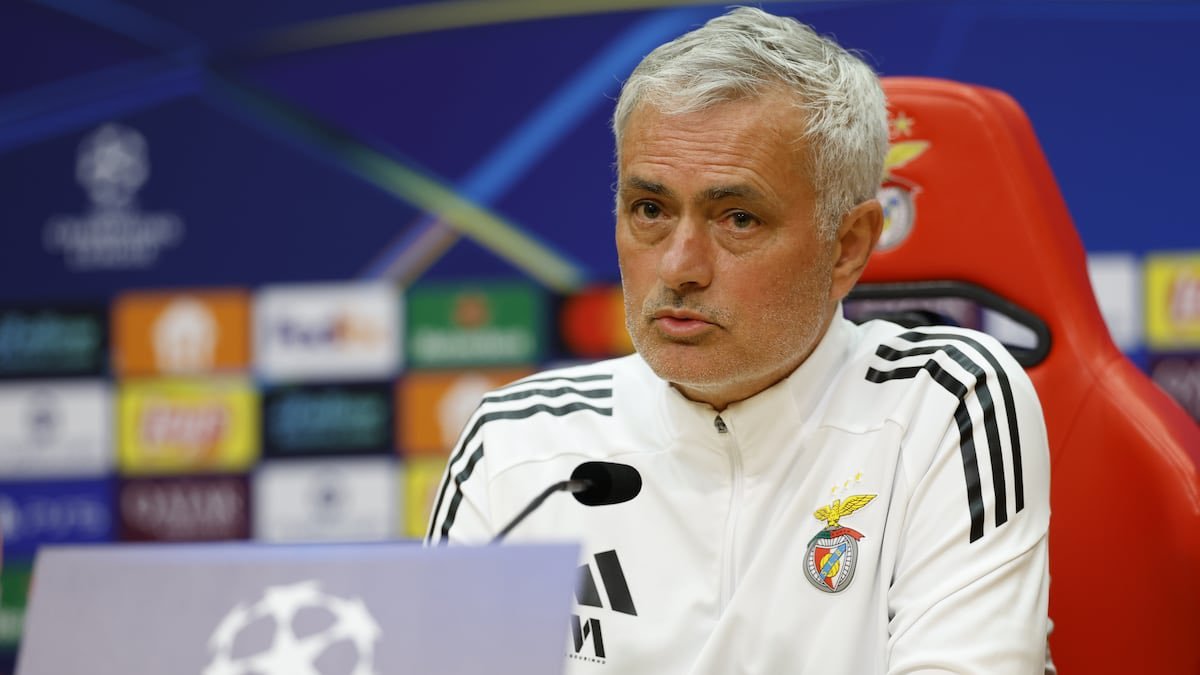
When discussing elite clubs and their psychological resilience, few managers speak with the authority of José Mourinho. Reflecting on Real Madrid, Mourinho delivered a pointed assessment: a wounded king is the most dangerous king.
Real Madrid, he argues, are not merely dangerous because of their technical superiority or individual brilliance. While their squad is stacked with elite-level talent capable of deciding matches in moments, Mourinho emphasized that the team has evolved significantly on a collective level. Tactical cohesion, defensive organization, and transitional efficiency have strengthened, making them more complete than ever.
However, what elevates the threat, in his view, is psychological. “They are a wounded team,” Mourinho suggested, referencing a heavy defeat in which they conceded four goals. For a club built on dominance and prestige, such setbacks do not weaken identity; they intensify response.
He drew a hypothetical comparison involving SL Benfica, imagining a scenario where they too concede four goals and then potentially face the same opponent weeks later. The implication is clear: elite institutions respond to humiliation with calculated aggression. And when Real Madrid are hurt, their reaction tends to be decisive.
Mourinho’s remarks go beyond tactical analysis; they reflect institutional DNA. In Madrid, setbacks often serve as catalysts rather than conclusions. “At that point, we will be faced with something worse,” he warned, suggesting that an injured Madrid side becomes more focused, more clinical, and more relentless.
The conversation then shifted to a more personal dimension. Can one reject Real Madrid? Mourinho’s answer was direct: yes, you can. His own departure remains a rare case in modern Madrid history, leaving without dismissal. He noted that he is one of the few coaches to exit of his own accord.
“When you leave of your own decision, there is no reason for envy,” he explained. “I left with a clear conscience.”
He recalled a telling remark from club president Florentino Pérez upon his departure: “Now comes the easy part; the hard part is over.” That statement acknowledged the intensity of Mourinho’s tenure, years marked by fierce rivalries, tactical revolutions, and high-pressure battles.
Despite the turbulence, Mourinho harbors no sense of ownership over the club’s subsequent triumphs, including their historic tenth European crown, La Décima. “Everything Real Madrid has achieved since then has brought me joy,” he stated. “But the credit belongs to those who were there.”
He also reflected on the symbolic power of the Santiago Bernabéu Stadium, describing it as Madrid’s stadium of joy. It is a venue where narratives shift rapidly, where defeat does not necessarily mean elimination, and where resilience often transforms adversity into silverware.
Indeed, Real Madrid has repeatedly demonstrated the capacity to lose battles but win wars, particularly in European competition. Mourinho’s warning is therefore not emotional; it is structural. A wounded Madrid side does not retreat; it recalibrates.
For opponents across Europe, the message is precise: if Real Madrid have been hurt, prepare for something worse in return.

Please Login to comment in the post!

you may also like
- by Christian Amegbor
- Feb 11, 2026
Sesko's Late Equalizer Denies West Ham Victor...

- by Christian Amegbor
- Feb 12, 2026
Milner Hits Career Milestone but Brighton's S...
- by Christian Amegbor
- Feb 12, 2026
Ghana Midfielder Thomas Partey Charged With T...
- by Christian Amegbor
- Feb 13, 2026