- by Christian Amegbor
- Feb 10, 2026
Antoine Semenyo and Marc Guéhi Hit With Racist Abuse After Man City vs Everton and FA Respond
- By Christian Amegbor
- May Tue, 2026
- in Sports
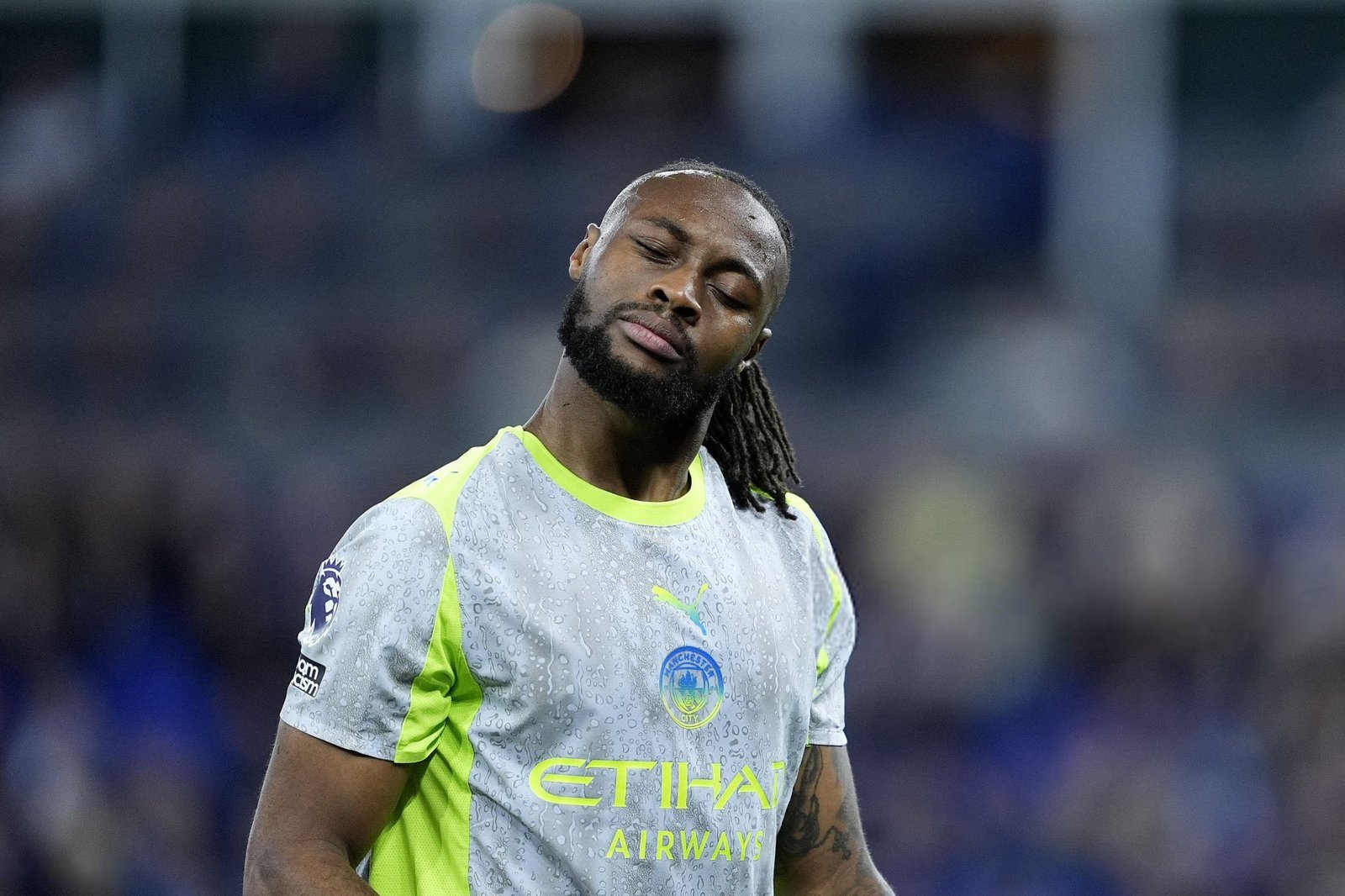
Monday night's 3-3 draw between Everton and Manchester City should have been remembered for its football. Six goals, a dramatic stoppage-time equaliser, and a title race reshaped in ninety breathless minutes. Instead, the match has been overshadowed by something far more serious, racist abuse directed at two of City's players, both during the game and in its aftermath.
Antoine Semenyo was subjected to racist abuse inside Hill Dickinson Stadium during the match itself. Marc Guéhi, City's England international defender, was then targeted by a torrent of vile racist posts on social media after the final whistle. Manchester City, the England national team, and Everton Football Club have all responded, and one individual is already in police custody.
Manchester City's Statement
Manchester City moved swiftly to address both incidents, publishing an official statement on Tuesday that condemned the abuse directed at both players in unequivocal terms.
"Manchester City strongly condemns the racist abuse directed towards Antoine Semenyo at yesterday's match. We welcome the swift action taken by Everton and the police to identify the individual responsible. We are also incredibly disappointed to hear that Marc Guéhi was subject to a series of vile, racist social media posts last night."
"We will continue to offer our full support to both Antoine and Marc and never accept discrimination of any kind in our game,"
The statement reflects not just institutional condemnation but a genuine acknowledgement of the human impact on two players who did nothing other than compete in a football match.
A 71-Year-Old Arrested
The in-stadium abuse directed at Semenyo did not go unnoticed, and the response from authorities was swift.
Everton confirmed that Merseyside Police arrested a 71-year-old on suspicion of a racially aggravated public order offence after supporters and stewards reported the incident. He has since been bailed with conditions, including restrictions preventing him from going within one mile of any designated sports stadium for a period of up to four hours before kick-off, during matches, and up to four hours after the final whistle.
Everton's own statement was equally direct: "Racism and discrimination in all forms are completely unacceptable. They have no place in our stadia, our sport or in society, and behaviour of this nature will not be tolerated."
Guéhi Targeted After His Own Difficult Night
The abuse directed at Marc Guéhi arrived in particularly cruel circumstances. The England defender, who made a key error that led to Everton's equaliser through Thierno Barry, had posted on Instagram after the match, writing: "I need to do better, but we keep going and focused on the next. Thank you for your support as always. Thank you, Jesus!"
It was the response of a professional taking accountability for a mistake, exactly what supporters and pundits ask players to do. What followed was a wave of racist abuse that had nothing to do with his performance and everything to do with who he is.
The official England account responded directly: "This type of behaviour is completely unacceptable and must have consequences. We stand with both Marc and his Manchester City team-mate Antoine, and support strong action by the authorities and social media companies."
A Pattern That Cannot Be Ignored, particularly for Semenyo
For Antoine Semenyo, Monday night was not an isolated incident. It was the latest episode in a disturbing and recurring pattern.
Only last month, Semenyo shared a racist comment he had received on Instagram alongside the caption "it's started again", a phrase that carries the exhaustion of someone who has been here before. Earlier in the season, the Ghanaian international was racially abused by a Liverpool fan at Anfield while playing for Bournemouth.
Semenyo is a professional footballer doing his job. He is also a Ghanaian representing his country at the highest level of English football, a fact that makes each incident not just a football story but a human one, with implications that extend well beyond the Premier League.
The question his repeated targeting raises is one the sport has struggled to answer convincingly for years: at what point does condemnation become action, and at what point does action become prevention?
The Wider Problem Social Media Cannot Escape
The arrest of the individual responsible for the in-stadium abuse at Hill Dickinson is a concrete outcome, a name, a charge, and a bail condition that carries real consequences. It represents the system working as it should.
Guéhi's case, however, points to a problem that is much harder to tackle: anonymous racism spreading on social media with hardly any consequences. The architecture of online platforms, the anonymity, the speed, and the scale continue to provide cover for abuse that would result in immediate arrest if directed at a player face-to-face.
Manchester City's statement specifically calls on social media companies to act. That call has been made before, by clubs, players, and governing bodies. The response from platforms has been inconsistent at best.
Football's Responsibility
Monday night produced moments of genuine brilliance, Doku's two goals, Haaland's composure, and a finish that will be replayed for years. Those moments deserve to be celebrated.
But the events that followed the final whistle demand a response that matches their seriousness. An arrest has been made. Statements have been issued. Support has been pledged.
For Semenyo and Guéhi, the support of their club, their national team, and the wider football community is meaningful. But the most meaningful thing the sport can offer them is a future in which they do not need to be supported, because the abuse never happens in the first place.
Football has been promising that future for a long time. It has not yet been delivered.

Please Login to comment in the post!

you may also like
- by Christian Amegbor
- Feb 11, 2026
Sesko's Late Equalizer Denies West Ham Victor...
- by Christian Amegbor
- Feb 12, 2026
Milner Hits Career Milestone but Brighton's S...
- by Christian Amegbor
- Feb 12, 2026
Ghana Midfielder Thomas Partey Charged With T...
- by Christian Amegbor
- Feb 13, 2026