- by Christian Amegbor
- Feb 09, 2026
Ghana Mourns Yaa Naa Mahama Abukari II, the King Who Healed Dagbon
- By Christian Amegbor
- Jul Mon, 2026
- in News
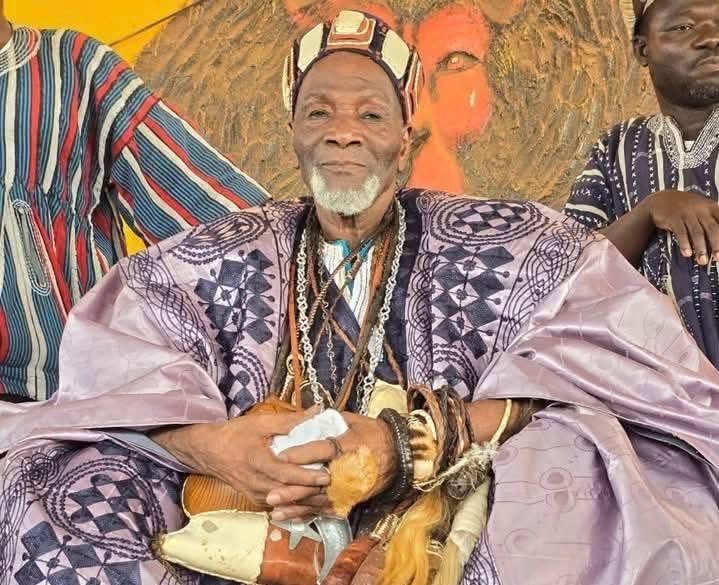
Ghana is in mourning after the death of Yaa Naa Mahama Abukari II, the Overlord of Dagbon, remembered as the traditional ruler who steered his kingdom out of more than a decade of conflict and into a period of peace and renewed unity.
His death closes a reign that began at a fragile moment for one of Ghana's most prominent traditional states, and leaves behind a legacy defined less by pomp than by patient reconciliation.
Tributes Pour In
News of his passing has drawn condolences from across the country, politicians, chiefs, and ordinary citizens alike, many pointing to the same themes: his humility, his patience, and his quiet insistence on peace over division.
How He Came to the Throne
Yaa Naa Mahama Abukari II took his seat as the 44th occupant of the Dagbon Nam in 2019, bringing to an end a chieftaincy dispute that had simmered for roughly sixteen years. That dispute traced back to 2002, when the killing of the previous Dagbon Overlord, Yaa Naa Yakubu Andani II, tore open a rift between Dagbon's two royal gates, the Abudu and the Andani families.
The years that followed were marked by uncertainty, as traditional leaders, government officials, and mediators worked to find common ground. The turning point came when a Committee of Eminent Chiefs, led by the Asantehene Otumfuo Osei Tutu II, brought the two sides together at the negotiating table. That process ultimately cleared the way for Mahama Abukari II's installation.
A Reign Defined by Reconciliation
From his earliest days on the throne, the new king made unity his central mission, working to mend old wounds and rebuild trust between communities that had been split for a generation. He came to the role already tested in traditional leadership, having previously served as Yoo Naa of Savelugu.
Those who watched him lead describe a ruler who reached across old divides rather than deepening them, and who treated the bond between traditional authority and everyday citizens as something to be actively maintained. Many credit him directly with holding together the fragile peace that Dagbon had fought so hard to secure.
Praise from National Leaders
Ghana's political class was quick to acknowledge his contribution. Former President John Dramani Mahama singled him out for sustaining peace in Dagbon and for his dedication to reconciliation and development, while other national figures echoed similar praise for his role in strengthening traditional leadership across the Northern Region.
His reign is now widely cited as proof of what traditional institutions can achieve in conflict resolution when given the chance to lead.
Building, Not Just Healing
Peace was not the end point of his leadership; it was the foundation for what came next. He pushed to attract investment, encourage cooperation among communities, and restore public confidence in traditional governance, work that helped cement Dagbon's standing as a cultural and traditional hub within Ghana. He also strengthened the working relationship between the Dagbon traditional council and government institutions, opening the door to closer collaboration on issues affecting the region.
What He Leaves Behind
Though his time on the throne was brief, its significance runs deep. Yaa Naa Mahama Abukari II will be remembered as the king who closed a painful chapter in Dagbon's history and opened a new one built on trust.
As Dagbon now turns to the question of succession, his name will remain tied to the restoration of peace, a reminder of what steady, reconciliatory leadership can accomplish, and a legacy expected to shape the kingdom for years to come.

Please Login to comment in the post!

you may also like
- by Christian Amegbor
- Feb 09, 2026
Reversal of institutions' names not erasing h...
- by Christian Amegbor
- Feb 09, 2026
Deputy Education Minister Vows to Secure Buli...
- by Christian Amegbor
- Feb 09, 2026
Blame Akufo-Addo, not John Mahama for poor WA...
- by Christian Amegbor
- Feb 10, 2026