- by Christian Amegbor
- Feb 09, 2026
Reversal of institutions' names not erasing history but rather depoliticizing academic institutions - Apaak
- By Christian Amegbor
- Feb Mon, 2026
- in News
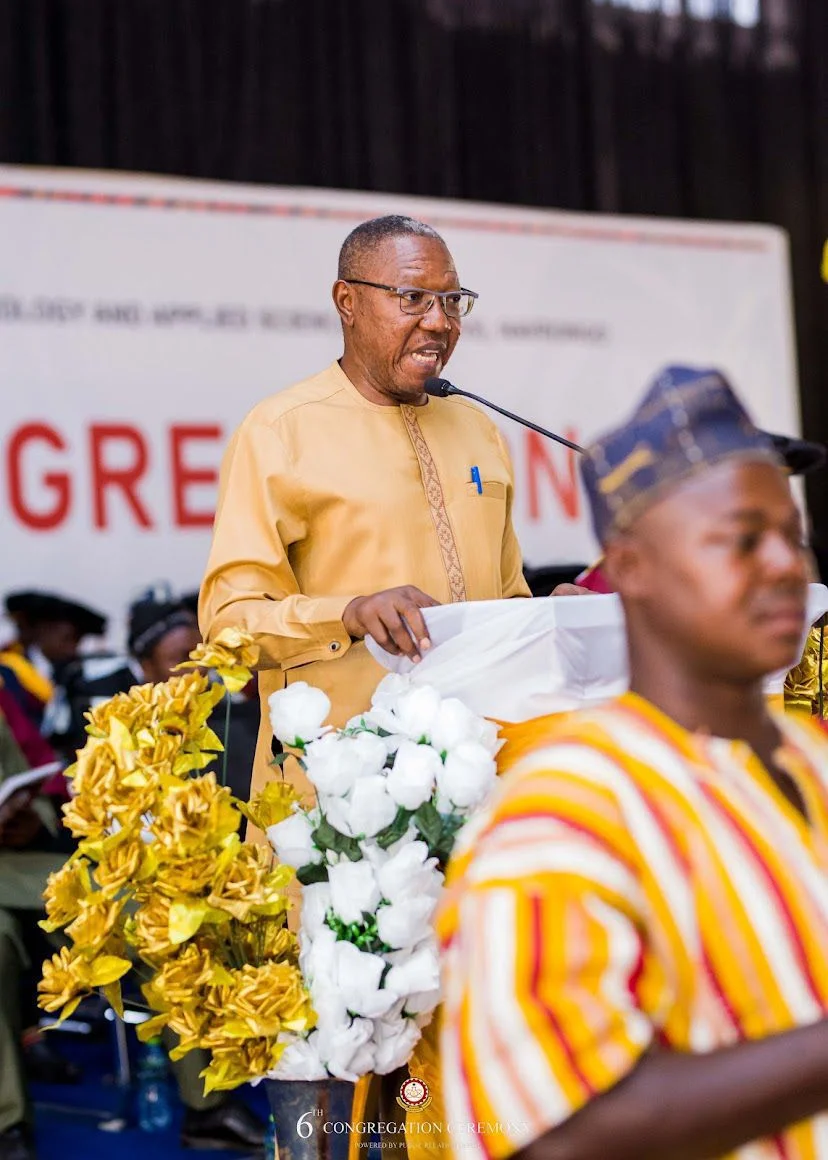
Deputy Minister of Education, Hon. Dr. Clement Abas Apaak, has explained that Parliament’s decision to reverse the renaming of the University of Technology and Applied Sciences (UTAS) and other public universities was taken to safeguard academic freedom, neutrality and institutional identity.
Addressing the 2025 UTAS Congregation, Dr. Apaak announced that the reversal had been approved by Parliament following broad stakeholder consultations.
“Just yesterday, Parliament reversed the renaming of University of Technology and Applied Sciences, along with other universities across the country,” he disclosed.
According to him, the decision followed extensive engagements with the academic community, traditional rulers, alumni associations, students and civil society organisations, all of whom expressed concerns about the politicisation of public universities.
In reaffirming government’s position, Dr. Apaak said the restoration of original university names was not intended to erase history but rather to strengthen academic independence.
“This move is not about erasing history but rather depoliticising our academic institutions and allowing them to focus on their core mandate of learning, research, and service to society,” he stated.
He emphasised that universities must remain neutral spaces dedicated to scholarship, innovation and national service, free from political symbolism that could undermine their core mission.
“By doing so, we not only uphold the principles of neutrality and academic independence, but we also preserve the historical integrity and legacy upon which these great institutions were founded,” the Deputy Minister added.
Dr. Apaak said the decision demonstrates government’s respect for institutional heritage and its commitment to protecting the autonomy of Ghana’s tertiary institutions.
He further urged university leadership, faculty and students to take advantage of this renewed clarity of identity to focus on academic excellence and societal impact.
The Deputy Minister reiterated government’s resolve to continue investing in education, describing it as the most effective tool for national development.
“Government will continue to invest in education,” he assured.
Dr. Apaak concluded by congratulating the graduating class and encouraging them to uphold values of resilience, ethics and patriotism as they contribute to Ghana’s development.
Earlier, Parliament passed legislation to rename several public universities, shifting their designations to emphasize their academic specialties and geographic locations.
Passed on Friday, the amendments alter the names of three institutions. The C.K. Tedam University of Technology and Applied Sciences will now be known as the University of Technology and Applied Sciences, Navrongo. Similarly, the S.D. Dombo University of Business and Integrated Development Studies becomes the University of Business and Integrated Development Studies, and the Akenten Appiah-Menka University of Skills Training and Entrepreneurial Development is renamed the University of Skills Training and Entrepreneurial Development, Kumasi.
The move to rename the C.K. Tedam University, originally established by an Act of Parliament (Act 1000) in August 2019, required a specific amendment to its founding statute.
According to a parliamentary committee report, the changes aim to modernize the institutions' identities in line with global trends.
The bill passed on Friday following a headcount vote. The majority National Democratic Congress (NDC) caucus voted overwhelmingly in favour with 154 votes, later rising to 155 after the First Deputy Speaker cast his ballot in support. The minority New Patriotic Party (NPP) caucus largely opposed the measure, registering 25 votes.
This renewed engagement is expected to drive broader investment in Ghana's higher education sector.
The report from the Committee on Education further justified the decision, stating, “Many universities globally are changing names to reflect contemporary values and social justice. By following this trend, the University will enhance its global competitiveness and appeal to international students.”
The renaming strategy seeks to clarify each university's core mission and anchor its identity within its community, positioning them for greater national and international recognition.

Please Login to comment in the post!

you may also like


- by Christian Amegbor
- Feb 09, 2026
Deputy Education Minister Vows to Secure Buli...

- by Christian Amegbor
- Feb 09, 2026
Blame Akufo-Addo, not John Mahama for poor WA...

- by Christian Amegbor
- Feb 10, 2026
Kaduna Residents Protest After 6 People Kidna...

- by Christian Amegbor
- Feb 10, 2026