- by Christian Amegbor
- Jun 21, 2023
Parliament of Ghana Minority Leader Hails Free SHS as Ghana’s Most Significant Social Policy Since 1992
- By Christian Amegbor
- Feb Mon, 2026
- in Politics
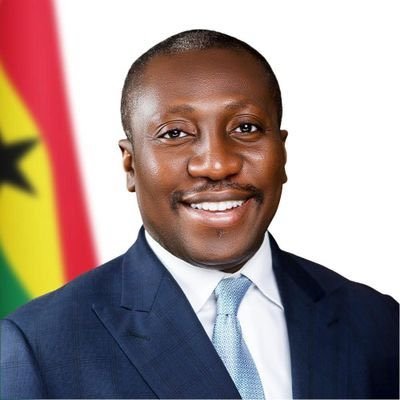
The Minority Leader in Parliament of Ghana, Alexander Afenyo-Markin, has described the Free Senior High School (Free SHS) programme as Ghana’s most significant social policy initiative since the return to constitutional rule in 1992. Speaking on the floor of Parliament, he emphasized the far-reaching impact of the policy on educational access, social mobility, and national development.
According to Afenyo-Markin, the introduction of Free SHS has fundamentally altered the educational landscape by removing financial barriers that previously prevented thousands of students from progressing beyond junior high school. He argued that before the policy’s implementation, many families, particularly those in low-income and rural communities, struggled to afford tuition, boarding fees, textbooks, and other related costs. As a result, capable students were often forced to truncate their education due to economic hardship.
The Minority Leader noted that the Free SHS initiative has significantly increased enrollment figures across the country, expanding opportunities for students regardless of socioeconomic background. He stressed that the policy represents more than just free tuition; it is a strategic investment in human capital development. By widening access to secondary education, Ghana is strengthening its future workforce and enhancing its long-term economic prospects.
Afenyo-Markin further described Free SHS as a transformative intervention that promotes equity and inclusivity. He highlighted its role in narrowing the education gap between urban and rural areas, as well as between affluent and disadvantaged households. In his view, the policy embodies the constitutional principles of equal opportunity and social justice that underpin Ghana’s democratic framework.
While acknowledging implementation challenges, such as infrastructure strain, funding sustainability, and quality assurance, he maintained that the policy’s overall impact outweighs its difficulties. He called for bipartisan cooperation to safeguard and improve the programme rather than politicize it, emphasizing that education reform should be treated as a national priority.
In conclusion, Afenyo-Markin reaffirmed his position that Free SHS stands as a landmark policy in Ghana’s Fourth Republic. By dramatically expanding access to secondary education, he argued, the initiative has reshaped the country’s social and economic trajectory, making it one of the most consequential reforms in Ghana’s modern history.

Please Login to comment in the post!

you may also like

- by Christian Amegbor
- Jun 21, 2023
Navigating the Political Landscape: Strategie...
- by Christian Amegbor
- Jun 21, 2023
The Power of Policy: Shaping Societies throug...
- by Christian Amegbor
- Jun 21, 2023
From Campaigns to Change: Inspiring Political...

- by Christian Amegbor
- Feb 09, 2026