- by Christian Amegbor
- Feb 09, 2026
Escalating Violence in Mexico Following Death of Alleged CJNG Leader
- By Christian Amegbor
- Feb Mon, 2026
- in News
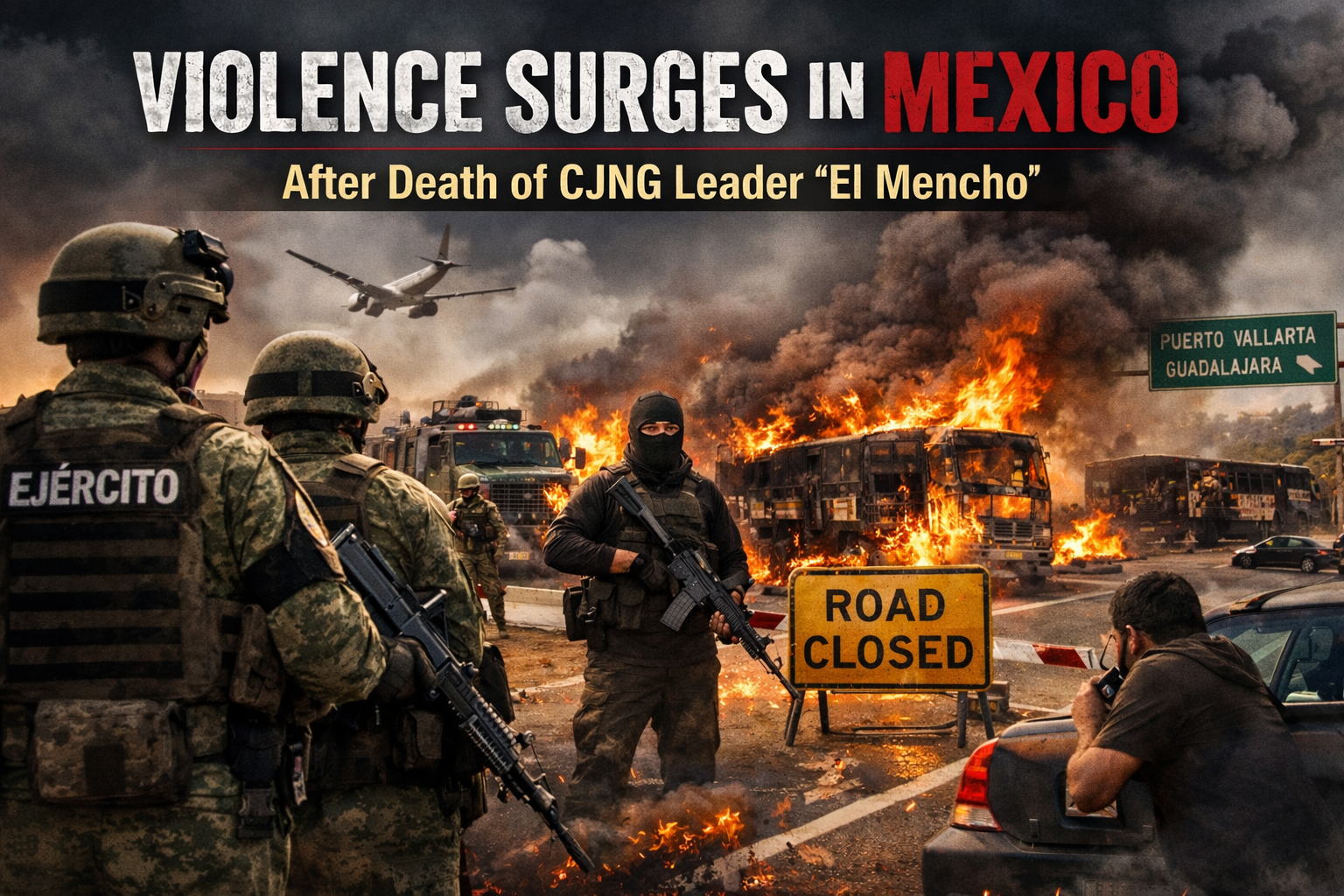
Mexico is experiencing a sharp surge in violence following the reported killing of Nemesio “El Mencho” Oseguera Cervantes, the alleged leader of the Jalisco New Generation Cartel (CJNG), during a military operation. The strike is being described by security analysts as one of the most consequential actions in the country’s prolonged campaign against organized crime and drug trafficking networks. If confirmed, it would mark a major development in Mexico’s security landscape, where cartel leadership figures have historically wielded enormous operational and territorial influence.
In the immediate aftermath, suspected CJNG affiliates reportedly launched coordinated retaliatory actions across several key urban centers. Incidents have included highway blockades, vehicle burnings, armed confrontations with security forces, and temporary shutdowns of commercial corridors. Major cities such as Puerto Vallarta and Guadalajara experienced heightened security deployments, with federal troops and state police reinforcing patrols in strategic zones. Authorities moved swiftly to contain unrest and prevent further escalation, particularly in areas critical to tourism and commerce.
The violence has significantly disrupted daily life. Schools in affected districts temporarily suspended classes as a precautionary measure, while some flights were delayed or rerouted due to security concerns. Tourism operators reported cancellations and operational interruptions, reflecting the sensitivity of Mexico’s travel sector to instability. Several foreign governments issued security advisories for their citizens in impacted regions, including precautionary shelter-in-place guidance and travel warnings.
Security experts note that such retaliatory flare-ups are not uncommon following high-profile operations targeting cartel leadership. Organized criminal groups often respond rapidly to demonstrate resilience, maintain internal cohesion, and project continued territorial control. In some cases, sudden power vacuums can trigger internal fragmentation or rivalries among factions seeking dominance, leading to short-term instability before a new hierarchy consolidates.
The situation underscores the persistent influence of cartel networks within Mexico’s broader security framework. Despite sustained federal enforcement campaigns over the past decade, including military deployments, intelligence-led operations, and asset seizures, criminal organizations continue to display adaptive capacity. These groups often operate diversified criminal portfolios, extending beyond narcotics trafficking into extortion, fuel theft, human smuggling, and other illicit enterprises that strengthen their financial base and local leverage.
Analysts emphasize that while decapitation strategies, targeting top leadership figures, can weaken centralized command structures, they do not always dismantle underlying criminal ecosystems. Cartels frequently maintain decentralized operational cells capable of functioning independently. As a result, the removal of a single leader, even a prominent one, may reduce symbolic power but not immediately neutralize operational capacity.
At the same time, the government faces a delicate balancing act: maintaining strong enforcement pressure while minimizing collateral disruption to civilian life and economic stability. Mexico’s tourism industry, international trade flows, and foreign investment climate are particularly sensitive to security perceptions. Prolonged instability could carry broader macroeconomic implications if not swiftly contained.
As federal and state authorities intensify patrols, intelligence gathering, and coordinated security responses, the coming weeks will be critical in determining whether violence subsides or evolves into a more prolonged period of unrest. The developments highlight the enduring complexity of Mexico’s struggle against organized crime, a multifaceted conflict shaped by law enforcement strategy, socio-economic conditions, political governance, and transnational drug demand dynamics.
Ultimately, while the reported operation against a key cartel leader represents a major tactical milestone, the broader strategic challenge remains: dismantling entrenched criminal infrastructures while ensuring long-term stability and public safety across affected regions.

Please Login to comment in the post!

you may also like


- by Christian Amegbor
- Feb 09, 2026
Reversal of institutions' names not erasing h...

- by Christian Amegbor
- Feb 09, 2026
Deputy Education Minister Vows to Secure Buli...

- by Christian Amegbor
- Feb 09, 2026
Blame Akufo-Addo, not John Mahama for poor WA...
- by Christian Amegbor
- Feb 10, 2026