-
 by Em News
- September 18, 2026
Why Attijariwafa Bank Is Taking Over Société Générale Ghana
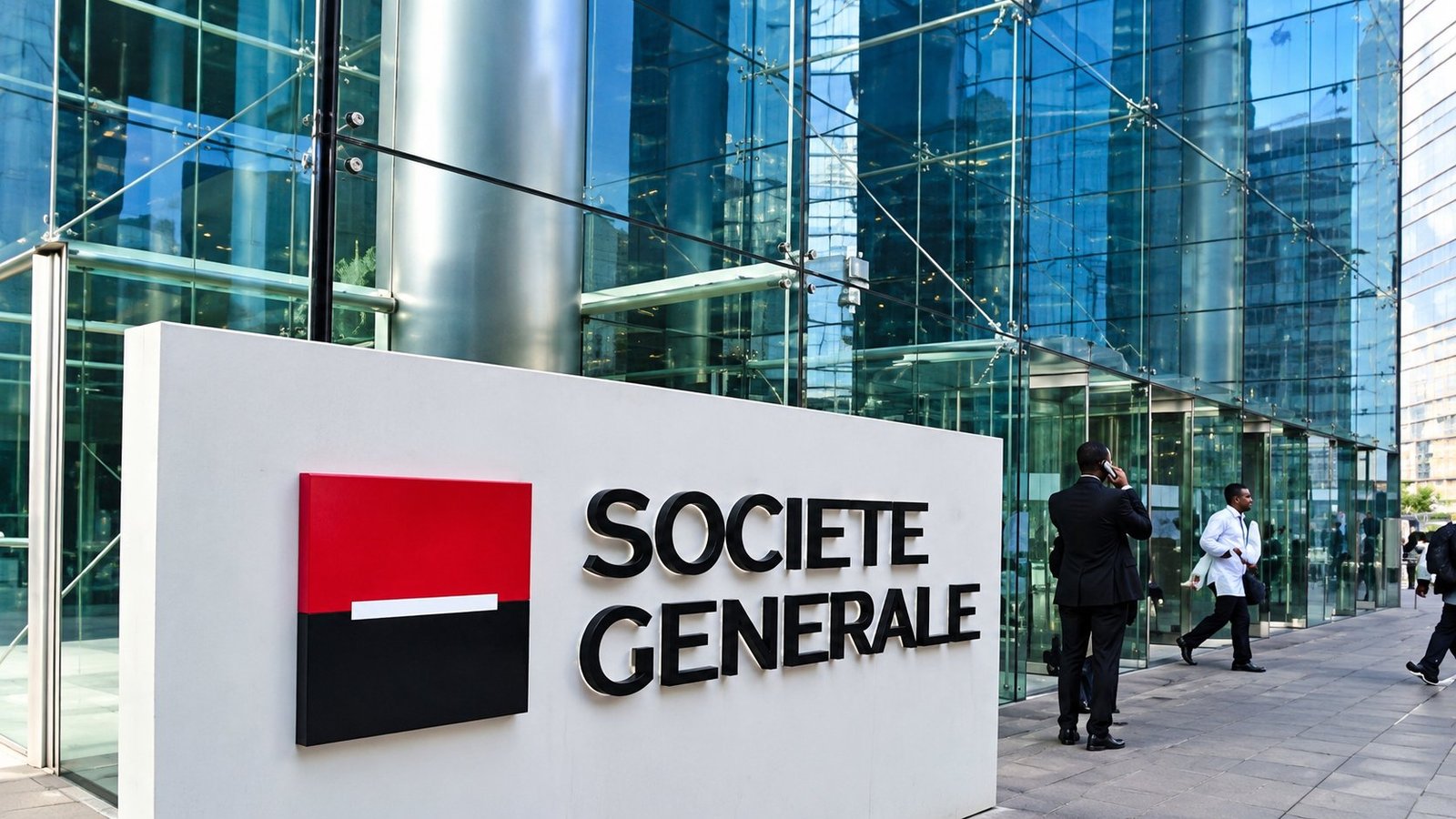
The proposed acquisition would give Morocco’s Attijariwafa Bank an established foothold in Ghana while bringing Société Générale’s controlling ownership of the local bank to an end.
The planned takeover of Société Générale Ghana by Morocco's Attijariwafa Bank is more than a change of ownership at one of Ghana's long-established financial institutions.
It represents a significant shift in the country's banking landscape: a major European banking group is preparing to relinquish control of its Ghanaian subsidiary, while one of Africa's largest banking groups is positioning itself to enter the market through an established operation.
Under the proposed transaction, Société Générale Group will sell its entire 60.22% controlling stake in Société Générale Ghana. Attijariwafa Bank is expected to acquire 55.22%, while the Social Security and National Insurance Trust (SSNIT) will purchase the remaining 5%.
The Bank of Ghana has issued a "No Objection" to the proposed transaction, clearing an important regulatory hurdle.
The deal, however, is not yet fully completed. Because Société Générale Ghana is listed on the Ghana Stock Exchange, additional regulatory processes must be concluded before ownership can formally change hands.
Beyond the numbers, the transaction raises a bigger question: Why does Attijariwafa Bank want Société Générale Ghana?
The answer lies largely in the Moroccan group's wider ambitions across Africa.
Ghana offers an established route into a strategic market
For Attijariwafa Bank, acquiring Société Générale Ghana provides something that would take years to build from scratch: an established banking platform.
Rather than entering Ghana as a new institution and gradually developing a customer base, branch network, workforce and corporate relationships, Attijariwafa would inherit an existing operation with decades of experience in the Ghanaian market.
Société Générale Ghana operates about 40 branches and outlets across the country and serves individuals, businesses and corporate clients.
That existing infrastructure gives the Moroccan group an immediate foothold in one of West Africa's major economies.
For a banking group pursuing regional expansion, buying an established institution can offer a faster route into a market than building a new operation from the ground up.
It also gives Attijariwafa access to something equally valuable: local knowledge.
Banking is heavily dependent on relationships, regulation and an understanding of domestic businesses and consumers. Société Générale Ghana already has those relationships and institutional experience.
Attijariwafa would therefore be acquiring not simply a banking licence or physical branches, but an operating business with an established position in Ghana's financial system.
The acquisition fits Attijariwafa's African strategy
The proposed takeover also makes sense when viewed against Attijariwafa Bank's broader expansion across Africa.
The Moroccan banking group already has operations in several African markets, including Côte d'Ivoire, Senegal, Togo, Burkina Faso, Mali, Benin and Cameroon.
According to the group's corporate profile, Attijariwafa operated in 27 countries, served more than 12 million customers and employed over 21,000 people by the end of 2025.
Its international retail banking businesses have also become an important contributor to the wider group.
That means Ghana is unlikely to be viewed as an isolated acquisition. It would become another piece of a much larger African banking network.
Ghana's position as a major West African economy could also make the local operation useful for businesses trading or investing across borders.
A Ghanaian company doing business in Côte d'Ivoire, Senegal or other markets where Attijariwafa already operates could potentially benefit from being connected to a banking group with a presence across those jurisdictions.
Similarly, companies elsewhere in Attijariwafa's network seeking opportunities in Ghana could have access to a bank already operating in the country.
Whether those opportunities materialise will depend on Attijariwafa's strategy after the takeover, but the regional network is one of the clearest strategic advantages behind the acquisition.
Why is Société Générale leaving Ghana?
Attijariwafa's expansion is only one side of the transaction.
The other is Société Générale Group's decision to sell.
The French banking group began reviewing the future of its Ghanaian operation in 2024, and the proposed sale would bring its controlling ownership of the local bank to an end.
It is important, however, to distinguish a parent company's strategic exit from the performance of the local institution.
Société Générale Ghana has operated in the country for decades and developed a significant local banking business.
Its history dates back to 1975, when the institution was established as Security Guarantee Trust Limited. It later became Social Security Bank before Société Générale acquired a controlling stake in 2004.
The bank subsequently adopted the Société Générale Ghana name in 2013.
The proposed sale therefore reflects a strategic decision by the French parent group about where it wants to maintain ownership and deploy capital, rather than simply the disappearance of the underlying Ghanaian banking operation.
The bank itself is expected to continue operating under new majority ownership.
SSNIT is increasing its stake
There is another important part of the transaction that could easily be overshadowed by Attijariwafa's arrival.
SSNIT is also increasing its ownership.
The pension fund currently holds 19.36% of Société Générale Ghana. By acquiring an additional 5% from Société Générale Group, its stake would rise to 24.36%.
Attijariwafa would hold 55.22%, giving the Moroccan group majority control, while SSNIT would become an even more significant institutional shareholder.
SSNIT has said the additional investment is intended to strengthen its position on behalf of Ghanaian workers and pensioners while increasing Ghanaian participation in the banking sector.
The resulting ownership structure would therefore combine majority control by a large African banking group with a substantial stake held by Ghana's national pension institution.
What could Attijariwafa bring to the bank?
Financial strength is one of the key considerations surrounding the proposed acquisition.
In assessing the transaction, the Bank of Ghana considered Attijariwafa Bank's financial capacity and its ability to support substantial financing activities.
That matters because banks increasingly need significant capital and international networks to finance major corporate transactions, infrastructure, trade, and business expansion.
Attijariwafa's regional footprint could potentially strengthen Société Générale Ghana's ability to connect customers to financing and business opportunities beyond Ghana.
Trade finance is one area where that network could prove particularly relevant.
Ghanaian companies increasingly trade with other African economies, and the implementation of the African Continental Free Trade Area has placed greater emphasis on intra-African commerce.
A bank operating across several of those markets could potentially make cross-border banking relationships easier for some businesses.
But these remain potential advantages.
The actual benefits to Ghanaian customers and businesses will depend on the products, capital allocation, technology investment and commercial strategy Attijariwafa introduces after taking control.
What does the takeover mean for customers?
For customers, the most important point is that a change in shareholders does not mean bank accounts, loans or other relationships automatically disappear.
The proposed transaction involves Attijariwafa taking control of Société Générale Ghana's banking activities, including its existing client portfolio and workforce.
Customers should therefore not assume that their accounts or banking arrangements will suddenly change simply because the majority shareholder is changing.
Over time, however, new ownership could result in changes.
Attijariwafa could eventually introduce its own products, technology, corporate strategy or branding. Decisions could also be made about branches, digital platforms and other aspects of the bank's operations.
Any material changes affecting customers would have to be communicated through the appropriate official channels.
Until then, customers should rely on information from Société Générale Ghana and regulators rather than speculation surrounding the takeover.
What happens to employees?
Employees will also be watching the transition closely.
A bank acquisition is not merely a financial transaction between shareholders. It eventually involves decisions about management, organisational structure, technology, operations and corporate culture.
Reporting around the regulatory process has indicated that discussions included commitments relating to employment and the continued role of Ghanaian management.
Those commitments could become important as Attijariwafa begins integrating the Ghanaian operation into its wider group after completion.
In the short term, continuity is likely to be particularly important. Société Générale Ghana already has employees with experience in the domestic market, existing customer relationships and knowledge of Ghana's regulatory environment.
The longer-term organisational structure, however, will become clearer only after the acquisition is completed and Attijariwafa begins implementing its strategy.
A bigger shift is taking place in African banking
The transaction also tells a broader story about the changing structure of banking in Africa.
For decades, European banking groups played a major role across many African markets through subsidiaries and local operations.
That landscape has gradually been changing.
Some European banking groups have reassessed their presence in individual African markets, while large African financial institutions have expanded beyond their home countries.
Attijariwafa's move into Ghana fits that wider pattern.
If the deal is completed, control of Société Générale Ghana will move from a French banking group to a Moroccan institution with an extensive pan-African network.
The bank will remain part of Ghana's financial system, but the strategic centre behind its majority shareholder will shift from Europe to Africa.
That makes the transaction more significant than a simple sale of shares.
The takeover is not complete yet
There is one important qualification.
Attijariwafa Bank has not yet fully completed the takeover.
The Bank of Ghana's No Objection is a major step, but Société Générale Ghana is a publicly listed company. The transaction must therefore satisfy the relevant securities-market and other regulatory requirements before it can be finalised.
Until those processes are completed, Attijariwafa is best described as the proposed new majority shareholder.
If the remaining approvals and requirements are satisfied, however, the transaction will mark the beginning of a new chapter for one of Ghana's established banks.
For Attijariwafa Bank, the acquisition offers an immediate foothold in Ghana and another connection in its expanding African network.
For Société Générale Group, the sale brings its controlling ownership of the Ghanaian operation to an end after more than two decades.
For SSNIT, the transaction provides an opportunity to deepen its investment in the bank.
And for Ghana's banking sector, it represents something broader: the transfer of control of a long-established institution from one international banking group to another, but this time with the new majority shareholder headquartered on the African continent.
The biggest question will therefore come after the paperwork is completed.
What will Attijariwafa Bank do with Société Générale Ghana once it takes control?
The answer will determine whether the takeover becomes simply a change in ownership, or the beginning of a more significant transformation of the bank's role in Ghana and across the wider African market.
you may also like


-
by Em News
- September 19, 2026
Government Launches First Phase of Major Toma...

-
by Em News
- September 19, 2026
Secured Credit Hits GH¢31.5bn in Q2 2026 as L...

-
by Em News
- September 19, 2026
MTN Ghana Steps Up Push to Take Digital Payme...

-
by Em News
- September 20, 2026
0 Comments
Be the first to join the conversation.