- by Christian Amegbor
- Jun 21, 2023
An Era of Clean Politics: Tarique Rahman Vows Reform as Bangladesh Holds First Post Hasina Election
- By Christian Amegbor
- Feb Thu, 2026
- in Politics
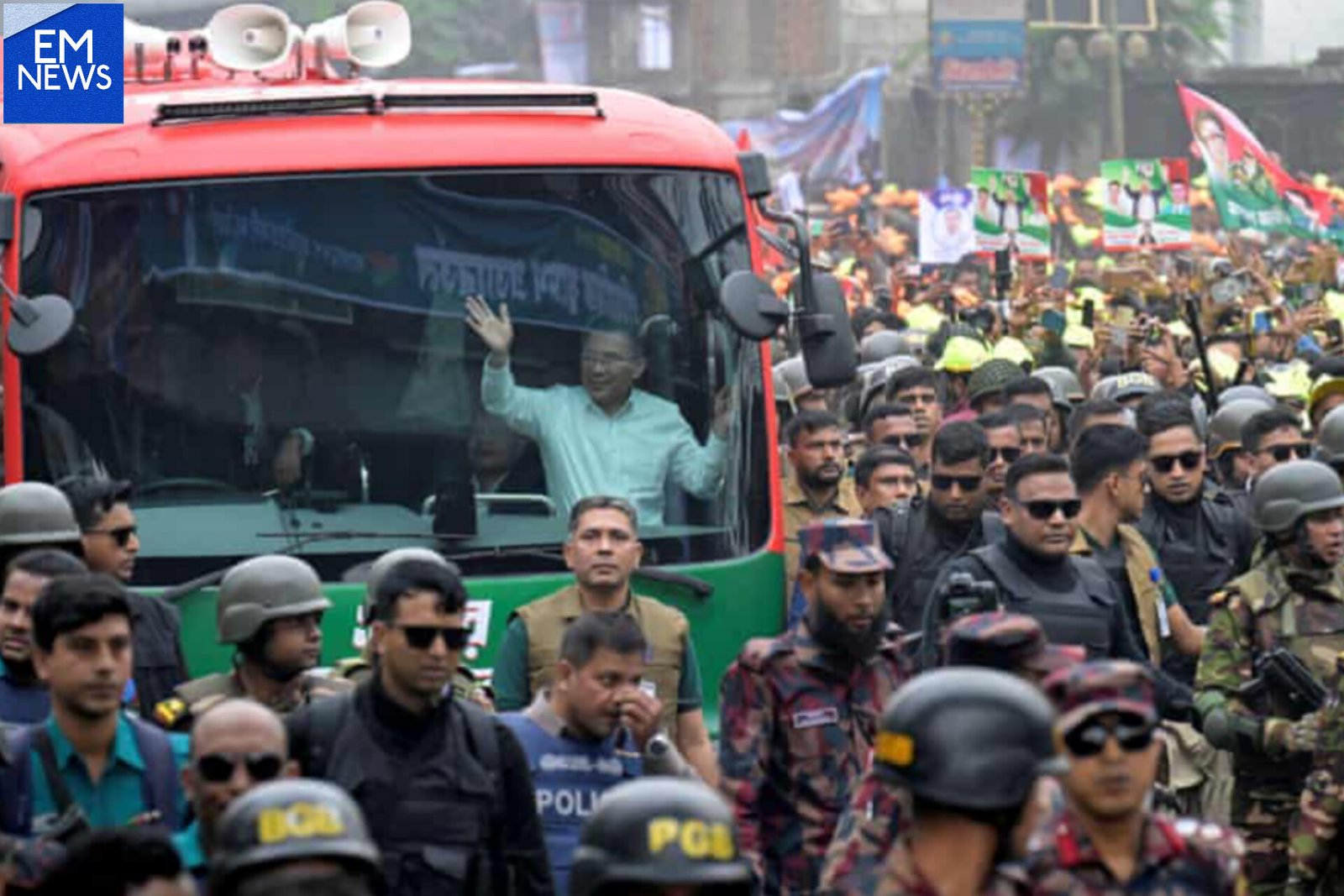
Tarique Rahman, who after 17 years in exile is the leading contender to become Bangladesh’s new prime minister, has vowed to end rampant corruption and set the country on a new course as it heads to the polls in its first free and fair elections in nearly two decades.
Speaking before polling stations opened on Thursday morning, Rahman promised a new era of clean politics, including a crackdown on property rights, if his Bangladesh Nationalist Party (BNP) is brought to power.
According to opinion polls, the BNP will win a landslide victory over its rival, the hardline returning the party to power after 20 years.
Rahman, 60, who has been quietly spoken to and ignored, acknowledged that the election comes at a crucial but challenging time for Bangladesh, long ranked among the world’s most corrupt countries and where democracy has been under attack for more than a decade.
We have seen in the previous government that corruption was encouraged, Rahman said. Our economy has been destroyed. It will take time, but if we ensure transparency in every part of the government and send a message throughout the chain, corruption will be defeated.
The election is the first since the fall of autocratic Prime Minister Sheikh Hasina in the spring of 2024. The student-led protests that ousted Hasina after 15 years in power left about 1,400 people dead, according to the United Nations, after the government faced harsh punishment.
Last year, the former prime minister, who lives in India, was convicted of crimes against humanity committed in the final days of her rule and sentenced to death.
In the past three elections, Hasina and her Awami League party have been accused of rigging the election results and imprisoning opponents, including thousands of activists and BNP leaders.
Since August 2024, Bangladesh has been led by an interim government led by Muhammad Yunus, who has been tasked with restoring democracy and preparing the country for free and fair elections. However, the country remains in turmoil, with law and order broken down and the economy in shambles.
Analysts have stressed that free and fair elections would be a major boost for the country. There are 127 million registered voters, and more than 900,000 police, military and security personnel have been deployed on election day to ensure security.
This is the first credible election in the country in 17 years, so it is of great importance, said Thomas Kean, senior Bangladesh crisis advisor at Crisis Group. People are eager to cast their votes after a long time.
In Dhaka, young voters spoke of their joy at witnessing democracy with their own eyes. I am happy, this is the first time I have cast my vote freely, said Yasmin Sorupa, 30, who said she intended to vote for the BNP.
Previously, I could not cast my vote because by the time I went to the polling station, someone had already cast his vote.
Rahman returned to Bangladesh to contest on Christmas Day, ending more than 17 years of political exile. He took over the leadership of the BNP from his mother, former Prime Minister Khaleda Zia, a prominent politician in Bangladesh and a political rival to Hasina. She died just five days after Rahman returned home in December.
I can say that I left the country, but I have maintained a connection with the people of Bangladesh all these years, he says.
Whenever the opportunity arose to serve my people, I returned.
When Rahman went into self-imposed exile in London, living on the outskirts of Kingston with his wife and daughter, his colleagues said he had calmed down.
His experiences in everyday British life had left them perplexed, from his efforts to increase tolerance in Bangladeshi politics to his determination to introduce a garbage collection system in the country.
Many in Bangladesh say they cannot forget the corruption that flourished during the last BNP government between 2001 and 2006, under his mother.
Rahman did not dispute that his party had made mistakes in the past. I will not deny that. If we do that, it will not help anything, he said.
Although Rahman did not hold any official position in the previous government, he was considered a negative influence, and in a leaked document in 2008, he was described as a symbol of the cryptocratic government.
He was imprisoned in 2007 as part of a crackdown on corruption by the military-backed interim government, which he denies. In 2008, he was released to seek medical treatment in London, after being severely tortured in prison and being taken to a plane in a wheelchair.
During Hasina’s 15 year rule, he was convicted on terrorism and corruption charges, which he alleged were politically motivated and he was barred from entering Bangladesh. In 2024, after Hasina’s fall, the courts overturned his conviction and released him to return home.
It’s been 18 years and nothing has been proven, Rahman says. Don't you think that's enough to prove my innocence?
However, not all Bangladeshis are happy with Rahman's return. Both of his parents were prime ministers of Bangladesh, and for many, he is the latest in a generation of authoritarian politicians who have ruled under two families since Bangladesh gained independence in 1971, which many had hoped would end the July Revolution.
Although the BNP won the election with a landslide victory, commentators have stressed that the revival of the hardline and the banned League under Hasina could pose a major challenge for the BNP and Bangladesh in the future.
Along with its allies who adhere to a strict Islamic political code, both believe in the introduction of Sharia law and could win the largest share of the vote in history and form the largest opposition party.
The leader has been accused of harsh policies and contradictory views on women's rights at home and in the workplace.
Human rights groups have also called for caution over the recent increase in women's rights, which has been exacerbated by incidents such as banning girls from playing football and forcing them to wear the veil and hijab.
Rahman acknowledged that there were extremists trying to do these things but said it had nothing to do with Islam or religion.
Instead, he attributed it to a lack of democracy. People were not given the opportunity to express their views for a long time, which led to frustration and, at times, extremism.
He insisted that the rise of radical Islamic politics was not a threat to the majority of Bangladeshis. If we can have democracy, if we can create jobs for the youth and opportunities for a better life, I think people will avoid such thinking.
One of the biggest challenges facing the new Bangladesh government politically is rebuilding relations with its neighbor India. Under Hasina, India was Bangladesh’s closest ally but relations have deteriorated significantly since the fall of her government and have become a major enemy in recent months.
Rahman acknowledged that there are problems with India and that he wants a relationship based on mutual respect, understanding.
Asked whether India and Bangladesh can rebuild friendship while Delhi continues to provide sanctuary to Hasina and hundreds of her party members, Rahman expressed doubts. That depends, he said. They must also reduce their own.

Please Login to comment in the post!

you may also like
- by Christian Amegbor
- Jun 21, 2023
Navigating the Political Landscape: Strategie...
- by Christian Amegbor
- Jun 21, 2023
The Power of Policy: Shaping Societies throug...
- by Christian Amegbor
- Jun 21, 2023
From Campaigns to Change: Inspiring Political...
- by Christian Amegbor
- Feb 09, 2026