- by Christian Amegbor
- Jun 21, 2023
Bank of Ghana's GH₵15.6 Billion Loss in 2025; The Full Story Behind the Numbers
- By Christian Amegbor
- Jun Wed, 2023
- in Business
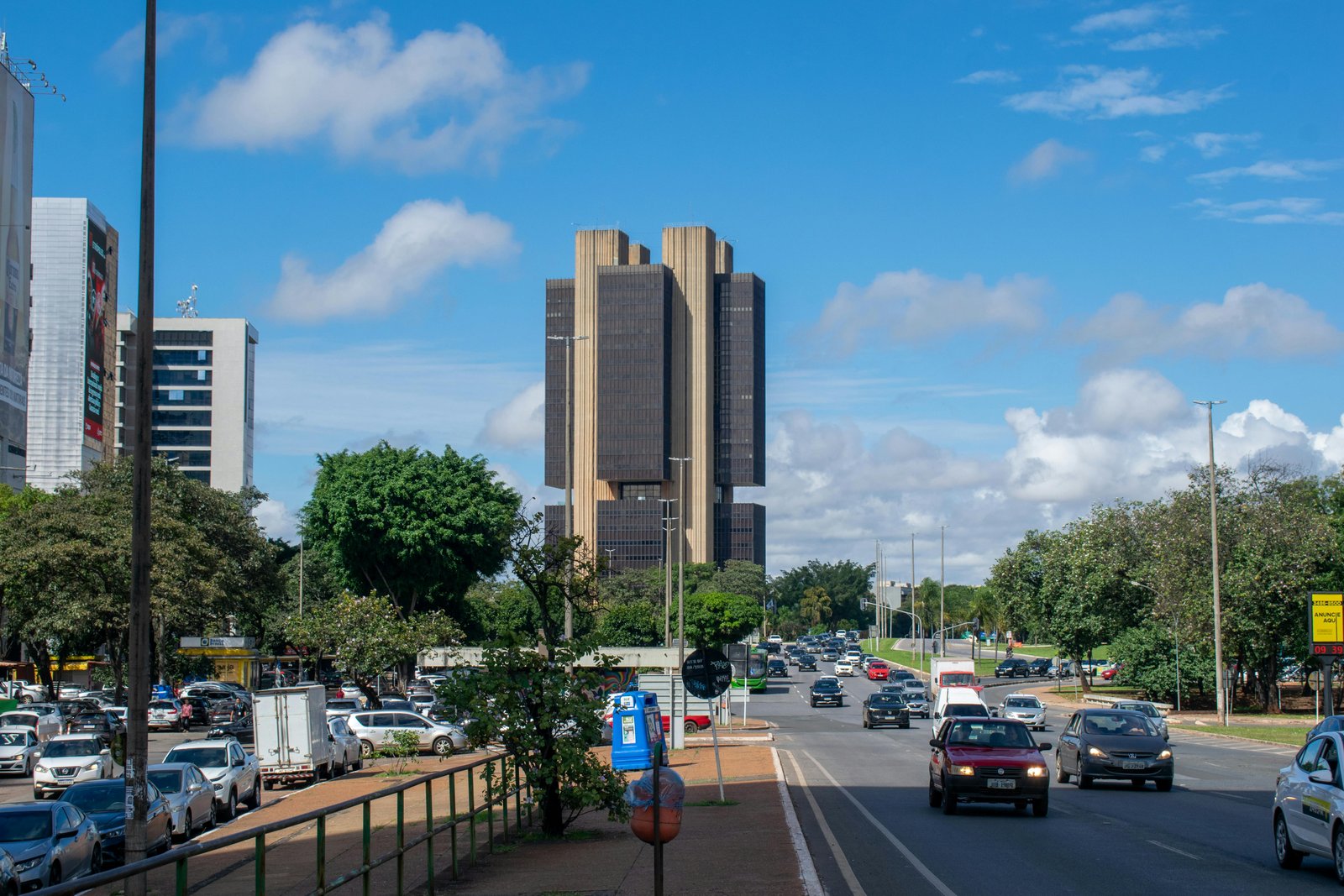
The Bank of Ghana has recorded an operational loss of GH₵15.6 billion for 2025, its second-largest financial loss since 2008. The headline figure is striking. The story behind it is more nuanced than the number alone suggests.
Understanding what drove this loss, and what it means for Ghana's economy going forward, requires looking beyond the balance sheet and into the specific decisions the central bank made, deliberately, and at considerable cost, to keep Ghana's economy from a far worse outcome.
The Debt Restructuring Bill: GH₵12 Billion and Counting
The single largest contributor to the 2025 loss was not a policy failure. It was a policy choice, and one with significant consequences for the central bank's income.
The Domestic Debt Exchange Programme (DDEP), Ghana's landmark domestic debt restructuring initiative, fundamentally altered the terms on which the government services its obligations to bondholders. For the Bank of Ghana, which holds substantial government securities as part of its normal operations, the restructuring translated directly into lost expected income. Estimates place that figure at over GH₵12 billion, the dominant share of the overall GH₵15.6 billion loss.
The DDEP was designed to reduce Ghana's unsustainable debt burden and restore fiscal credibility. It achieved those objectives. But the cost of debt restructuring does not disappear; it is redistributed. For the Bank of Ghana, a significant portion of that cost landed squarely on its balance sheet.
The Price of Fighting Inflation
Alongside the DDEP impact, the central bank's aggressive use of monetary policy tools contributed substantially to the loss. Throughout 2025, the Bank of Ghana conducted extensive open market operations, buying and selling securities to control the volume of money in circulation and keep inflation on a downward trajectory.
These operations are effective. They are also expensive. The interest costs associated with absorbing excess liquidity from the financial system, combined with the broader operational demands of sustained monetary tightening, generated significant financial burdens that accumulated across the year.
The results, however, were visible. Inflation, which had reached levels that were eroding Ghanaian purchasing power at an alarming rate, came down meaningfully. The monetary policy interventions that produced that outcome are the same interventions that drove the losses, a direct and unavoidable trade-off.
The Cedi's Strength Worked Against the Books
In a notable twist, one of the contributors to the Bank of Ghana's loss was something that most Ghanaians would consider positive news: the relative strengthening of the cedi.
When the domestic currency appreciates against major foreign currencies, the accounting value of foreign reserves held by the central bank declines in cedi terms. The reserves themselves have not diminished, but their recorded value on the balance sheet falls, producing what accountants call a revaluation loss. It is a paper loss rather than a cash loss, but it contributes to the bottom line nonetheless.
The cedi's stabilisation was itself a product of the central bank's interventions. The revaluation losses it generated are, in this sense, another cost of success.
Gold-for-Reserves: An Additional Layer of Pressure
The Bank of Ghana's Gold-for-Reserves programme introduced a further accounting complication. Variations between the price at which gold was purchased and the value at which it was subsequently recorded created additional losses on the institution's books. The programme itself serves a long-term strategic purpose, diversifying Ghana's reserve holdings and reducing dollar dependency, but its short-term accounting impact added to an already pressured balance sheet.
Why This Loss Was Necessary
The cumulative picture of these four factors, DDEP income losses, open market operation costs, cedi revaluation losses, and gold accounting adjustments, explains how a central bank conducting its operations responsibly and effectively can still record a loss of this magnitude.
The critical distinction is between a loss that reflects failure and a loss that reflects deliberate intervention on behalf of a broader economic objective. The Bank of Ghana's GH₵15.6 billion loss falls firmly in the second category.
Central banks are not commercial banks. Their mandate is not to maximise profit, it is to maintain price stability, protect the currency, and ensure the financial system functions reliably. In 2025, fulfilling that mandate required interventions that were expensive, necessary, and ultimately beneficial to an economy that needed stabilising.
The counterfactual is instructive. Without these interventions, Ghana would likely have faced higher inflation for longer, a weaker and more volatile cedi, a more fragile banking system, and a debt situation that continued to deteriorate rather than begin to resolve. The GH₵15.6 billion is the cost of avoiding that outcome, absorbed by the central bank's balance sheet so that it was not absorbed by Ghanaian households and businesses.
The Sustainability Question
Acknowledging the strategic rationale for the loss does not close the conversation. It opens a different and equally important one: how long can this continue?
Repeated large operational losses reduce the Bank of Ghana's financial buffers and, over time, could constrain its ability to respond to future economic shocks. A central bank with a weakened balance sheet has less room to manoeuvre, and in an economy as exposed to external volatility as Ghana's, that flexibility matters enormously.
The path forward requires a gradual unwinding of the conditions that made such large losses necessary. As inflation stabilises at lower levels, the need for aggressive and costly open market operations should diminish. As the post-DDEP environment normalises, the income lost through debt restructuring should partially recover. As the gold programme matures, its accounting volatility should reduce.
None of these improvements happens automatically or immediately. They require consistent macroeconomic management, fiscal discipline from the government, and the kind of sustained credibility that takes years to build and days to lose. Policymakers will need to manage the transition carefully, reducing the central bank's financial burden without withdrawing the support that Ghana's economy still needs.
What It Means for Businesses and Individuals
For most Ghanaians, the Bank of Ghana's internal accounts feel distant from daily economic reality. But the connection is direct and consequential.
Lower inflation, delivered through the very interventions that drove the losses, means that the purchasing power of wages and savings erodes more slowly. A stable cedi means that imported goods, food, fuel, medicine, and electronics do not reprice upward every few weeks. A functioning banking system means that credit is accessible, deposits are secure, and the financial infrastructure that underpins economic activity continues to operate.
These are not abstract benefits. They are the outcomes for which the GH₵15.6 billion was spent to protect. For businesses planning investment, for families managing household budgets, and for the broader economy attempting to rebuild confidence after a difficult period, the stability those interventions delivered has real and measurable value.
The Bigger Picture
Ghana's economy in 2025 was not a comfortable place to manage monetary policy. The legacy of debt distress, the demands of an IMF programme, the volatility of external conditions, and the ongoing pressure on the cedi all created an environment in which the cost of doing the right thing was inevitably high.
The Bank of Ghana absorbed that cost. Its GH₵15.6 billion loss is, in that context, a measure of how much pressure the institution took on behalf of the broader economy, and how seriously it took its mandate to stabilise rather than simply report.
The question for 2026 and beyond is whether the stability that was purchased at such significant cost will prove durable enough to allow the central bank to restore its own financial health, and whether the policymakers responsible for fiscal management will hold up their end of the bargain.
The numbers will tell that story. For now, the 2025 loss tells a story of an institution that chose economic stability over institutional comfort. In the long run, Ghana's economy will be the beneficiary of that choice.

Please Login to comment in the post!

you may also like


- by Christian Amegbor
- Feb 09, 2026
Ghana T-Bills Auction Records Strong Oversubs...

- by Christian Amegbor
- Feb 12, 2026
Frank Aduse Poku Questions COCOBOD Vehicle Ex...

- by Christian Amegbor
- Apr 20, 2026
Bank of Ghana Recognises Digital Platform Inc...

- by Christian Amegbor
- Jul 15, 2026