- by Christian Amegbor
- Feb 10, 2026
FIFA’s $871M World Cup Prize Fund What It Means for Ghana and Emerging Football Nations
- By Christian Amegbor
- Apr Wed, 2026
- in Sports
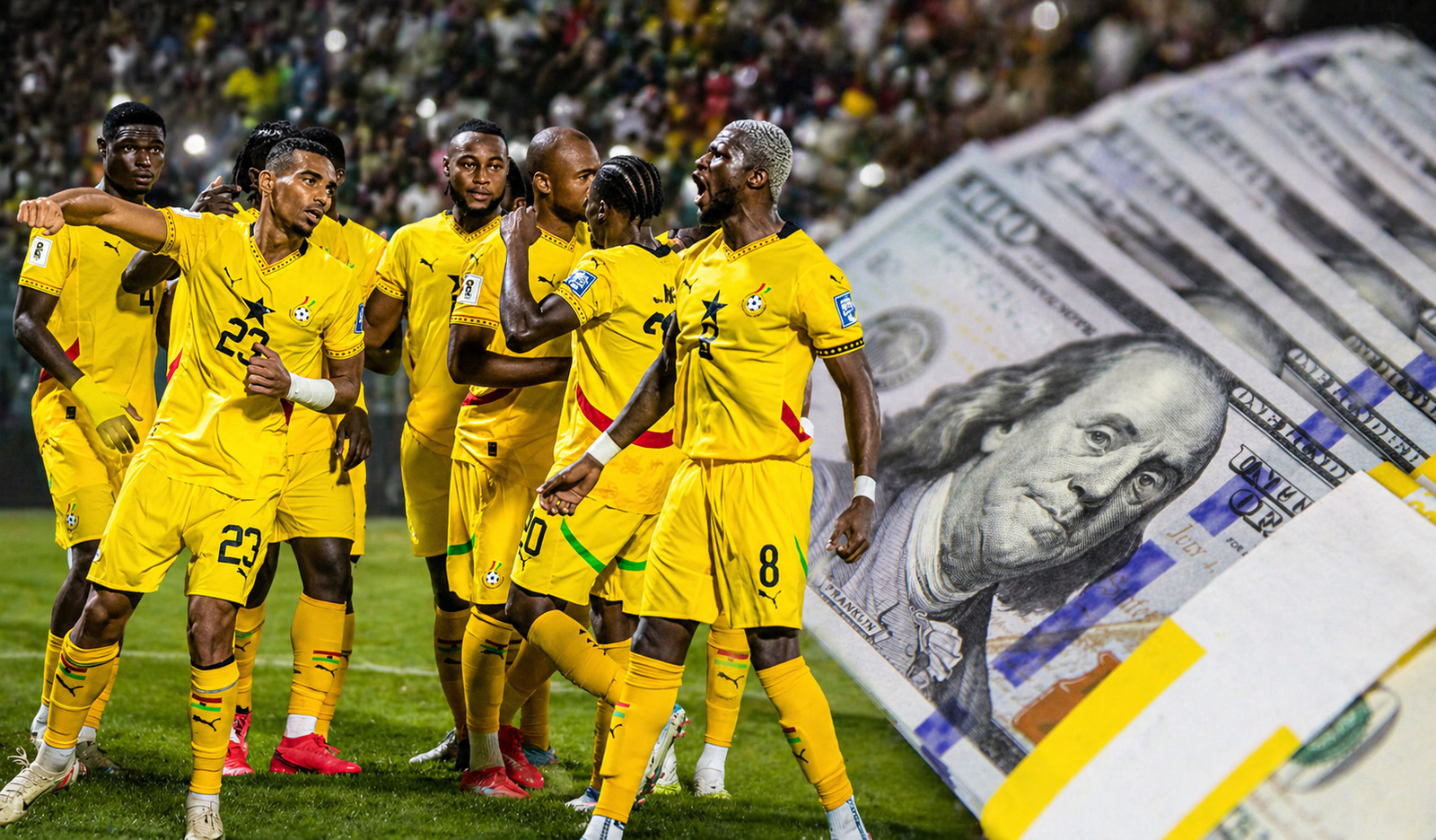
FIFA has changed the financial architecture of international football, and for countries like Ghana, the implications stretch far beyond the pitch.
The governing body has announced a staggering $871 million prize pool for the 2026 FIFA World Cup, a figure that transforms qualification from a sporting achievement into a significant economic event. For Ghana's Black Stars, simply arriving at the tournament guarantees a minimum of $12.5 million. That number, composed of approximately $2.5 million in preparation funding and $10 million for participation, does not yet account for the performance-based bonuses that multiply rapidly with every round survived.
This is no longer just about football prestige. It is about financial leverage.
What $12.5 Million Means for Ghanaian Football
To understand the significance of that guaranteed figure, context is everything.
European football's wealthiest nations operate within financial ecosystems, commercial partnerships, broadcasting revenue, and established infrastructure that insulate them from the peaks and troughs of tournament participation. For Ghana's Football Association, the calculus is different. Operating within tighter budgetary constraints, the kind of immediate, guaranteed income that World Cup qualification now delivers is genuinely transformational.
Twelve and a half million dollars directed purposefully into training facilities, youth academies, scouting networks, and player welfare programmes can reshape the structural foundations of a football association for years beyond the tournament itself. It is not simply money in; it is the seed funding for a more sustainable model. One where talent development is not contingent on a single sponsor or a fortunate draw, but built on recurring, performance-linked investment.
Qualification as a Financial Strategy
The sheer scale of the 2026 prize pool reframes how football federations across the continent must think about World Cup qualification. It is no longer purely a sporting objective; it is a financial target with measurable returns.
For Ghana, consistent qualification every four years represents a reliable revenue cycle. The kind of financial stability that allows long-term planning, reduced dependence on external commercial partners, and stronger negotiating positions when those partnerships are pursued. Federations that qualify regularly are not just better footballing organisations. They are better-run institutions.
This also reshapes the investment logic around preparation. Spending more on coaching infrastructure, competitive exposure, and player welfare is not a luxury for associations chasing this prize pool; it is a rational business decision with a clear return.
The Real Upside: Performance Bonuses
The $12.5 million floor is significant. But the ceiling is where the numbers become genuinely transformative.
As teams progress through the knockout stages, the financial rewards escalate sharply. Advancing to the quarter-finals, semi-finals, or beyond could see Ghana's earnings double or even triple from the baseline figure. The 2026 World Cup operates on a performance-driven financial model that directly rewards competitive investment. Every win in the knockout rounds is simultaneously a sporting achievement and a major economic event.
For players, that structure adds a layer of collective motivation that extends beyond national pride. For the federation, it justifies elevated investment in the preparation cycle. The incentives align in a way they rarely have before.
Beyond Football: The Broader Economic Case
World Cup participation does not begin and end with FIFA prize money. Ghana's presence on the global stage activates a wider set of economic opportunities that are harder to quantify but no less real.
National visibility surges. International sponsorship conversations open at a different level. Foreign investment linked to sports development, infrastructure projects, kit partnerships, and media rights becomes more accessible for a nation whose football programme is seen as competing credibly at the world's biggest tournament. Tourism potential, though indirect, is real for countries whose brand is elevated by World Cup participation.
And then there is the social dimension. The cohesion generated by a nation following its team through a World Cup, the shared experience, the collective pride, carries value that never appears on a balance sheet but shapes a country's sense of itself in ways that outlast the tournament.
A Wider Field, A Sharper Competition
The 2026 edition expands to 48 participating nations, statistically improving Ghana's qualification prospects alongside those of several other African nations with genuine ambitions. But that expanded field also intensifies the competition for places. More slots available means more federations mobilising resources, more emerging football nations treating qualification with the financial seriousness it now demands.
Ghana's advantage lies in experience. The Black Stars carry the history, the infrastructure, and the continental reputation of a programme that has competed at the highest levels of African and world football. But experience alone does not qualify teams. The expanded prize pool demands a strategic response, investment in depth, in scouting, in coaching, and in the sustained development pipeline that turns talented young Ghanaian players into World Cup contributors.
The Bigger Picture
FIFA's decision to set the 2026 prize fund at $871 million is not simply a financial announcement; it is a structural shift in the economics of international football. It reorders the priorities of associations, reshapes the logic of investment, and raises the stakes of qualification for every nation involved.
For Ghana, the road to the 2026 World Cup carries all of its traditional emotional weight, national pride, continental ambition, and the desire to prove the Black Stars belong among the world's best. But it now carries something else too: a multi-million-dollar opportunity to reshape the future of football in the country.
In modern football, the best programmes are built on both performance and financial sustainability. For Ghana, the 2026 World Cup represents a chance to advance on both fronts simultaneously.
The prize pool is set. The opportunity is clear. The only question is whether Ghana will be on the plane to North America when the tournament begins.

Please Login to comment in the post!

you may also like
- by Christian Amegbor
- Feb 11, 2026
Sesko's Late Equalizer Denies West Ham Victor...
- by Christian Amegbor
- Feb 12, 2026
Milner Hits Career Milestone but Brighton's S...

- by Christian Amegbor
- Feb 12, 2026
Ghana Midfielder Thomas Partey Charged With T...
- by Christian Amegbor
- Feb 13, 2026