-
 by Em News
- September 18, 2026
Ghana Teacher Unions Maintain Strike After Fresh Talks End Without Agreement
Update — October 11, 2026: The strike described below was suspended on October 9 after the pre-tertiary teacher unions reached an agreement with the Fair Wages and Salaries Commission, according to the Ghana News Agency. The unions asked members to return to classrooms on Monday, October 12. This article reports the situation at its original publication date. The earlier October 5 report records the preceding stage of talks.
Another round of negotiations has failed to end the nationwide teachers’ strike, with unions insisting that government assurances must be backed by concrete action on promotion arrears, conditions of service and allowances.
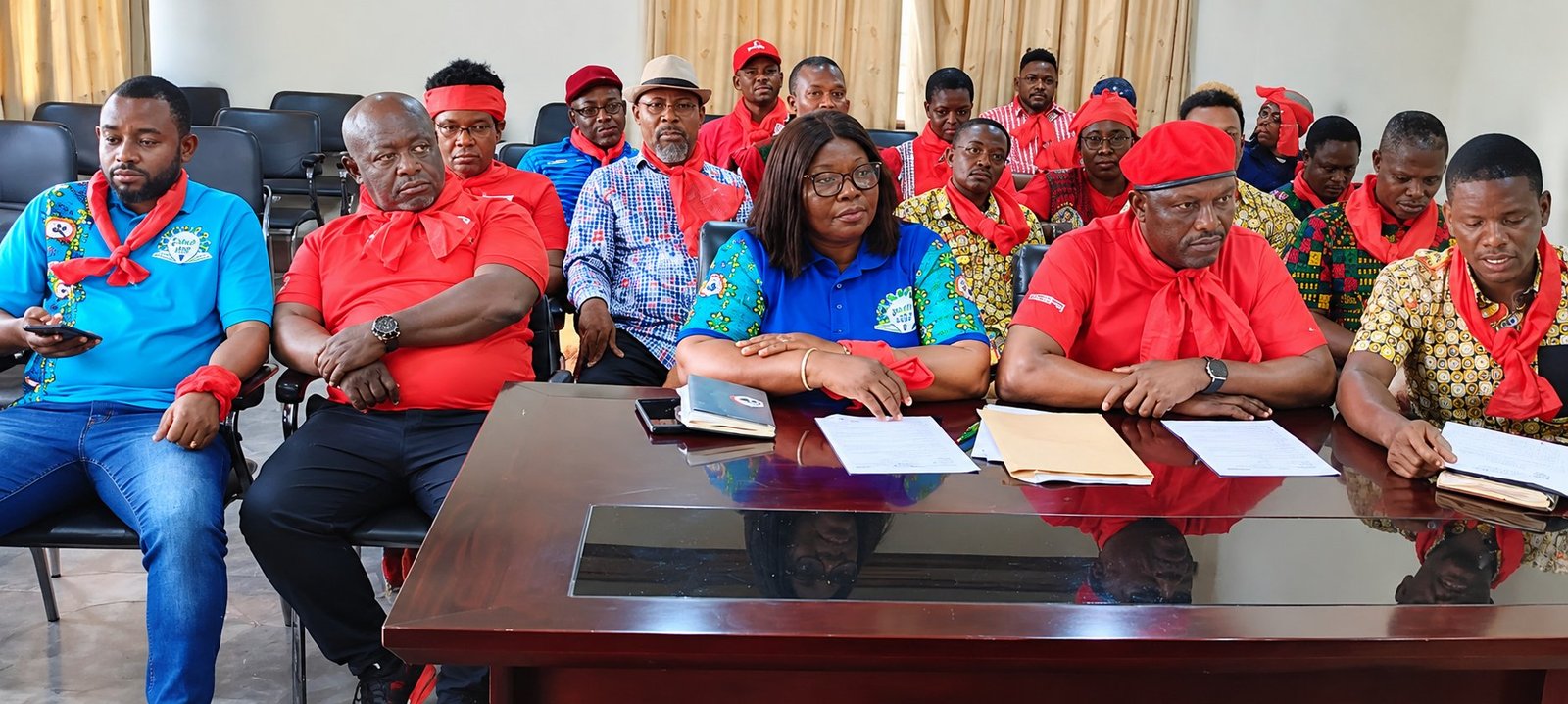
Ghana's nationwide teachers' strike will continue after fresh negotiations between the government and the country's three major pre-tertiary teacher unions ended without an agreement on Tuesday, October 6.
The meeting brought together representatives of the Ghana National Association of Teachers (GNAT), National Association of Graduate Teachers (NAGRAT), Pre-Tertiary Teachers Association of Ghana (PRETAG), Fair Wages and Salaries Commission (FWSC) and the Ghana Education Service (GES).
There had been growing expectations that the talks could provide a breakthrough after days of negotiations and public appeals for teachers to return to the classroom.
That breakthrough did not come.
The unions left the meeting without calling off their industrial action, meaning teachers will remain away from classrooms as discussions with the government continue.
At the heart of the dispute are outstanding promotion-related payments, negotiations over teachers' conditions of service and allowances for educators working in deprived communities.
But behind those specific demands is a deeper disagreement over implementation.
The government says processes are underway to address teachers' concerns. The unions say they have heard assurances before and want to see commitments translated into action.
For students and parents, the result is continued uncertainty over when normal teaching and learning will resume.
Why Ghana's teachers are on strike
GNAT, NAGRAT and PRETAG declared the nationwide strike on September 25 following months of disagreement with the government over what the unions describe as unresolved obligations to teachers.
Although several concerns have been raised, three issues have become central to the dispute.
One involves teachers who successfully passed promotion examinations but have not yet been placed on the appropriate salary grades.
The unions want those teachers placed on their correct salary levels and paid the arrears due to them, including amounts they say have accumulated since January 2026.
The second major concern is the expiration of the collective agreement governing teachers' conditions of service.
Union leaders argue that negotiations for a replacement have dragged on for too long, leaving several employment-related issues unresolved.
The third is the proposed allowance for teachers working in deprived and hard-to-reach communities.
The allowance is intended to improve the conditions of educators serving in areas where attracting and retaining qualified teachers has historically been difficult.
Together, the issues have created a dispute that goes beyond a single payment.
For the unions, it has become a broader question of whether agreements reached with teachers will be implemented within reasonable timelines.
Promotion arrears remain at the centre of the dispute
The payment and salary placement of promoted teachers remains one of the most immediate issues confronting both sides.
Education Minister Haruna Iddrisu has assured teachers that the government accepts its obligation to settle the outstanding amounts and has indicated that affected teachers should receive the necessary adjustments by October 30, 2026.
The Ghana Education Service and other state institutions have been working to compile and validate information on teachers who have been promoted but have not yet been placed on their new salary grades.
That process, however, has not moved quickly enough to satisfy the unions.
Earlier information from the Controller and Accountant-General's Department indicated that only part of the expected data on affected teachers had been submitted for processing, raising questions about whether all eligible teachers could be captured within the government's proposed timeline.
Authorities have since stepped up efforts to complete the validation and payroll processes.
For the unions, however, another deadline is not enough.
They want to see evidence that teachers are actually being placed on the appropriate salary levels and that the arrears owed to them are being processed for payment.
That distinction, between a promise to pay and evidence that payment is being implemented, has become one of the defining issues in the strike.
Unions say the dispute is bigger than arrears
Even if the promotion arrears are resolved, union leaders say that alone will not necessarily end the industrial action.
PRETAG President King Ali Awudu made that position clear following Tuesday's discussions, arguing that several other commitments to teachers remain unresolved.
Among them are concerns surrounding allowances and the broader conditions-of-service negotiations.
The unions therefore do not want the dispute reduced to a question of when promotion arrears will be paid.
Their argument is that teachers went on strike because of a collection of unresolved issues, and any agreement capable of bringing them back to the classroom must address those concerns more comprehensively.
That helps explain why negotiations have proved difficult despite repeated government assurances.
The government has pointed to administrative processes already underway and timelines for implementation.
The unions are asking a different question: when will teachers begin to see the results?
Deprived-area allowance remains unresolved
Another important part of the negotiations concerns the proposed 20% allowance for teachers working in deprived areas.
The policy is intended to provide an additional incentive for teachers who accept postings to communities where living and working conditions can make recruitment and retention difficult.
The government says it remains committed to implementing the allowance.
But before payments can begin, officials say they must determine which schools and communities qualify as deprived and identify the teachers eligible to receive the benefit.
A committee involving relevant state institutions and representatives of the teacher unions has been working on the validation process.
The Government has previously indicated that implementation is expected to begin from January 2027, subject to completion of the necessary validation and the development of an agreed roadmap.
For teachers, however, the allowance is not a new discussion.
Union leaders argue that the issue has remained unresolved for too long and want greater certainty about how and when it will finally be implemented.
That makes the debate about more than the percentage itself.
The key questions are who qualifies, when payments begin, and whether the implementation timetable will be honoured.
Government wants teachers back in classrooms
Despite the absence of an agreement, government officials have continued to appeal to teachers to return to work while negotiations proceed.
Haruna Iddrisu has repeatedly said the government intends to honour its obligations and has urged the unions to reconsider keeping teachers away from classrooms while administrative processes are being completed.
Deputy Education Minister Dr Clement Apaak has made a similar appeal, arguing that negotiations can continue while teaching and learning resume.
From the government's perspective, the two processes do not have to be mutually exclusive: teachers can return to work while negotiations and payment processes continue.
The unions see the situation differently.
Their position is that suspending the strike before meaningful implementation would weaken the pressure that brought the government back to the negotiating table in the first place.
They also point to previous delays as a reason for demanding more than assurances before asking members to return to work.
That leaves both sides facing a difficult question of trust.
Students are paying the immediate price
Away from the negotiating table, the consequences are being felt in schools across the country.
Reports from different regions have pointed to significant disruption since the industrial action began.
Some public schools have recorded little or no classroom activity as teachers comply with the strike directive.
For students, every day without regular lessons adds to the amount of instructional time that may eventually have to be recovered.
For parents, the uncertainty makes it difficult to know how long children will remain out of regular classes and whether the disruption could eventually affect the wider academic calendar.
The consequences can be particularly serious for students preparing for examinations or working through time-sensitive parts of the curriculum.
But the disruption does not stop at the classroom door.
School feeding is also being affected
The strike is also creating consequences for programmes connected to the school system.
The Ministry of Gender, Children and Social Protection has raised concerns about the effect of the industrial action on the Ghana School Feeding Programme.
For some children, particularly those from economically vulnerable households, the meal provided at school is an important part of their daily nutrition.
When schools are not functioning normally, that support can also be interrupted.
The ministry has therefore added its voice to calls for dialogue and an early resolution of the dispute.
It is another reminder that a prolonged teachers' strike has consequences beyond lost classroom hours.
Students, parents, caterers and communities can all feel the effects.
The dispute is increasingly about trust
Tuesday's failure to reach an agreement does not mean negotiations have broken down.
Government representatives and union leaders remain engaged, and discussions are expected to continue.
But each unsuccessful meeting makes the underlying problem more apparent.
The disagreement is no longer simply about whether teachers are owed money or whether certain allowances should be implemented.
Much of the dispute now revolves around confidence in the implementation process.
Government says it has accepted its obligations, established timelines and begun the administrative work required to fulfil them.
The unions want evidence that those timelines will produce actual results.
That is why another promise may not be enough to end the strike.
A breakthrough will likely require a settlement that gives union leaders sufficient confidence to return to their members and recommend a suspension of the industrial action.
What happens next?
Attention now turns to the next stage of negotiations.
The government will be under pressure to demonstrate progress on the validation and payment of promotion arrears while continuing negotiations over the collective agreement and outstanding allowances.
The unions, meanwhile, will have to decide what level of progress would be sufficient for them to reconsider the strike.
For parents and students, those negotiations cannot conclude soon enough.
The longer classrooms remain disrupted, the greater the challenge of recovering lost teaching time and restoring normal academic activities.
There is still room for a negotiated settlement. Both sides remain at the table, and neither has suggested that the outstanding issues are impossible to resolve.
But Tuesday's talks have shown that optimism alone will not reopen Ghana's classrooms.
The government says the machinery for addressing teachers' concerns is already moving.
The unions say they need to see the results of that movement before returning to work.
Until that gap between promises and implementation is closed, Ghana's teachers remain on strike, and students remain caught in the middle.
you may also like


-
by Em News
- September 18, 2026
Rev. Francis Lawer Sackitey Launches Memoir o...

-
by Em News
- September 19, 2026
Global Evangelicals Church Holds Kasoa Zone D...
-
by Em News
- September 19, 2026
GES Warns SHSs Against Turning Away Students...

-
by Em News
- September 19, 2026
0 Comments
Be the first to join the conversation.