-
 by Em News
- September 18, 2026
Ghana Teachers’ Strike: Government Talks Advance as Vice President Calls for Swift Resolution
Update — October 11, 2026: The strike described below was suspended on October 9 after the pre-tertiary teacher unions reached an agreement with the Fair Wages and Salaries Commission, according to the Ghana News Agency. The unions asked members to return to classrooms on Monday, October 12. This article reports the situation at its original publication date. The October 6 follow-up describes the next stage of talks.
Government says negotiations with teacher unions are making progress, but classrooms remain disrupted as teachers wait for firm action on promotion arrears, conditions of service and the deprived-area allowance.
There are growing signs that Ghana's nationwide teachers' strike could be moving towards a resolution, but thousands of teachers remain away from classrooms as their unions wait for government commitments to translate into action.
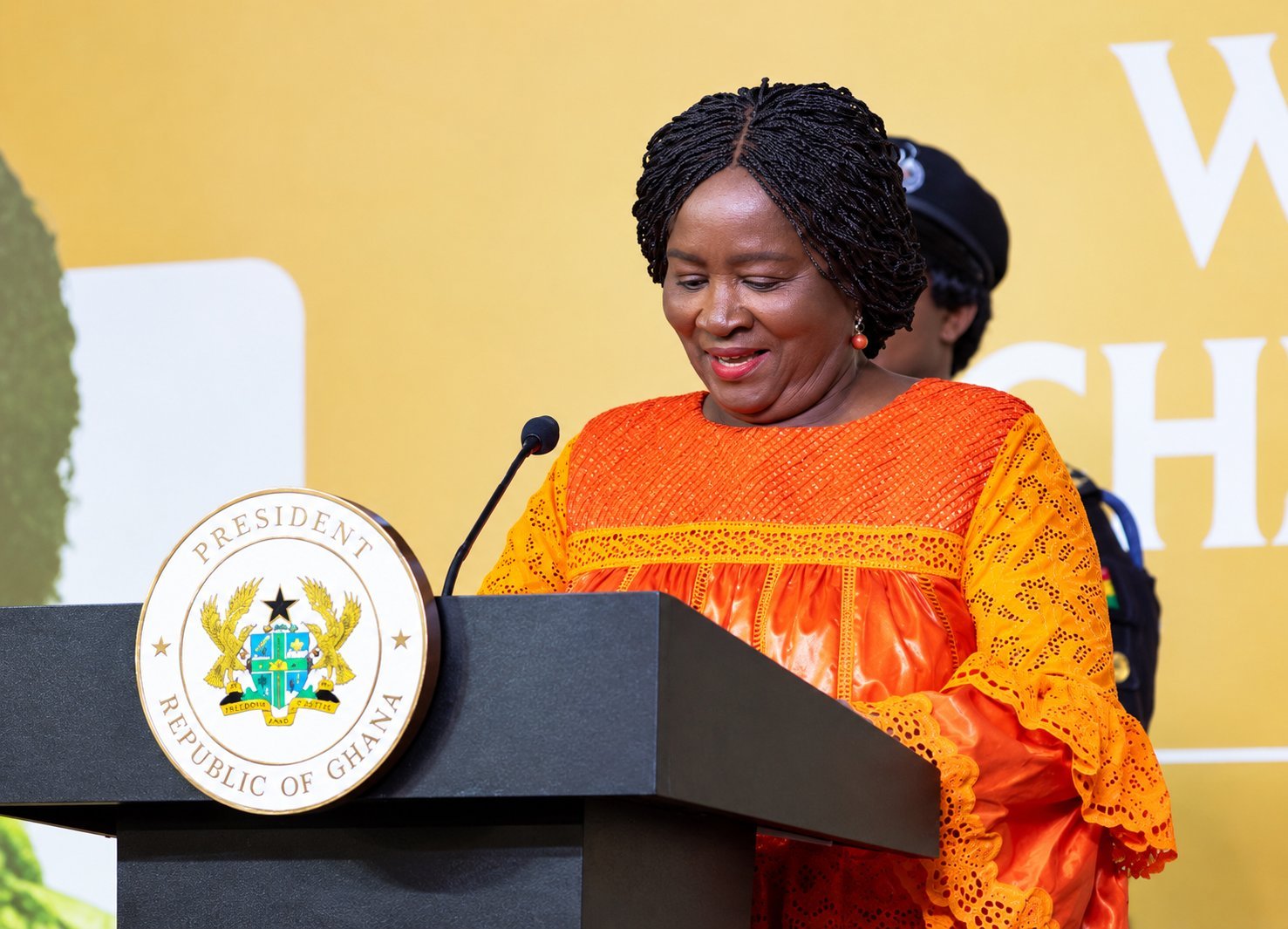
Vice President Professor Jane Naana Opoku-Agyemang says discussions between the government and the striking teacher unions have made encouraging progress, expressing hope that the ongoing negotiations will soon produce an agreement.
She made the remarks on Monday, October 5, during the 2026 Ghana Teacher Prize ceremony in Accra, where outstanding teachers from across the country were recognised for their contribution to education and national development.
Her comments offered a more hopeful assessment of negotiations that have so far failed to end the strike.
The industrial action began on September 25 and involves three major pre-tertiary teacher unions — the Ghana National Association of Teachers (GNAT), National Association of Graduate Teachers (NAGRAT) and Pre-Tertiary Teachers Association of Ghana (PRETAG).
At the centre of the dispute are three major concerns: the placement of promoted teachers on their appropriate salary levels, negotiations for a new collective agreement and the implementation of a 20% deprived-area allowance.
For government, recent meetings represent progress towards resolving those issues.
For the unions, however, assurances alone are not enough.
Government says talks are moving forward
Speaking at the Teacher Prize ceremony, Professor Opoku-Agyemang said the government remained committed to addressing the concerns that pushed teachers to withdraw their services.
She described the engagements with the unions as constructive and expressed optimism that the discussions would lead to an agreement.
The Vice President also stressed that addressing the challenges facing teachers was essential to strengthening Ghana's education system, while reminding teachers of the professional responsibilities that come with their role.
Her comments followed several rounds of discussions involving the unions and government officials.
Education Minister Haruna Iddrisu has also renewed his appeal for teachers to return to the classroom, saying the government is committed to resolving the dispute.
But while the tone from government has become increasingly optimistic, the unions have so far maintained the strike.
That difference captures the central issue in the negotiations: the government is asking for time to implement its commitments, while teachers want evidence that those commitments will actually be fulfilled.
Promotion and salary placement remain major concerns
One of the most immediate grievances involves teachers who have successfully passed promotion examinations but have not been placed on their corresponding salary levels.
The issue has become particularly sensitive because promotion is expected to come with an adjustment in salary.
Teacher unions argue that members who have already satisfied the requirements for promotion should not have to wait indefinitely for the financial benefits attached to their new rank.
The government has given assurances that affected teachers will be placed on the appropriate salary grades and that outstanding adjustments will be addressed.
The process involves validating teacher records through the relevant state agencies before payments can be completed.
But for the unions, the dispute is not simply about administrative processing.
Their position is that teachers who have already earned promotion should receive the salaries and arrears due to them without further unnecessary delays.
That is one reason the strike has continued despite the government's assurances.
The dispute goes beyond promotion arrears
Settling the promotion issue alone may not be enough to bring teachers back to the classroom.
The unions have made it clear that their industrial action involves a broader package of unresolved concerns.
Another major issue is the negotiation of a new Collective Agreement and conditions of service.
The previous agreement has expired, and the unions say negotiations on its replacement have taken longer than expected.
There is also the proposed 20% deprived-area allowance for teachers working in underserved communities.
The allowance is intended to make postings to difficult or underserved areas more attractive and help retain teachers in communities where staffing can be a challenge.
Government has indicated that it remains committed to the allowance, but says a validation exercise must first determine which teachers and communities qualify.
For the unions, however, the important question is when that commitment will move from policy discussions to implementation.
October 6 talks could be critical
Attention now turns to the Fair Wages and Salaries Commission (FWSC), which is scheduled to meet the leadership of the three striking unions on Tuesday, October 6.
The meeting is expected to focus particularly on the unions' conditions of service and collective agreement.
The Education Ministry says the Commission has been given the mandate to engage the unions in an effort to find an acceptable settlement.
That makes the meeting potentially important to the future of the strike.
Previous negotiations have produced proposals but not a final agreement.
A government meeting with the unions on October 2 ended without a conclusive settlement. The government presented proposals on the issues under discussion, but union leaders said they needed time to study them and consult their members before deciding what to do next.
Until that process produces an agreement, the strike remains in force.
Teachers want action, not only promises
The language coming from the unions helps explain why negotiations have been difficult.
Their argument is not necessarily that government has refused to discuss their concerns.
Rather, they say previous commitments have not always been implemented within the expected timelines.
That has created a question of trust.
GNAT General Secretary Thomas Musah has continued to press the government over the payment and salary placement of promoted teachers, arguing that teachers who have completed the required promotion process should receive the appropriate remuneration.
Regional branches of the unions have also publicly backed the industrial action and urged members to remain away from classrooms until their outstanding concerns are satisfactorily addressed.
The government's challenge, therefore, is not only reaching another agreement.
It is convincing teachers that whatever agreement is reached will be implemented.
Students and parents remain caught in the middle
While negotiations continue, the most visible impact of the dispute is being felt in public schools.
The nationwide nature of the strike means the disruption is not confined to one school, district, or region.
Teachers across the pre-tertiary public education system have been affected, disrupting normal teaching and learning.
For parents, every additional day of uncertainty raises questions about lost instructional time and the possible impact on the academic calendar.
Students have even less control over the situation.
They are effectively caught between teachers pressing for what they consider legitimate employment entitlements and a government asking for time to complete administrative and negotiating processes.
The longer the dispute continues, the more difficult it becomes to recover lost classroom time.
That gives both sides an incentive to find a workable settlement.
Government points to wider education reforms
Even as negotiations over the strike continue, the Vice President used the Ghana Teacher Prize ceremony to place the dispute within the government's broader education agenda.
Professor Opoku-Agyemang highlighted investments and reforms aimed at improving teaching and learning, infrastructure and teacher development.
She said more than GH¢33 billion had been allocated to education in the 2026 Budget, covering areas including infrastructure, textbooks, teaching and learning materials and teacher accommodation.
She also highlighted progress in moving schools away from the double-track system, saying 99 schools that previously operated under the arrangement had transitioned to single-track education.
Another change involves teacher promotions.
Under the revised system, professional progression is no longer tied strictly to the availability of administrative vacancies, allowing eligible teachers to advance without waiting for a management position to become available.
But that reform has also increased the number of promotion cases requiring administrative processing and validation, one of the pressures now feeding into the dispute over salary placement.
It illustrates a wider challenge for education policy: reforms announced at the national level ultimately depend on administrative systems being able to implement them efficiently.
What could end the strike?
At this stage, neither side appears to be arguing that the underlying issues cannot be resolved.
The disagreement is increasingly about timing, implementation and confidence.
Government says progress has been made and has outlined processes for addressing promotion-related payments, negotiating conditions of service and implementing the deprived-area allowance.
The unions want those commitments backed by clear timelines and concrete action.
That puts considerable importance on the next round of negotiations.
If the Fair Wages and Salaries Commission and union leaders can narrow their differences over the collective agreement and other outstanding issues, the October 6 meeting could provide a pathway towards ending the industrial action.
If significant disagreements remain, however, teachers could stay away from classrooms for longer.
For students and parents, the hope is that a settlement comes quickly.
For teachers, the issue is about salaries, working conditions and commitments they say have remained unresolved for too long.
And for government, the immediate task is to demonstrate that the progress it says has been made at the negotiating table can produce something more tangible.
The next breakthrough will not simply be another promise or another meeting. It will be an agreement strong enough to convince teachers that it is time to return to the classroom.
you may also like


-
by Em News
- September 18, 2026
Rev. Francis Lawer Sackitey Launches Memoir o...

-
by Em News
- September 19, 2026
Global Evangelicals Church Holds Kasoa Zone D...
-
by Em News
- September 19, 2026
GES Warns SHSs Against Turning Away Students...

-
by Em News
- September 19, 2026
0 Comments
Be the first to join the conversation.