- by Christian Amegbor
- Feb 10, 2026
Loris Karius is from Champions League Nightmare to Bundesliga Promotion, a pure redemption story in football.
- By Christian Amegbor
- May Sun, 2026
- in Sports
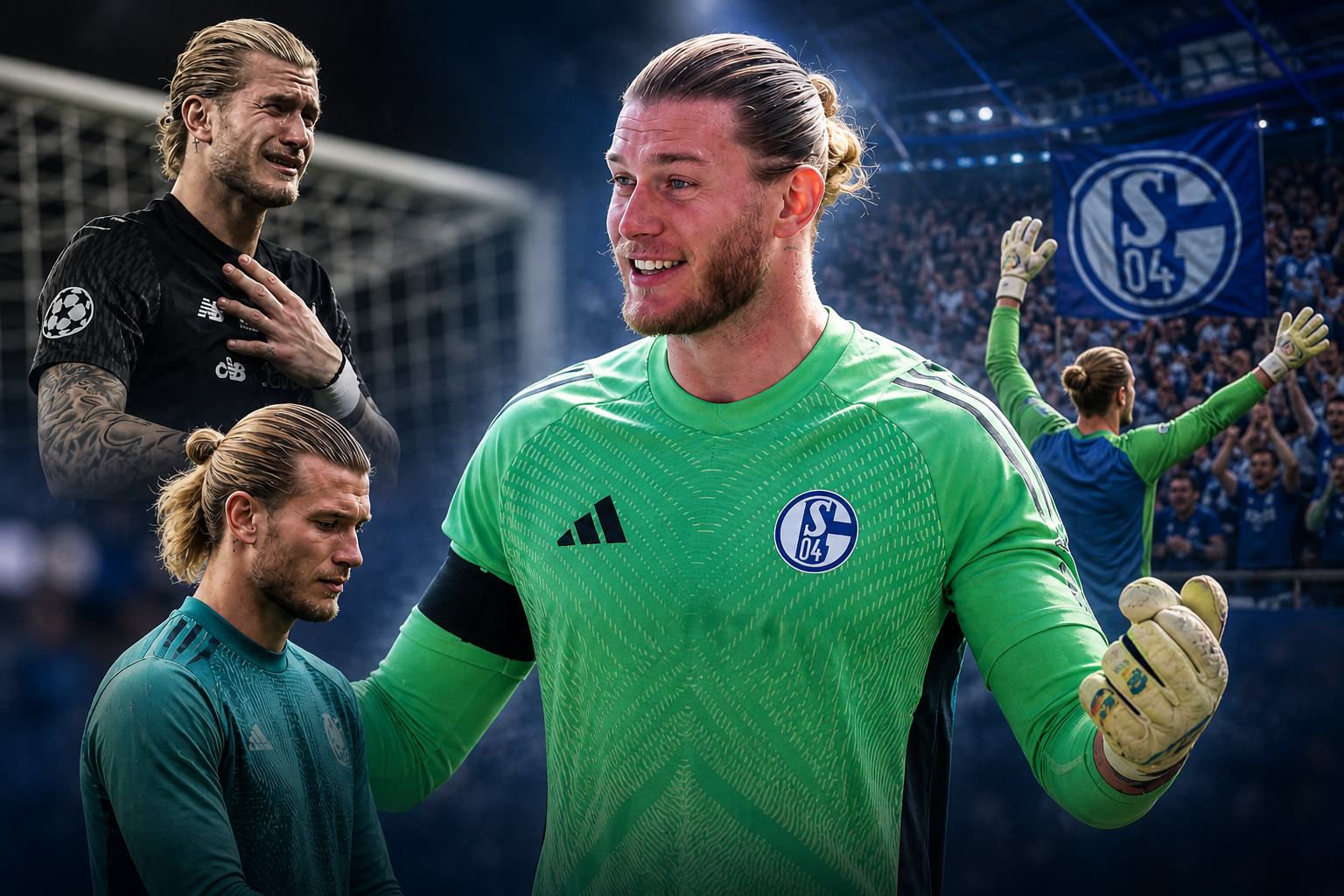
There are moments in football that define a career. And then some moments appear to end one.
For Loris Karius, that moment came on the night of 26 May 2018, in Kyiv, Ukraine, under the floodlights of the UEFA Champions League Final between Liverpool and Real Madrid. Two goalkeeping errors. Two goals were conceded directly as a result. A 3-1 defeat. And a young goalkeeper's career at one of the world's biggest clubs effectively finished in the space of 90 minutes.
What happened next was not a story of swift redemption or quiet recovery. It was something harder, longer, and ultimately far more meaningful than that.
The Night Everything Fell Apart
Karius had arrived at the 2018 Champions League Final as Liverpool's first-choice goalkeeper, part of a squad that had reached the pinnacle of European club football under Jürgen Klopp. The occasion was enormous. The stakes were absolute.
His first error gifted Karim Benzema an opening goal that should never have stood. His second, late in the match, handed Gareth Bale a third. Liverpool lost 3-1. The post-match images of Karius, in tears, inconsolable, apologising directly to Liverpool supporters in the stadium, travelled around the world.
A subsequent medical examination revealed that Karius had been suffering from a concussion sustained during the match following a collision with Sergio Ramos, a detail that added a layer of painful complexity to an already devastating night. But the damage to his career, and to his confidence, had already been done in the most public way imaginable.
Years in the Wilderness
What followed was a period of professional difficulty that tested the limits of his resilience.
Karius left Liverpool and spent years moving between loan spells and short-term contracts, Beşiktaş, Union Berlin, Newcastle United, never quite finding the stability or the form that would allow him to rebuild his reputation at the level his talent once suggested was possible. Between 2021 and 2024, he made just six appearances. Six matches across three years for a goalkeeper who had once been trusted with Liverpool's European campaign.
In 2024, the situation reached its lowest point. Karius found himself without a club for six months, a stretch long enough and difficult enough that he began to seriously consider whether his career was over. Retirement, at 31, felt like a genuine possibility rather than a distant abstraction.
For a player who had experienced the highest and lowest points of European football within the same ninety-minute period, the prospect of walking away quietly, without resolution, without redemption, was the quiet ending that the story seemed to be building toward.
Football, occasionally, refuses to follow the expected script.
Schalke, and the Beginning of Something New
In January 2025, Schalke 04 signed Loris Karius.
It was not a glamorous move. Schalke, one of German football's most storied clubs, were themselves in the middle of its own difficult chapter, rebuilding in the second tier of German football, battling for a return to the Bundesliga they once called home. In that context, a goalkeeper with Karius's history, the errors, the years out of the game, the injury struggles, was a risk as much as an opportunity.
What happened instead was a story that neither the club nor the goalkeeper could have scripted.
Karius rediscovered not just his form but his purpose. Playing with the freedom that comes from having nothing left to lose and everything left to prove, he produced the most consistent performances of his career. Twelve clean sheets across the season. A defensive solidity that gave Schalke the foundation their promotion push required. A goalkeeper, at 32, is playing some of the best football of his professional life.
And when Schalke secured promotion back to the Bundesliga, returning to the top flight after their years away, Karius was at the centre of it. Not as a passenger. Not as a squad player. As a contributor, a performer, and a goalkeeper who had earned his place in the moment.
What This Story Actually Means
It would be easy to frame Karius's redemption purely in football terms, the clean sheets, the promotion, the statistical recovery. But the more important dimension of this story is not tactical. It is human.
Six months without a club. Considering retirement at 31. Years of watching opportunities narrow while the memory of Kyiv refused to fade. The psychological weight of that period is not something that statistics can measure or highlight reels can capture. It was a private battle, fought largely outside the public eye, that required a quality more important than any technical attribute: the refusal to stop.
Karius did not return to football because the path was clear or the opportunity was obvious. He returned because he had not finished. Because the version of himself that walked off the pitch in Kyiv in tears was not the final version. Because, and this matters, he kept going when the easiest and most understandable thing would have been to stop.
Twelve clean sheets and a Bundesliga promotion medal are the football outcomes of that decision. But the decision itself, to sign for Schalke in January 2025, to compete again, to show up, was the real achievement.
The Lesson That Goes Beyond Football
Sport produces redemption stories regularly. It is part of what makes it worth watching. But Karius's particular journey, the scale of the public failure, the length of the wilderness period, and the proximity to giving up entirely give this one a weight that extends beyond the game.
Careers end. Forms dip. Confidence collapses. The gap between who you were and who you are currently being asked to be can feel, in the worst moments, impossible to close. Karius lived that gap for years, publicly, painfully, and without any guarantee that it would ever close.
It closed. At 32. In the second division of German football. In front of crowds who cared more about promotion than about Kyiv.
That is football. That is life. And the only reason it happened is that he never gave up.

Please Login to comment in the post!

you may also like
- by Christian Amegbor
- Feb 11, 2026
Sesko's Late Equalizer Denies West Ham Victor...
- by Christian Amegbor
- Feb 12, 2026
Milner Hits Career Milestone but Brighton's S...
- by Christian Amegbor
- Feb 12, 2026
Ghana Midfielder Thomas Partey Charged With T...
- by Christian Amegbor
- Feb 13, 2026