- by Christian Amegbor
- Feb 10, 2026
Mohamed Salah Reveals How Jürgen Klopp Built Liverpool’s Winning Culture
- By Christian Amegbor
- May Fri, 2026
- in Sports
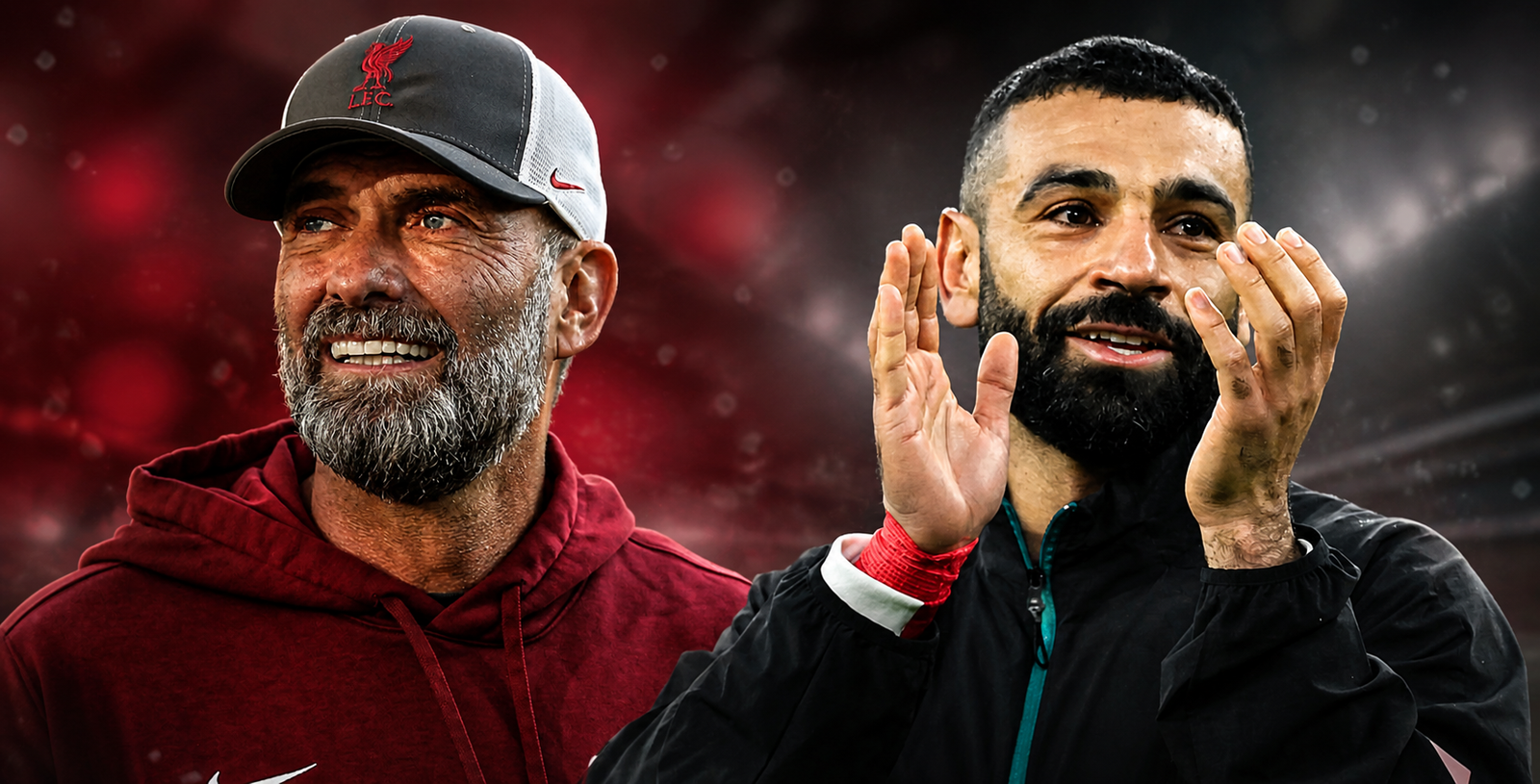
Mohamed Salah has given the most candid account yet of what made Jürgen Klopp's Liverpool dressing room work, and the answer is both simpler and more profound than most people assume.
Speaking about his former manager's influence, Salah did not reach for tactical explanations or statistical achievements. He reached for something more fundamental: the culture Klopp built, the bond he cultivated, and the environment he created in which elite players chose to work rather than being forced to.
Coming from one of the most decorated forwards of his generation, the assessment carries significant weight.
The Hardest Job in Football
Salah was unusually direct about the complexity of managing a squad at the level Liverpool operated under Klopp. "Managing the players is very hard," he said. "Through the years, you understand more with experience that it is not easy at all, managing the player, managing the dressing room, having a team with stars as we had, and still keeping everybody focused and working."
It is a candid acknowledgement from someone who lived inside that environment for years. Dressing rooms filled with international stars, competing egos, and enormous individual ambitions are not naturally harmonious places. The history of elite football is littered with talented squads that fractured under exactly that pressure, teams whose individual quality far exceeded their collective output because the internal culture never held together.
Klopp's Liverpool was the opposite of that. And Salah's explanation of why cuts to the heart of what made it different.
The Bond That Built a Dynasty
The most revealing part of Salah's account was not about Klopp's tactical system or his man-management techniques. It was about something less tangible and more powerful.
"He was lucky that we all wanted to work," Salah said. "He didn't have to force anyone because we really wanted to succeed. We had that bond between us."
The word "lucky" is worth pausing on. Salah uses it with the self-awareness of someone who understands that this kind of collective hunger is not something a manager can manufacture by instruction. But luck alone does not explain it. The conditions in which that hunger thrived, the trust, the communication, the clarity of purpose that Klopp established from his first days at the club, were entirely deliberate.
Great managers do not simply inherit motivated players. They create environments in which motivation becomes the natural state. Klopp's achievement at Liverpool was building a dressing room where players did not need external pressure to give everything, because the internal culture made anything less feel like a betrayal of the group.
That is extraordinarily difficult to do. And it is why so few managers at the elite level manage to sustain it across multiple seasons.
The Vision That Outlasted the Trophies
Salah also shared a specific memory that reveals the depth of Klopp's long-term thinking and why it resonated so deeply with the players around him.
"I remember a conversation we had with Klopp," Salah said. "He told us, 'I want us to come back in 5, 10, or 15 years and look back and say we had a great time together.'"
It is a striking thing for a manager to say to his squad. Not "I want us to win the league" or "I want us to dominate Europe", though those ambitions were present and eventually fulfilled. But a statement rooted in the human experience of the journey itself. A reminder that the relationships, the shared struggle, and the memories being built together were worth more than any individual trophy.
That philosophy shaped how the squad approached their time at the club. Players were not simply contracted employees executing a tactical system; they were participants in something they believed would matter to them long after the final whistle of their last game together.
Two Premier Leagues and a Personal Milestone
Salah's reflection on Klopp's legacy carried a personal dimension that spoke directly to the depth of their relationship. "I was so happy last year that I won the Premier League so I could tell Klopp that I have two Premier Leagues, not one," he said.
The comment is revealing on multiple levels. That Salah's immediate emotional response to a championship victory was the desire to share the news with a manager who had already left the club speaks to the quality of the bond Klopp built. The trophies were personal achievements, but they were also points on a shared journey, milestones in a story that Klopp had invited his players to care about beyond their immediate careers.
For context, Liverpool's Premier League title under Klopp in 2020 ended a thirty-year wait for the club. Salah's second title last season extended that personal chapter, and in his telling, the first person he wanted to tell was the man who first believed they could build something extraordinary together.
What Klopp Got Right That Others Get Wrong
Salah's reflections, taken together, sketch a portrait of a managerial philosophy that modern football pays lip service to but rarely executes with Klopp's consistency.
The balance between discipline and trust is one of the most discussed and least successfully achieved dynamics in elite management. Too much discipline without trust produces compliance without commitment, players who follow instructions but never exceed them. Too much trust without discipline produces talented squads that drift when the pressure increases. Klopp found the equilibrium, a structured system that gave players freedom within it, and a culture of accountability that felt self-imposed rather than externally enforced.
His emotional intelligence was equally important. Managing elite players requires understanding that the psychological demands of performing at the highest level are as real and as significant as the physical ones. Klopp's communication, direct, warm, honest, and consistently grounded in genuine relationships rather than managerial calculation, created the conditions in which players felt seen as people rather than assets.
That distinction matters more than most tactical analyses acknowledge.
The Legacy That Remains
Liverpool as a club has continued to evolve since Klopp's departure, with Arne Slot building his own identity and achieving his own early successes. But the cultural foundation that Klopp constructed, the standards, the expectations, the belief that collective ambition and individual excellence are complementary rather than competing, remains embedded in the club's DNA.
Salah's account is a reminder that the most important thing Klopp built at Liverpool was not a tactical system, a pressing style, or even a trophy cabinet. It was a group of people who genuinely wanted to be great together, and who, years later, still think of each other when the next achievement arrives.
In an era of football defined by financial power, squad depth, and tactical sophistication, Klopp's Liverpool stands as evidence that culture remains the most powerful force in the game. And according to the man who scored more goals for that team than anyone else, it all came down to a bond that nobody had to be forced into.
That is the secret. And now Salah has shared it.

Please Login to comment in the post!

you may also like
- by Christian Amegbor
- Feb 11, 2026
Sesko's Late Equalizer Denies West Ham Victor...

- by Christian Amegbor
- Feb 12, 2026
Milner Hits Career Milestone but Brighton's S...
- by Christian Amegbor
- Feb 12, 2026
Ghana Midfielder Thomas Partey Charged With T...
- by Christian Amegbor
- Feb 13, 2026