- by Christian Amegbor
- Feb 10, 2026
Carrick, Ratcliffe, and the Quiet Work of Rebuilding Manchester United From the Inside Out
- By Christian Amegbor
- Apr Mon, 2026
- in Sports
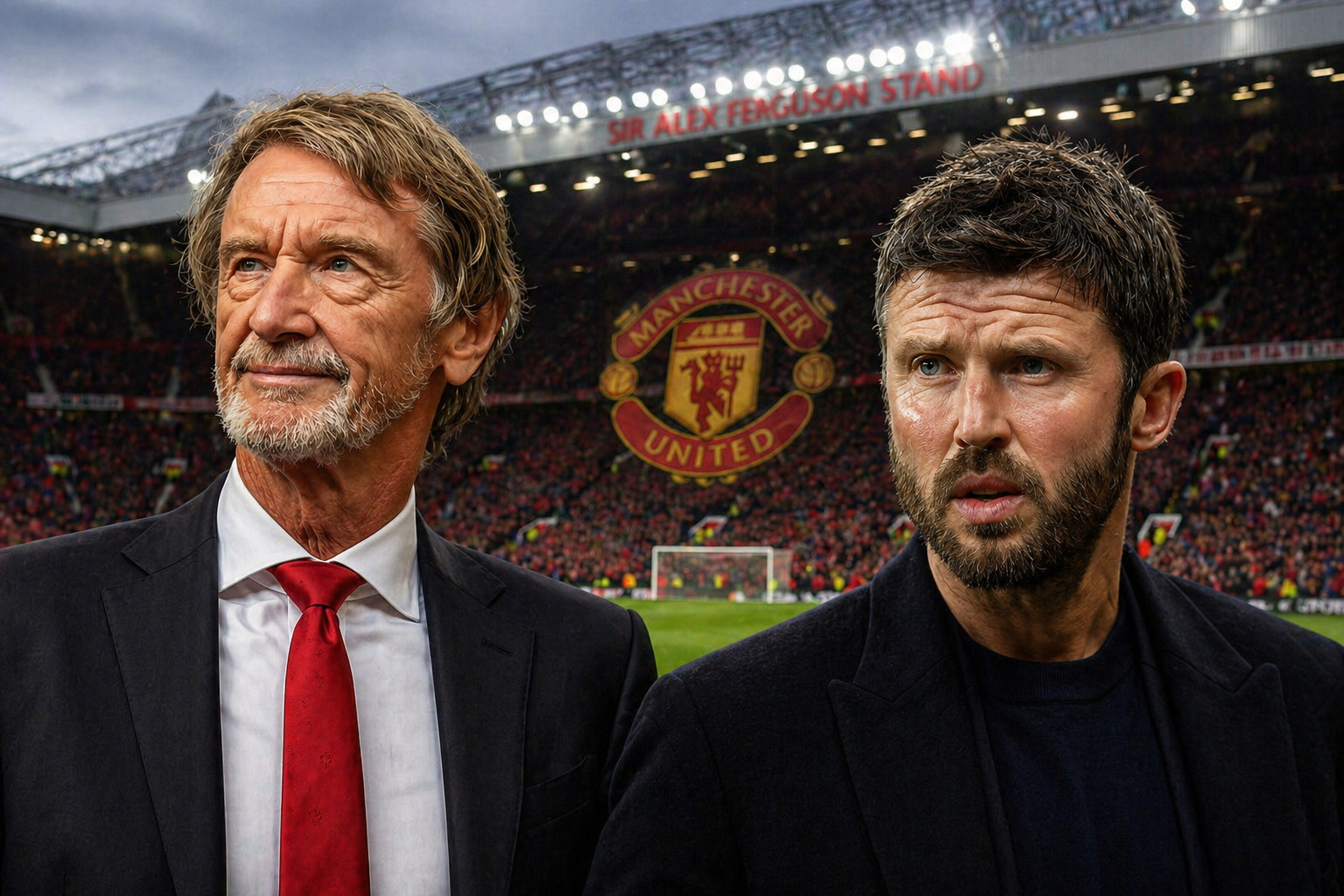
There are grander gestures in football than a cup of tea at a training ground. But sometimes the most telling signals about the direction of a football club are found not in press conferences or transfer announcements, but in the quieter, more human moments, the kind Michael Carrick described when he spoke recently about his meeting with Sir Jim Ratcliffe at Carrington.
"I met with Sir Jim Ratcliffe at Carrington. We had a chat, a cup of tea. It was nice to see him showing his support," Carrick said. The simplicity of the exchange is precisely what makes it worth examining. At a club that has endured years of turbulence, disconnection between ownership and football operations, and a recurring sense that those running the institution from the top did not fully understand or engage with what was happening on the ground, an ownership figure turning up at the training base to sit down with coaching staff carries more meaning than the informality of the occasion might suggest.
Ratcliffe's presence at Carrington, and his willingness to engage directly, personally, and without ceremony, is part of a broader shift in the culture of Manchester United's leadership that has been developing since INEOS took operational control. Whether that shift translates into sustained competitive improvement remains to be seen. But the early signals, at least from those working within the club's structure, appear to be positive.
Unity as a Strategic Asset
Carrick's framing of the meeting went beyond the social pleasantries. He was quick to situate the exchange within a broader principle that he clearly considers fundamental to what elite football clubs must be.
"As a football club, we're hugely connected; it's a big part. I'm really conscious that's how it should be," he said. The emphasis on the connection between ownership, coaching staff, and the wider football operation reflects a philosophy that modern football management has increasingly come to recognise as central to sustained success.
The clubs that perform most consistently over time are rarely those with the largest budgets or the most celebrated individual signings. They are the ones where the lines of communication between board level and training ground are functional and trusted, where the sporting vision held by ownership aligns with the tactical and developmental priorities of the coaching staff, and where players operate within an environment of clarity and collective purpose.
Manchester United, across their most difficult recent seasons, have struggled precisely on those terms. The disconnect between executive decision-making and football operations became a defining characteristic of the club's dysfunction. Carrick's comments suggest that, at least at the level of day-to-day engagement, something is changing, that the walls between the boardroom and the training pitch are becoming more permeable in the right direction.
Whether that cultural shift has been fully embedded or remains a work in progress will only become clear as the season develops and the pressures of top-level competition test its resilience.
The Transfer Window Question
Beyond the cultural observations, Carrick's comments on the summer transfer window provided a specific and somewhat unexpected signal about where Manchester United's recruitment priorities may be pointing.
Centre-back has been one of the most persistently discussed positions in the context of United's rebuild. The defensive record across recent seasons has drawn consistent criticism, and the combination of injuries, inconsistency, and structural uncertainty at the back has made central defence one of the most obvious areas for reinforcement in the eyes of external analysts and supporters alike.
Carrick's response to questions on the subject was notably firm. "It's not an area of concern for me at this moment in time," he stated.
That kind of directness from a senior figure within the club's football structure is worth taking seriously. It suggests either that the current defensive options are meeting internal benchmarks more comfortably than external perception indicates, or that the club's recruitment strategy is being shaped by considerations, positional balance, contract situations, and market availability that are not fully visible from outside Carrington.
It also raises the question of where United's summer investment will be directed if not into central defence. Midfield creativity, attacking depth, and wide options have all been identified at various points as areas where the squad requires strengthening. Carrick's comments imply that the internal hierarchy of need looks different from how it has been characterised in much of the media speculation surrounding the club.
Ratcliffe's Hands-On Approach
The significance of Ratcliffe's visit to Carrington should not be reduced to a symbolic gesture, though the symbolism itself is not trivial. Ownership figures at elite football clubs operate at a level of strategic and financial decision-making that can feel remote from the daily rhythms of training ground life. When those figures make the deliberate choice to engage directly, to show up, sit down, and listen, it communicates something to everyone working within the organisation about what they consider important and how they understand the business they are running.
Ratcliffe has been closely watched since INEOS's investment in Manchester United, with supporters and analysts assessing whether his approach to football club ownership would prove more attuned to the sporting realities of the Premier League than his predecessors. The early evidence, of which Carrick's account forms one small but instructive piece, suggests an ownership that is at least genuinely curious about the operational detail of the football club it now controls.
That curiosity, consistently applied, has the potential to be genuinely valuable. The clubs that have made the most successful transitions under new ownership in recent Premier League history have typically been those where the incoming investors demonstrated not just financial commitment but genuine engagement with the football operation. The cup of tea at Carrington, in that context, matters more than it might appear.
The Road Ahead for Manchester United
Manchester United remains a club in transition, a description that has been accurate for longer than anyone connected to the institution would wish. The rebuilding process under Ratcliffe and INEOS is ongoing, the results on the pitch have been inconsistent, and the gap between current performance levels and the standards this club's history demands has not yet been closed.
But the picture Carrick paints from inside Carrington is one of an institution making deliberate, considered progress on the cultural and structural foundations that competitive success must be built upon. Ownership that shows up. A coaching staff that understands and articulates the importance of collective identity. A recruitment approach that appears to be driven by internal assessment rather than external pressure.
These are not dramatic developments. They will not generate the kind of headlines that transfer signings or managerial appointments produce. But they are the kind of developments that, accumulated over time, determine whether a football club is genuinely rebuilding or merely rearranging.
For Manchester United supporters who have waited a long time for genuine, sustainable progress, the quiet work underway at Carrington, over cups of tea and candid conversations, may ultimately prove more consequential than any single summer-window decision.
Further updates on Manchester United's summer transfer plans and managerial structure are expected as the season concludes.

Please Login to comment in the post!

you may also like
- by Christian Amegbor
- Feb 11, 2026
Sesko's Late Equalizer Denies West Ham Victor...
- by Christian Amegbor
- Feb 12, 2026
Milner Hits Career Milestone but Brighton's S...
- by Christian Amegbor
- Feb 12, 2026
Ghana Midfielder Thomas Partey Charged With T...
- by Christian Amegbor
- Feb 13, 2026