- by Christian Amegbor
- Feb 10, 2026
Mourinho Wants Real Madrid Again; But Does Real Madrid Want the Mourinho of 2025?
- By Christian Amegbor
- Apr Mon, 2026
- in Sports
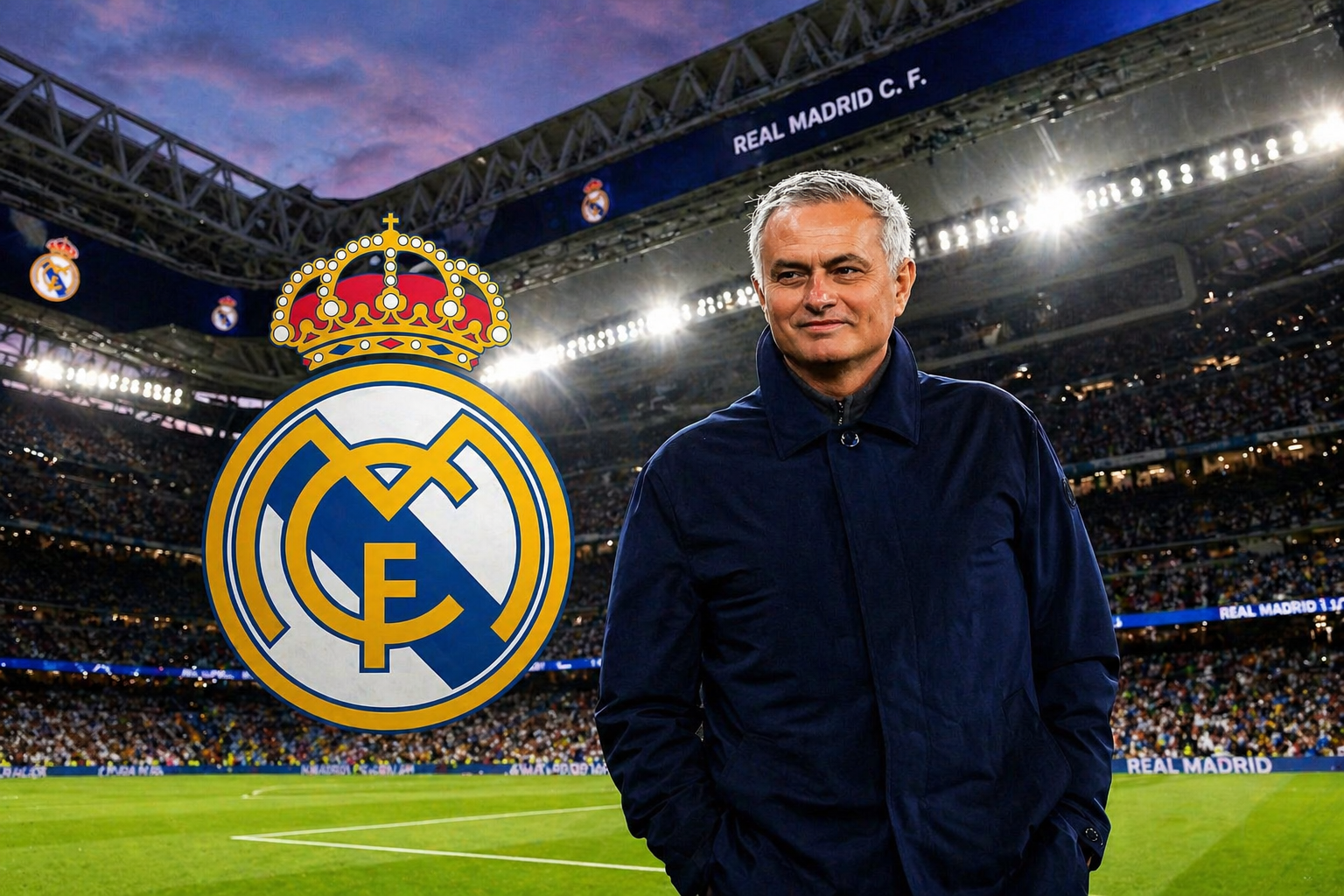
José Mourinho has never been a man who does things quietly, and his reported desire to return to Real Madrid for a second managerial spell is entirely consistent with that reputation. According to reports, the Portuguese coach has privately communicated his interest in coming back to the Santiago Bernabéu, the stadium where, between 2010 and 2013, he won a La Liga title, a Copa del Rey, and generated enough controversy to fill several volumes of football history.
The message has been received by the club. What Real Madrid does with it is the more complicated question.
Madrid is in the process of evaluating their managerial future with the deliberate, unsentimental rigour that has characterised the club's decision-making at key junctures. The decision they reach will define the next chapter of one of football's most scrutinised institutions. Mourinho's interest ensures that the chapter will be written with the whole world watching, regardless of which way it goes.
The Evidence From Benfica
Any serious assessment of Mourinho's candidacy must begin with what he has actually produced since taking charge of Benfica in September 2025, because the numbers, examined honestly, present a genuinely mixed picture.
The statistical headline is positive. Benfica have recorded approximately twenty wins and nine draws in the Primeira Liga, conceding just eighteen goals while scoring more than sixty. A goal difference of plus forty-three reflects a team built on the kind of defensive solidity and attacking efficiency that have always been the hallmarks of Mourinho's best work. His side averages nearly 2.3 points per game, a return that, in most leagues across Europe, would represent a title-winning pace.
The defensive record is particularly notable. Multiple clean sheets across the campaign, a backline that is compact, well-organised, and difficult to break down in transition, these are the fingerprints of a Mourinho team operating to his specific tactical blueprint. The structure is recognisable, the discipline is evident, and the results in individual matches have been consistently strong.
But the full story contains a complication that goes to the heart of the debate around Mourinho's current capabilities and limitations. Benfica has drawn too many matches. Not lost them, drawn them. Against opponents they might reasonably have been expected to defeat, Mourinho's side have repeatedly settled for a point when three were available. The cumulative effect of those dropped points has left Benfica trailing in the title race despite a statistical profile that, on almost every other metric, resembles a championship-winning team.
This paradox, dominant in structure, inconsistent in execution, prolific in draws, is not a new chapter in the Mourinho story. It has appeared before, at different clubs and in different competitions, and it raises a legitimate question about whether something in his approach to the very final phase of matches, the management of games his team is controlling but not yet winning, has calcified in ways that prove costly at the margins.
In European competition, Benfica showed genuine quality in patches but fell short when the stakes were highest. Again, familiar territory.
What Mourinho Would Bring to Madrid
Set the complications aside for a moment, and the affirmative case for Mourinho's return to Real Madrid is a substantial one.
He is, first and foremost, a manager who understands the specific demands of the Santiago Bernabéu in a way that very few coaches in world football do. He has stood in that dugout in the biggest matches European football produces. He has managed dressing rooms containing some of the most demanding and psychologically complex players the sport has ever seen. He has won there, the 2011-12 La Liga title, secured with a record-breaking one hundred points, remains one of the most statistically dominant single-season title wins in the competition's history.
The experience of managing Real Madrid is not transferable through preparation or study. It is acquired only through having done it, and Mourinho has done it. That familiarity with the environment, the expectations, and the specific pressures of the role represents a genuine asset in a position where many highly qualified coaches have discovered that their capabilities in other contexts do not fully translate.
His tactical intelligence remains sharp. At sixty-two, Mourinho continues to demonstrate the capacity to organise a team defensively, to prepare his side specifically for individual opponents, and to manage matches with a strategic patience that younger coaches often lack. His man-management at its best, when he has a settled squad, a clear sense of collective purpose, and the trust of his senior players, remains among the most effective in the game.
And there is the motivational dimension. Mourinho at a club he considers unfinished business, which is precisely how he has framed his relationship with Real Madrid, tends to produce a version of the manager operating with particular edge and focus. The desire to rewrite a narrative, to add a second chapter that surpasses the first, has historically driven some of his most intense and effective work.
The Case Against
The counterargument is equally serious and deserves equal weight.
Real Madrid are not simply searching for a manager who can organise a defence and win individual matches. They are searching for a manager who can define an era — who can build something that sustains excellence across multiple seasons, that develops young talent, and that plays football consistent with the attacking, expansive identity the club's history and fanbase demand.
Mourinho's relationship with that identity has always been complicated. His pragmatism, his defensive foundations, and his willingness to sacrifice aesthetic quality for results produce titles in certain contexts and alienate supporters and players in others. His first spell at Madrid ended in acrimony, with a dressing room fractured, key relationships broken, and a departure that left wounds on both sides that took years to heal.
The question is not whether Mourinho of 2010 could manage Real Madrid. He demonstrably could. The question is whether Mourinho of 2025, older, with a Benfica season that has raised questions about his capacity to convert sustained control into decisive victories, represents the right answer to the specific challenge Madrid faces.
There are other candidates whose profiles more naturally align with what Real Madrid's next era appears to require: coaches with deeper roots in possession-based football, with stronger records of developing and integrating young talent, and without the institutional baggage that inevitably accompanies any Mourinho appointment.
The Decision Madrid Must Make
Real Madrid's choice of next manager is, at its core, a choice about identity. It is a statement about what kind of club they intend to be in the years ahead, what they prioritise, what they are willing to accept, and what kind of football they want played on the pitch that their history demands the most of.
Mourinho's desire to return is genuine, his credentials remain formidable, and his connection to the club is real. But desire and credentials, in isolation, have never been sufficient at the Santiago Bernabéu. The fit between manager and moment is what separates appointments that define eras from appointments that simply fill vacancies.
Whether José Mourinho represents that fit in 2025 is the question Real Madrid's leadership must now answer, and the answer they give will tell us as much about the club's vision for its own future as it does about the manager they ultimately choose.
This story is developing. No official confirmation has been made by Real Madrid or José Mourinho's representatives at the time of publication.

Please Login to comment in the post!

you may also like
- by Christian Amegbor
- Feb 11, 2026
Sesko's Late Equalizer Denies West Ham Victor...
- by Christian Amegbor
- Feb 12, 2026
Milner Hits Career Milestone but Brighton's S...
- by Christian Amegbor
- Feb 12, 2026
Ghana Midfielder Thomas Partey Charged With T...
- by Christian Amegbor
- Feb 13, 2026