- by Christian Amegbor
- Feb 10, 2026
Yellow Cards in the Stands, Three Points on the Pitch as Liverpool's Victory Over Crystal Palace.
- By Christian Amegbor
- Apr Sat, 2026
- in Sports
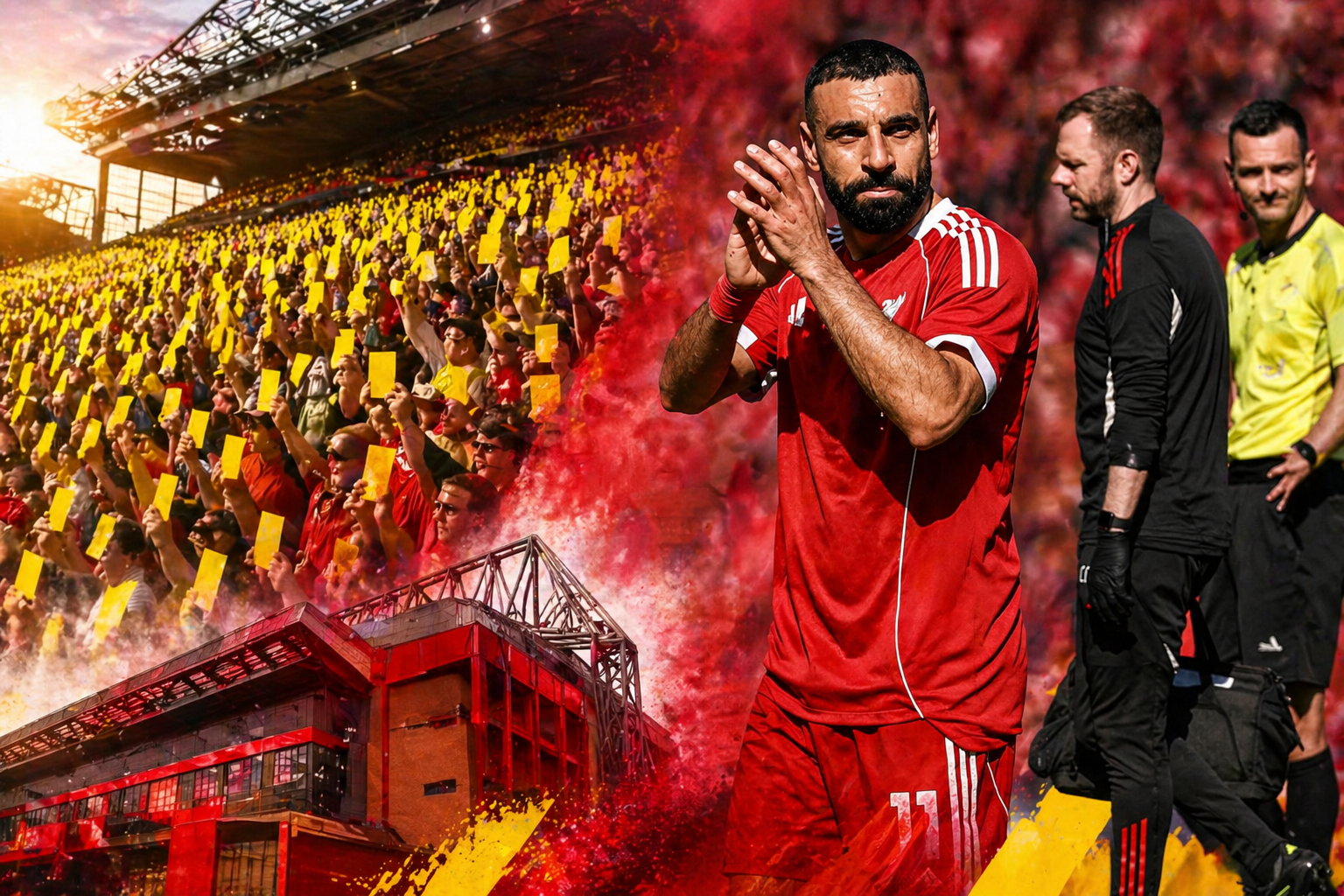
Anfield has witnessed many extraordinary nights across its long and storied history. Nights of European glory, title-clinching celebrations, and comebacks that have passed into football folklore. But the atmosphere generated inside the ground as Liverpool faced Crystal Palace this week carried a different kind of intensity, one directed not at the opposition, but at the club itself.
Liverpool secured a 3-1 Premier League victory, extending their home form and maintaining pressure in the title race. But the result, significant as it was, did not dominate the conversation that followed. What dominated was the image of thousands of supporters raising yellow cards in unison, a coordinated, premeditated protest against ticket pricing that turned one of football's most famous stadiums into a vivid, unmistakable demonstration of fan discontent.
The message from the stands was clear, organised, and impossible to ignore. The question now is whether the people running Liverpool Football Club choose to listen.
The Protest: What Happened and What It Meant
The yellow card demonstration was not a spontaneous expression of frustration. It was a planned, disciplined act of supporter activism, thousands of fans acting in concert to create a visual statement powerful enough to transcend the match itself and reach audiences far beyond Anfield.
Chants of "You greedy bastards, enough is enough" rang around the ground with a fervour that underlined the depth of feeling behind the protest. For the supporters involved, this was not a minor grievance or a fleeting moment of irritation. It was the visible expression of a conviction that has been building steadily: that Liverpool Football Club, in its pursuit of commercial growth and revenue maximisation, is pricing out the very people whose loyalty, passion, and identity are the foundation on which its global reputation was built.
Ticket pricing across the Premier League has become one of the most contentious issues in English football. The gap between what clubs generate in broadcast revenue, commercial partnerships, and global merchandise sales and what they charge their local, loyal supporters to attend matches has widened to a point that many fans find ethically indefensible. At Liverpool, a club whose culture has historically been defined by the relationship between the team and its working-class fanbase, that tension carries particular weight.
The yellow card, chosen deliberately for its symbolic resonance, was the right gesture for the moment. It communicated a warning without causing disruption. It was visible on camera, replicable across social media, and comprehensible to football audiences worldwide who may never have set foot inside Anfield but understand what a booking means. It was a protest designed for the modern media environment, and it worked.
Liverpool's Historic Precedent
This is not the first time Liverpool supporters have used collective action to challenge their club's financial decisions — and crucially, it is not the first time such action has produced results.
In 2016, a significant walkout by fans during a Premier League match against Sunderland directly challenged the club's announcement of ticket prices that would have reached £77 for some categories. The response from ownership was swift and substantial: the pricing structure was reversed, and a cap was introduced. It was one of the most striking examples of fan power producing tangible policy change in the modern era of Premier League football.
The supporters who organised Thursday's yellow card protest will have that history firmly in mind. They know that Liverpool's ownership has demonstrated a capacity to respond to organised, sustained pressure. They also know that the most effective protests are those that maintain public attention and build momentum beyond a single match.
Whether this demonstration proves to be the beginning of a sustained campaign or a powerful but isolated gesture will depend on what happens next, both in terms of the club's response and the supporters' continued organisation.
On the Pitch: Liverpool's Controlled Performance
Amid the political theatre in the stands, Liverpool's players produced a performance of considerable quality that deserves recognition in its own right.
The 3-1 win over Crystal Palace was composed, controlled, and ultimately comfortable — the kind of result that reflects a team operating with confidence and collective clarity. Liverpool managed the key phases of the match effectively, converting their chances with the clinical efficiency that has characterised their best performances this season, while remaining solid enough defensively to limit Crystal Palace's opportunities to threaten meaningfully.
Crystal Palace showed resilience and earned their goal through persistence, but the gap in quality across the ninety minutes was clear. Liverpool's attacking unit created the better chances, their midfield controlled the tempo in the periods that mattered, and the result was rarely in serious doubt once the home side established their rhythm.
Anfield, even amid protest, remains one of the most imposing home environments in English football. The paradox of the evening was that the very passion driving the fan demonstration, the fierce, unconditional commitment of Liverpool supporters to their club, also contributed to the atmosphere that helped the team perform. The two things are not in conflict. They are expressions of the same devotion, directed at different targets.
The Broader Premier League Context
Liverpool's protest did not occur in isolation. It is part of a growing and increasingly vocal movement across English football, supporters at multiple Premier League clubs pushing back against what they describe as the systematic prioritisation of corporate revenue over fan accessibility.
The economics of modern Premier League football have created a structural tension that no amount of commercial success resolves. Broadcast deals generate billions. Shirt sales reach global markets. Stadium naming rights, hospitality packages, and premium seating tiers expand revenue streams year after year. And yet the supporters who fill the lower tiers, who generate the noise that makes these stadiums worth broadcasting, who have supported their clubs through decades of financial and sporting difficulty, are asked to pay more with each passing season.
The argument from clubs, that costs rise, that investment in squads requires revenue, that pricing reflects market demand, is not without logic. But it is an argument that lands differently when directed at communities where attending matches was once a cultural norm accessible to working families, and where it has now become a financial stretch that many can no longer justify.
Liverpool supporters know their power. They have exercised it before with measurable effect. Thursday's yellow card protest was a reminder to FSG and the club's leadership that the fanbase they inherited when they took ownership of this club is not passive, not naive, and not without leverage.
What Liverpool's Leadership Must Now Do
The 3-1 win over Crystal Palace keeps Liverpool competitive at the top of the Premier League. The club's footballing ambitions remain intact. But ambition on the pitch and accountability to supporters off it are not mutually exclusive; they are, or ought to be, part of the same institutional commitment.
Liverpool's ownership now faces a choice that is not really a difficult one, if viewed through the right lens. Engage with the concerns being raised. Open a genuine dialogue with supporter groups. Demonstrate that the club understands what the yellow cards meant and who was holding them.
The supporters raising those cards on Thursday were not enemies of Liverpool Football Club. They were its most committed believers — people who love this club enough to stand in organised protest rather than simply stop attending. That distinction matters. That loyalty deserves a response worthy of it.
Success on the pitch must not come at the expense of the people who built the culture that made the pitch worth playing on.

Please Login to comment in the post!

you may also like
- by Christian Amegbor
- Feb 11, 2026
Sesko's Late Equalizer Denies West Ham Victor...
- by Christian Amegbor
- Feb 12, 2026
Milner Hits Career Milestone but Brighton's S...

- by Christian Amegbor
- Feb 12, 2026
Ghana Midfielder Thomas Partey Charged With T...
- by Christian Amegbor
- Feb 13, 2026