- by Christian Amegbor
- Feb 10, 2026
Real Madrid's Defensive Collapse, a Winless April, and Barcelona at the Door
- By Christian Amegbor
- Apr Sat, 2026
- in Sports
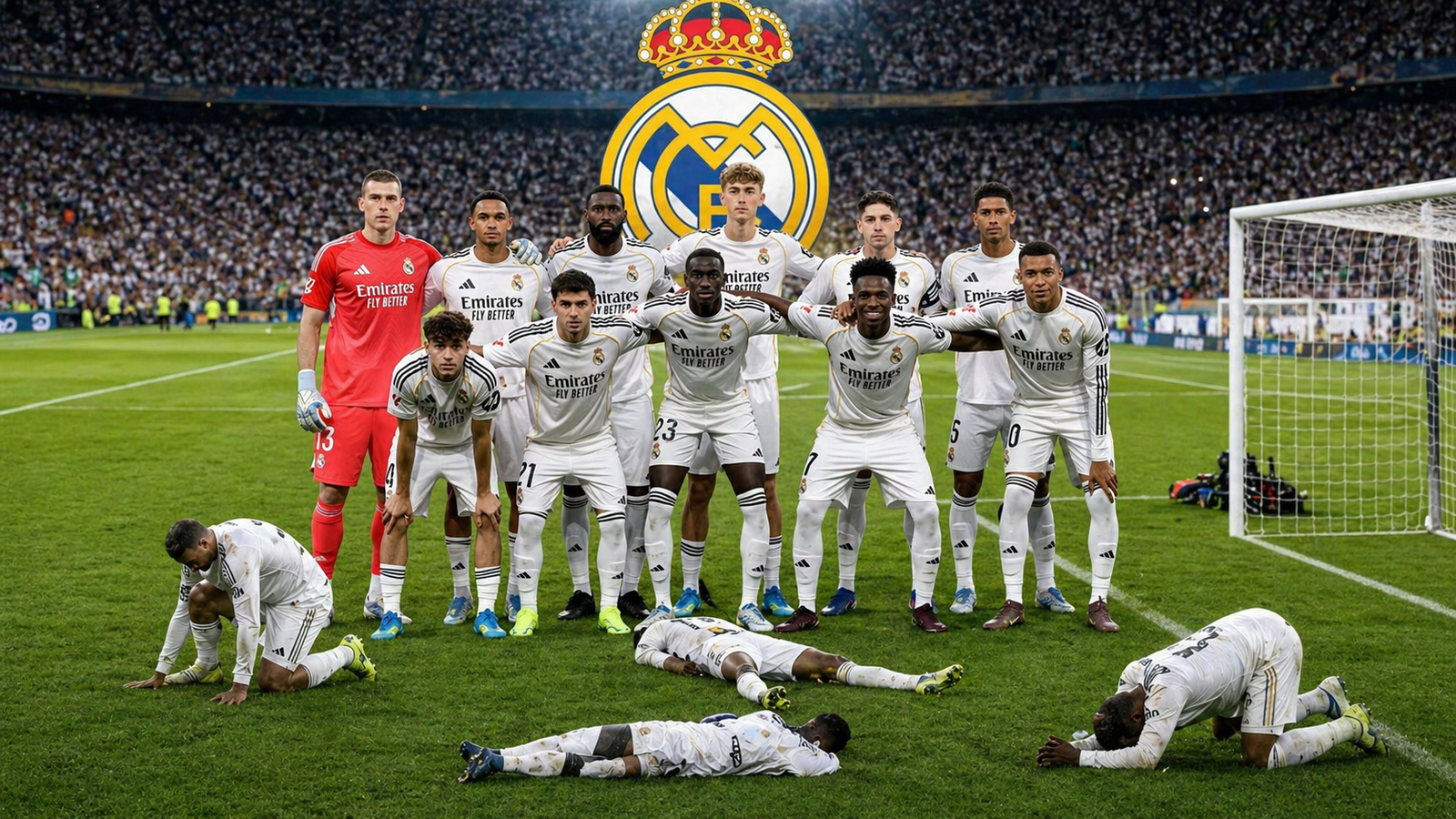
There is a version of this story that could be told with numbers alone. One win in April. No clean sheet since March. Four consecutive seasons without a victory at Real Betis. A title deficit that could reach eleven points by the weekend. Barcelona is potentially lifting the La Liga trophy at the Santiago Bernabéu itself.
The numbers are damning enough. But the full picture of Real Madrid's current crisis is more troubling still, because behind the statistics lies a team that has lost its defensive identity, its tactical cohesion, and, increasingly, the psychological edge that has historically made them the most formidable side in Spanish football when the season reaches its decisive phase.
This is not a minor wobble. This is a structural unravelling, and it is happening at precisely the worst moment on the calendar.
The Defensive Collapse in Numbers and in Practice
Real Madrid's defensive record since March constitutes one of the most alarming statistical sequences produced by a club of their standing in recent La Liga history. The last clean sheet came against Manchester City, a result that, in retrospect, now looks like the final expression of a defensive solidity that has since disintegrated almost entirely.
Across the nine matches that have followed, Madrid's backline has been a recurring source of vulnerability rather than the bedrock of certainty that elite title challenges are built upon. The defensive line has lacked organisation and compactness. Pressing triggers have been poorly coordinated, leaving midfielders exposed and centre-backs isolated. Transitions from attack to defence have been slow and disjointed, creating precisely the kind of space behind that technically proficient opponents consistently exploit.
The assessment delivered by analysts on La Liga TV, that Real Madrid's defending has bordered on an amateur level, rescued only by the heroics of their goalkeeper, was blunt to the point of provocation. It was also, by the evidence available, difficult to meaningfully dispute. When a defence of Madrid's resources and pedigree is being described in those terms by credible observers of the game, something has gone seriously wrong beneath the surface.
The Betis Problem: Four Years and Counting
If the broader defensive collapse represents Madrid's most urgent crisis, their persistent inability to win at Real Betis speaks to something equally concerning, a psychological and tactical block that has now stretched across four consecutive seasons without resolution.
Away fixtures against well-organised, technically confident sides on their own ground have consistently exposed the vulnerabilities in Madrid's current setup. Betis, at the Estadio Benito Villamarín, presents a specific combination of high defensive intensity, compact structure, and fluid attacking transition that Madrid has repeatedly failed to solve.
Four seasons are not a coincidence. It is a pattern, and patterns of this kind, particularly against opponents who are not direct title rivals, suggest that the problem is embedded in how Madrid approaches certain tactical contexts rather than simply a matter of individual error or bad fortune. Opponents and coaches around La Liga will have noticed. The psychological dimension of such a persistent record should not be underestimated either.
Barcelona and the Title Race Reality
The most painful external consequence of Madrid's collapse in form is the opportunity it has handed FC Barcelona. Having occupied a position of genuine vulnerability themselves at various points across the season, Barcelona have steadied, found consistency, and are now on the verge of turning a competitive title race into something approaching a procession.
A Barcelona victory in their next fixture would extend their lead over Real Madrid to eleven points. In a La Liga season with a finite number of matches remaining, an eleven-point gap is not insurmountable in the abstract, but it is, in practical terms, almost certainly decisive. The mathematics would require Madrid to produce a near-perfect run while Barcelona simultaneously collapsed. Neither outcome looks remotely likely given current form.
The scenario that Madrid supporters will find most difficult to contemplate is the one that is simultaneously most plausible: Barcelona securing the La Liga title at El Clásico, on Real Madrid's own ground, in front of their own fans. It would be a moment of profound symbolic and competitive significance, marking not just a Barcelona triumph but a vivid encapsulation of how completely Madrid's season has unravelled in its closing weeks.
The Tactical Diagnosis
Unpacking why this has happened requires looking beyond individual errors to the systemic issues that have made those errors so recurring.
The pressing structure that Madrid deploys has become increasingly predictable and easily bypassed. Opponents who absorb initial pressure and play through the first line of Madrid's press regularly find themselves with significant space to operate in the middle third, space that well-organised teams have repeatedly exploited to create high-quality attacking sequences.
The gap between Madrid's midfield and defensive lines has been particularly pronounced. When possession is lost in the middle of the pitch, which is happening with greater frequency than in previous seasons, the defensive block is slow to recover its shape, leaving central areas congested while wide channels open up. For teams with pace and directness in their attacking unit, that combination represents a straightforward route to goal.
At the back, the coordination between centre-backs has looked uncertain in a way that is uncharacteristic of players of their experience and quality. Whether that uncertainty reflects fatigue, confidence, tactical confusion, or some combination of all three is difficult to determine from outside the training ground. What is observable is the result: a defensive line that too frequently finds itself reacting to situations rather than controlling them.
The Coming Weeks and What They Mean
Real Madrid's remaining fixtures represent both a test and an opportunity. A test, because the quality of the upcoming opposition will expose any continued defensive deficiencies without mercy. An opportunity, because the alternative narrative, a Madrid revival that forces Barcelona to hold their nerve in the final weeks, remains theoretically possible and would represent one of the more compelling finishes to a La Liga season in recent memory.
But possibilities require foundations. And the foundation that Madrid most urgently needs to rebuild, defensive structure, collective organisation, the capacity to keep a clean sheet, is precisely the one that has been most comprehensively eroded across recent weeks.
Carlo Ancelotti and his coaching staff face a challenge that is as much psychological as tactical: restoring belief in a dressing room that has watched a title challenge fade, that has conceded goals it should not have conceded, and that now faces the prospect of watching its greatest rival celebrate on its own pitch.
Whether the response Madrid produces in the weeks ahead reflects the historical character of this club, resilient, proud, capable of raising its level under pressure, or confirms that this season's decline runs deeper than a temporary loss of form, is the question that the coming fixtures will answer.
For now, the crisis is real, the deficit is significant, and the clock is running.

Please Login to comment in the post!

you may also like

- by Christian Amegbor
- Feb 11, 2026
Sesko's Late Equalizer Denies West Ham Victor...

- by Christian Amegbor
- Feb 12, 2026
Milner Hits Career Milestone but Brighton's S...

- by Christian Amegbor
- Feb 12, 2026
Ghana Midfielder Thomas Partey Charged With T...
- by Christian Amegbor
- Feb 13, 2026