-
 by Christian Amegbor
- September 18, 2026
Mahama Visits Flood-Hit Hohoe as Thousands Struggle to Rebuild Their Lives
-
By
Christian Amegbor
- October 2, 2026
- in News
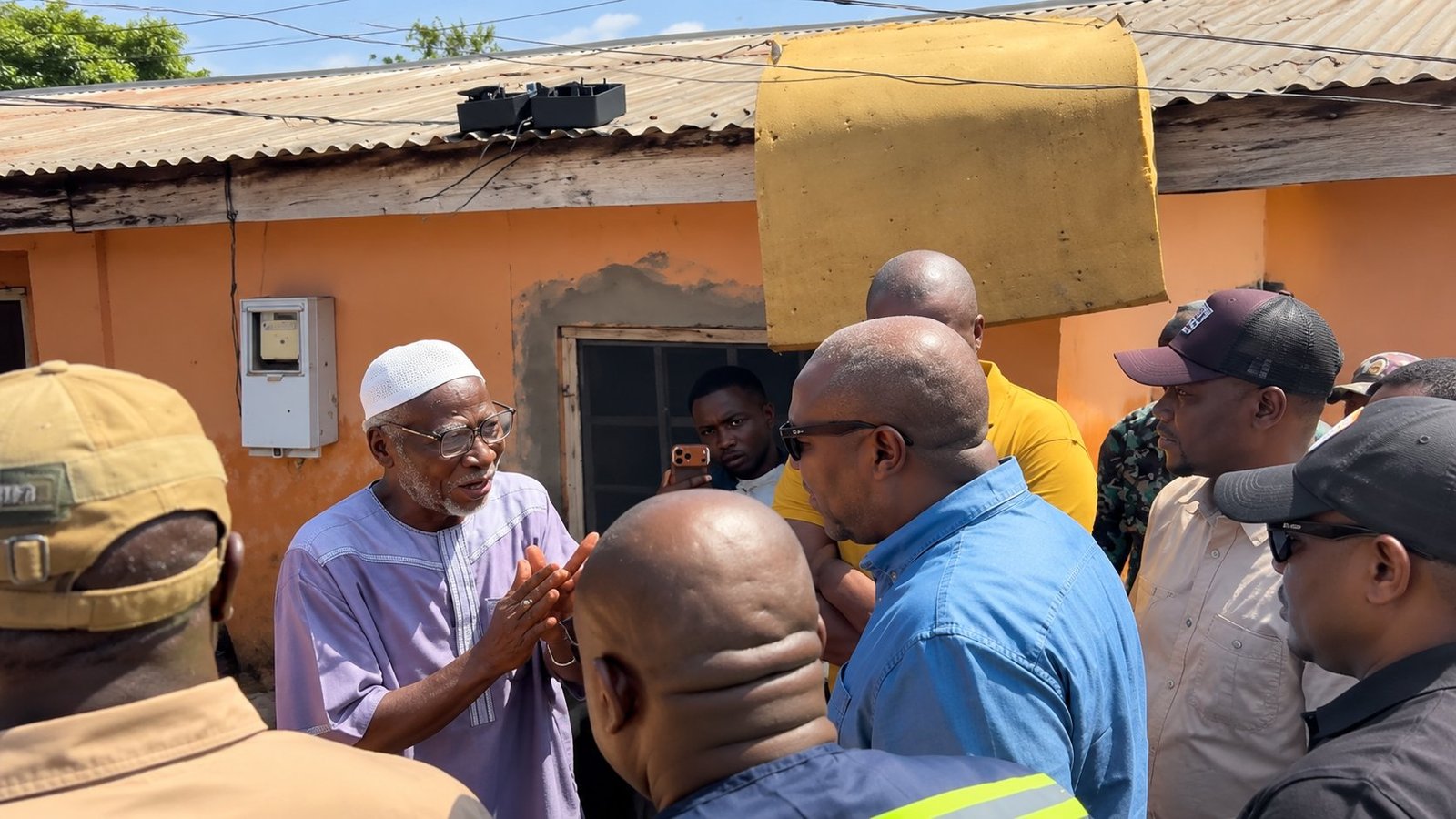
President announces support for affected families as government intensifies relief efforts following devastating floods in the Volta Region
President John Dramani Mahama has visited flood-hit communities in Hohoe in the Volta Region, where thousands of residents are struggling to recover after days of heavy rainfall left homes inundated, property destroyed, and livelihoods disrupted.
The President arrived in Hohoe on Friday, October 2, to see the destruction firsthand and meet some of the families affected by the disaster.
During the visit, he presented relief supplies and assured residents that the government would support recovery efforts, particularly families whose homes had been destroyed or badly damaged.
The flooding followed sustained heavy rainfall that caused the River Dayi to overflow its banks, sending water into several low-lying communities across the Hohoe Municipality.
Hohoe Zongo was among the areas hardest hit.
For many residents, the floods left behind more than damaged buildings. Families have lost household belongings, businesses have been disrupted, and some residents have been forced to seek temporary shelter after their homes became unsafe.
Preliminary assessments indicate that more than 5,000 people have been displaced, although the exact number continues to change as emergency officials assess the affected communities.
Thousands forced from their homes
The scale of the destruction has placed significant pressure on local authorities and emergency response agencies.
Figures attributed to the National Disaster Management Organisation (NADMO) and reported by Citi Newsroom indicated that about 5,140 people had been displaced, with 412 houses affected across 11 communities.
A separate assessment reported by the Daily Graphic put the number of displaced people at about 5,336 across 10 communities.
NADMO also reported that 4,218 households had been affected, while farms suffered damage and about 500 poultry birds were lost.
The differences in the preliminary figures reflect the continuing nature of the assessment as officials move through affected communities to establish the full extent of the damage.
Some residents have taken shelter in classrooms and other temporary facilities as they wait to determine whether their homes are safe enough to return to.
Authorities have cautioned displaced families against moving back into damaged buildings until structural assessments have been completed.
For families who escaped with little more than the clothes and belongings they could carry, attention has now shifted from surviving the floods to rebuilding what was lost.
Mahama announces support for rebuilding homes
During his tour of the affected areas, President Mahama announced additional support for families whose houses were destroyed or severely damaged.
He disclosed that the owner of Dzata Cement had pledged 5,000 bags of cement towards reconstruction efforts in the municipality.
The donation is expected to help affected families repair and rebuild damaged homes as recovery efforts gather pace.
The President also presented relief items, including food, bedding, roofing materials and other essential supplies.
He directed the Member of Parliament for Hohoe, the Municipal Chief Executive and Volta Regional Minister James Gunu to supervise the distribution of the items and ensure that assistance reaches residents who were directly affected by the floods.
Mahama also conveyed sympathies from First Lady Lordina Mahama to the victims, acknowledging the difficult circumstances confronting families who have lost homes and property.
The immediate challenge for authorities will be ensuring that relief reaches affected households quickly and equitably, particularly residents who remain displaced.
A disaster that has disrupted livelihoods
Beyond the damage to houses, the floods have dealt a serious economic blow to communities in the municipality.
Farms have been affected, household property destroyed and small businesses disrupted, leaving some residents uncertain about how quickly they will be able to return to normal life.
For households that depend on farming, petty trading and other small-scale economic activities, the losses could extend well beyond the period when the floodwaters recede.
Recovery will therefore involve more than repairing damaged buildings.
Families will need food and temporary shelter in the short term, while others may require assistance to restart businesses, restore farms and replace essential household items lost in the floods.
Health and sanitation are also likely to remain important concerns, particularly in communities where floodwater may have contaminated water sources or left stagnant pools behind.
Floods renew calls for lasting solutions
While emergency relief remains the immediate priority, the disaster has once again raised questions about Hohoe's vulnerability to flooding and what can be done to prevent another crisis of this scale.
Volta Regional Minister James Gunu has called for the dredging of rivers and the expansion of culverts to improve the movement of water through flood-prone communities.
Traditional authorities have also raised concerns about the dumping of waste into the River Dayi and called for stronger enforcement of planning and building regulations.
These concerns point to a combination of environmental and infrastructure challenges that could leave communities increasingly exposed during periods of intense rainfall.
President Mahama also drew attention to changing weather patterns, saying the effects of climate change were contributing to increasingly unpredictable and extreme weather conditions.
He said rainfall in neighbouring Togo had also contributed to rising water levels in the River Dayi before floodwaters spread into low-lying parts of Hohoe.
Recovery begins, but the road ahead is long
As emergency teams continue their assessments, government agencies and local authorities are coordinating the distribution of relief supplies, health interventions and inspections of damaged buildings.
For residents, however, recovery will take time.
The floodwaters may recede, but replacing destroyed property, repairing homes and rebuilding sources of income could take weeks or months for some families.
President Mahama's visit has brought national attention to their immediate needs, but it has also highlighted a larger challenge facing Hohoe: how to reduce the risk of communities repeatedly suffering the same devastation when rivers overflow and heavy rains return.
In the short term, displaced families need shelter, food and help rebuilding their homes.
In the longer term, the disaster has strengthened calls for investment in drainage, dredging, proper waste management, enforcement of planning regulations and other measures that could make vulnerable communities more resilient.
For thousands of residents affected by the floods, those longer-term interventions will matter.
But for now, the priority is much simpler, finding somewhere safe to stay, recovering what remains, and beginning the difficult task of rebuilding their lives.
Please Login to comment in the post!

you may also like


-
by Christian Amegbor
- September 18, 2026
Rev. Francis Lawer Sackitey Launches Memoir o...
-
by Christian Amegbor
- September 19, 2026
Global Evangelicals Church Holds Kasoa Zone D...
-
by Christian Amegbor
- September 19, 2026
GES Warns SHSs Against Turning Away Students...

-
by Christian Amegbor
- September 19, 2026