-
 by Christian Amegbor
- September 8, 2026
Ghana’s New Mining Bill: What Could Change for Mining Companies and the State
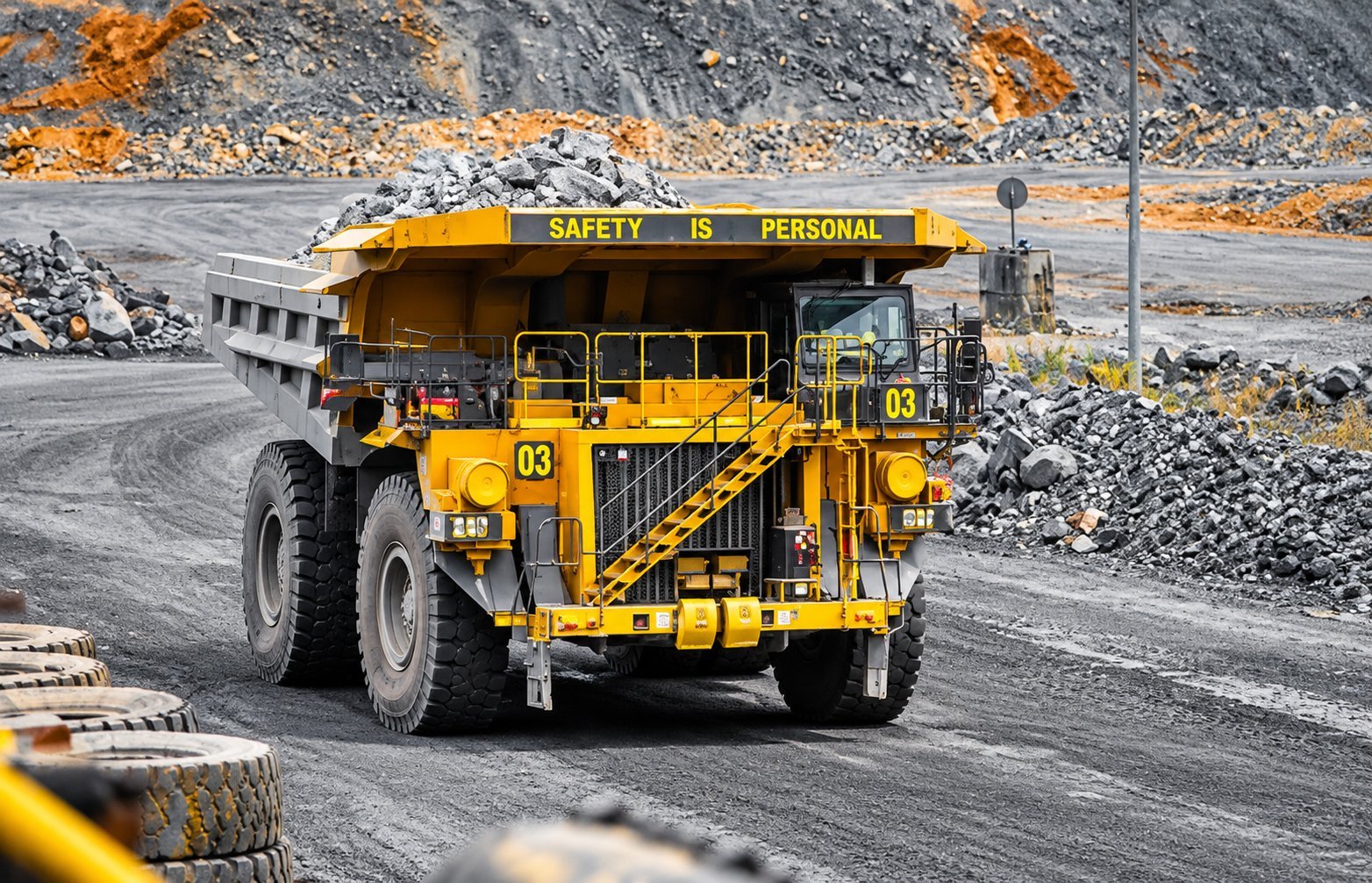
Proposed reforms could give the government greater influence over strategic mining decisions, shorten lease periods and push more mineral processing into Ghana.
Ghana is preparing for one of the most significant changes to its mining laws in two decades, with proposed legislation that could reshape the relationship between the state and companies operating in the country's mineral sector.
The Minerals and Mining Bill, 2026, currently before Parliament, seeks to replace the Minerals and Mining Act, 2006 (Act 703), the main legislation governing Ghana's mining industry for the past 20 years.
Parliamentary records show that the bill was laid before the House on May 26, 2026. The government says the review is intended to strengthen regulation, increase Ghanaian participation in the industry and ensure that the country retains more value from its mineral resources.
For mining companies, however, the proposed reforms could introduce important changes to how projects are structured, financed and operated.
Among the provisions attracting the most attention are proposals for a special state share in certain mining companies, shorter mining leases and stronger government powers to require minerals to be processed locally.
Together, the measures point to a broader shift in Ghana's mining policy: from focusing primarily on mineral extraction and exports to securing greater domestic economic value from the industry.
A special share could give the state greater influence
One of the most consequential proposals is the introduction of a special share that the government could require certain mining companies to issue to the state at no cost.
According to a draft of the bill reviewed by Reuters, the special share could give the government consent or veto rights over specific major corporate decisions.
These could include the transfer of mining leases, the disposal of significant company assets and the voluntary liquidation of a mining company.
The provision is significant because it would operate alongside Ghana's existing 10% free-carried interest in mining projects.
The free-carried interest gives the state an economic stake in mining operations without requiring it to contribute capital for that share. The proposed special share would serve a different purpose, potentially giving the government additional influence over decisions considered strategically important.
Companies required to issue the special share could also face financial penalties if they fail to comply within the prescribed period.
If approved in its current form, the provision could therefore alter the balance between private ownership, investor control and government oversight in Ghana's mining industry.
Mining leases could be reduced to 15 years
Another major proposal concerns the duration of mining leases.
Under the draft legislation, a mining lease could be granted for 15 years or the projected life of the mine, whichever is shorter.
That would represent a substantial departure from the existing framework, under which mining leases can extend for considerably longer periods, including terms of up to 30 years.
For mining companies, lease duration is more than an administrative issue.
Large-scale mining projects can require significant upfront investment in exploration, infrastructure, equipment, processing facilities and community development before commercial production reaches its full potential.
Shorter lease periods could therefore become an important consideration when companies assess project economics, financing requirements and expected returns on long-term investments.
Much will depend on the final wording of the legislation, including provisions governing lease renewals and the conditions companies would have to satisfy to continue operating beyond an initial term.
Parliament could also amend the proposal as the bill moves through the legislative process.
Ghana wants more minerals processed at home
The bill also places greater emphasis on domestic mineral processing.
Under the proposed framework, the government would have greater authority to require specified minerals to undergo processing in Ghana rather than being exported in raw or minimally processed form.
The legislation could also provide the foundation for future restrictions on exports of certain unprocessed mineral concentrates.
The policy reflects a wider concern that Ghana has historically captured only part of the economic value generated by its mineral resources.
Mining creates export earnings, taxes, royalties and employment, but additional value can be generated further along the supply chain through refining, processing, manufacturing, logistics and other supporting industries.
Keeping more of those activities in Ghana could potentially create additional jobs, expand the domestic industrial base and generate new opportunities for Ghanaian businesses.
President John Mahama has reinforced that direction by reiterating the government's intention to end the export of raw mineral ore by 2030 and calling on mining companies to prepare for increased domestic processing.
The challenge will be ensuring that Ghana develops the infrastructure, energy capacity, investment environment and technical expertise needed to make large-scale local processing commercially viable.
Why Ghana is rewriting its mining law
Mining remains one of the pillars of Ghana's economy.
The country is Africa's leading gold producer, and gold continues to play a major role in export earnings, foreign-exchange inflows, employment and government revenue.
That economic importance has also intensified debate over whether Ghana receives enough long-term value from the extraction of its natural resources.
The new Minerals and Mining Bill forms part of a broader government effort to address that question.
The Ministry of Lands and Natural Resources has said the review of the 2006 mining legislation is intended to strengthen regulation and reposition the sector so that Ghana's mineral wealth contributes more effectively to national development.
The government is also pursuing reforms around local content and procurement, with the aim of increasing the participation of Ghanaian-owned businesses across the mining value chain.
Taken together, the policies suggest that the government wants to move beyond measuring the industry's success primarily through production and export volumes.
The focus is increasingly on how much economic activity remains in Ghana after minerals are extracted.
Mining companies are watching closely
The proposed reforms have inevitably attracted attention from mining companies and industry representatives.
The Ghana Chamber of Mines has repeatedly emphasised the importance of regulatory certainty and a predictable fiscal environment in maintaining Ghana's competitiveness as a mining destination.
Mining projects typically involve substantial capital commitments and long investment horizons. Companies therefore place considerable weight on taxation, licensing conditions and regulatory stability when deciding where to invest.
In June, the Chamber called for the eventual removal of the Growth and Sustainability Levy imposed on mining companies, arguing that reducing the fiscal burden would help improve competitiveness and encourage investment.
The government had already reduced the levy to 1% in 2026 and indicated that it would be phased out by 2028.
The new mining bill adds another dimension to that discussion.
Reuters reported that industry representatives had raised concerns about consultation surrounding some of the proposed provisions and were preparing to seek changes as the bill moves through Parliament.
The debate is therefore likely to centre on finding a balance between two objectives: ensuring Ghana receives greater value from its mineral wealth while maintaining an investment environment capable of attracting the capital needed to develop new mines and sustain existing operations.
What the reforms could mean for Ghana
If Parliament approves the legislation broadly in its current direction, the state could emerge with considerably stronger tools to influence the development of Ghana's mineral resources.
For the government, the changes could provide greater oversight of strategic transactions and more leverage in determining how minerals are developed, processed and ultimately exported.
For mining companies, the reforms could mean additional compliance requirements, closer government involvement in major corporate decisions and a need to reassess long-term investment planning.
For Ghanaian businesses and workers, meanwhile, stronger local-content and processing requirements could create opportunities if more of the industry's supply chain is brought into the domestic economy.
But legislation alone will not guarantee those outcomes.
Requiring minerals to be processed locally, for example, will deliver limited benefits if Ghana lacks sufficient processing capacity, reliable energy, competitive infrastructure or investors willing to finance the necessary facilities.
Likewise, greater state influence over mining companies will only produce stronger economic outcomes if regulatory decisions remain transparent, predictable and commercially credible.
Implementation will therefore be just as important as the legislation itself.
Parliament will determine how far the reforms go
The Minerals and Mining Bill is not yet law.
It must pass through Parliament, where lawmakers can scrutinise individual provisions, consider submissions from industry and other stakeholders, introduce amendments and debate the wider economic implications before giving final approval.
That process will be closely watched by mining companies, investors, workers, local communities and Ghanaian businesses whose livelihoods are connected to the sector.
What is already clear is that Ghana is reconsidering the fundamental terms under which one of its most valuable natural resources is developed.
For years, much of the mining debate has centred on how much gold and other minerals Ghana can produce and export.
The emerging question is more complex: how much of the wealth created from those resources should remain in Ghana, and how much influence should the state have over the companies responsible for extracting them?
The Minerals and Mining Bill, 2026 is the government's attempt to provide a new legal framework for answering those questions.
How Parliament ultimately reshapes the bill will determine whether the reforms become a major turning point for Ghana's mining industry, or a more measured adjustment to the system that has governed the sector for the past two decades.

Please Login to comment in the post!

you may also like


-
by Christian Amegbor
- September 18, 2026
Central Regional Minister Mourns New Winneba...
-
by Christian Amegbor
- September 19, 2026
Foreign Affairs Ministry Submits 200-Page Rep...

-
by Christian Amegbor
- September 19, 2026
Barker-Vormawor: If It Was Wrong Under NPP, I...

-
by Christian Amegbor
- September 19, 2026