-
 by Christian Amegbor
- September 8, 2026
Barker-Vormawor: If It Was Wrong Under NPP, It Cannot Be Right Under NDC
-
By
Christian Amegbor
- September 19, 2026
- in Politics
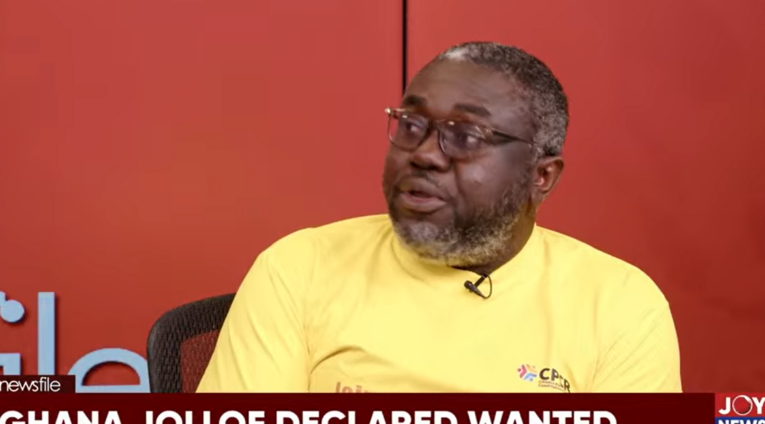
Legal practitioner and activist Oliver Barker-Vormawor has called for consistency in the way state institutions, particularly the police, exercise their powers under different political administrations.
He says an action that was considered wrong under the previous New Patriotic Party (NPP) government should not suddenly become acceptable simply because the National Democratic Congress (NDC) is now in power.
Speaking on JoyNews’ Newsfile, Mr Barker-Vormawor was discussing the recent case involving social media commentator Ghana Jollof and the wider debate over police powers and freedom of expression.
He said some people had been using his experiences with the NPP government to defend similar actions under the current administration.
According to him, that argument misses the point because those same actions were criticised as wrong when the NPP was in government.
“Now, if these were wrong, then they cannot be right now because government has changed,” he said.
Debate over the ‘Ghana Jollof’ case
Mr Barker-Vormawor stressed that criticising the police response to the case does not mean he supports everything the social media commentator has said.
He admitted that some of the content attributed to her was offensive and difficult to listen to. However, he argued that being offensive does not automatically make a statement criminal.
For him, the bigger issue is whether law enforcement agencies are applying the right threshold before using criminal sanctions against controversial speech.
“The question is, in terms of how we use law enforcement powers, whether or not we are striking the right balance,” he said.
Not every offensive statement is criminal
Mr Barker-Vormawor, however, acknowledged that some of the material attributed to Ghana Jollof could warrant police attention.
He pointed specifically to an audio recording in which she allegedly claimed that a coup was taking place at the Jubilee House.
He said such a claim could fall within the law relating to the publication of false news intended to cause fear and panic.
At the same time, he drew a distinction between such allegations and statements in which political figures are simply insulted.
While describing some of those comments as unpleasant, he argued that they do not necessarily meet the threshold for criminal prosecution.
Questions police handling
The activist also raised questions about how the police handled parts of the case, particularly the decision to issue a wanted notice for the suspect.
He questioned the need for such a notice if investigators already knew that she was in the United Kingdom.
Mr Barker-Vormawor said such actions could raise questions about the professionalism of the police and fuel public perceptions that law enforcement was being used to serve political interests.
“It just feeds into the general sense that you are doing work at the service of a regime,” he said.
Calls for a consistent standard
Mr Barker-Vormawor clarified that his position should not be interpreted as opposition to police investigations into alleged offences committed through social media.
Rather, he believes the focus should be on applying the law consistently and making a clear distinction between conduct that amounts to a criminal offence and speech that is simply offensive, unpopular or distasteful.
He maintained that the standard used to assess state power should not change depending on which political party is in government.
He also cautioned that calling for such a discussion should not be seen as encouraging irresponsible behaviour.
“Having that conversation in itself is not an invitation for reckless conduct in a society,” he said.
Please Login to comment in the post!

you may also like
-
by Christian Amegbor
- September 18, 2026
Central Regional Minister Mourns New Winneba...
-
by Christian Amegbor
- September 19, 2026
Foreign Affairs Ministry Submits 200-Page Rep...
-
by Christian Amegbor
- September 19, 2026
Alan Kyerematen: God Will Give Me Strength to...

-
 by Criss Jin
- October 1, 2026