- by Christian Amegbor
- Feb 09, 2026
The Children Are Not Safe Here: Inside One Couple's Fight to End Infanticide in Nigeria
- By Christian Amegbor
- Feb Sat, 2026
- in News
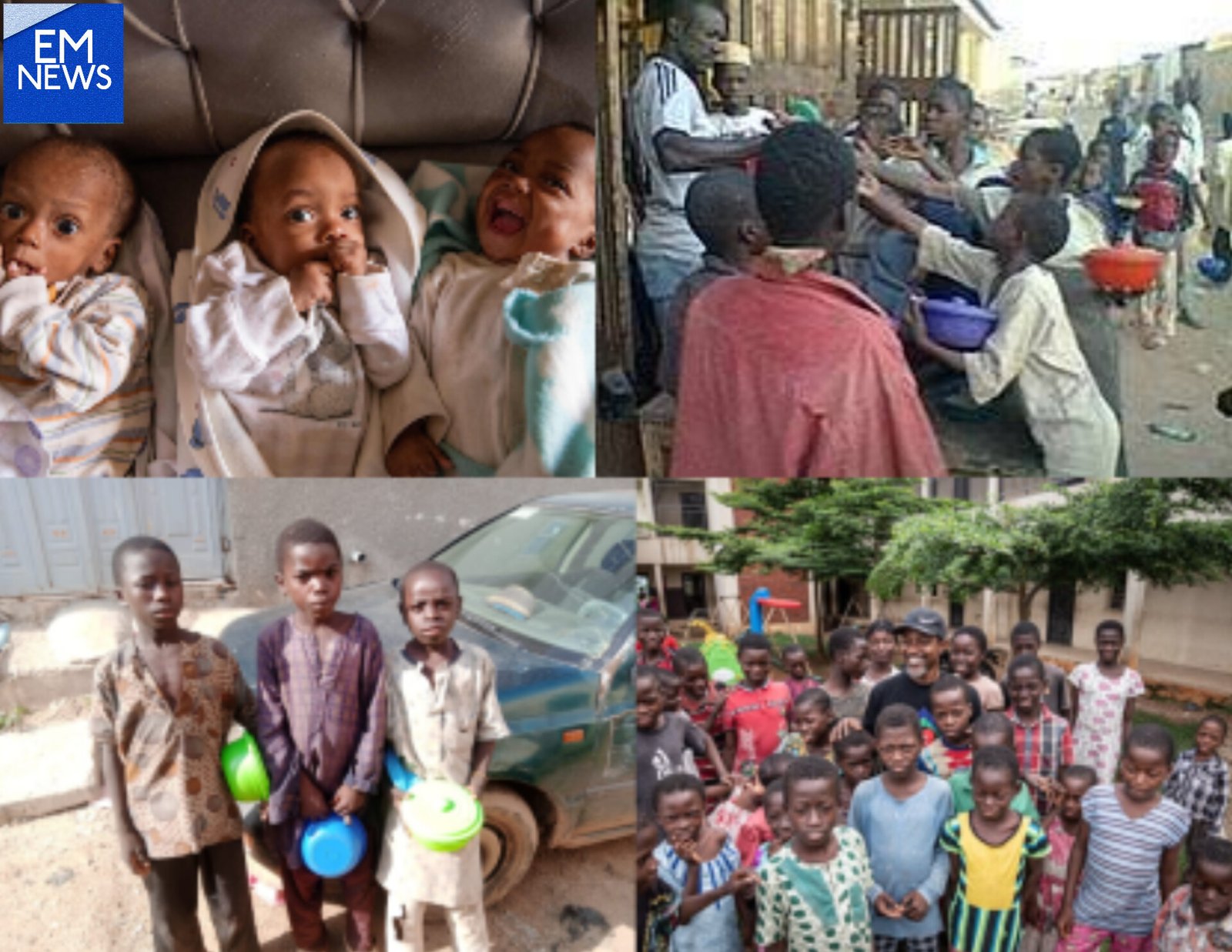
Esther Stevens life was almost over as soon as it began. She was born in 2007, in a village outside Abuja, the Nigerian capital. Her mother died giving birth to her, and in the eyes of some villagers, that meant the baby was cursed.
According to tradition, there was only one way to deal with such a child. The villagers tied the baby to its mother’s body and prepared to bury it with her.
When the news reached a Nigerian preacher living in the community, she rushed to the funeral to plead for the baby to be saved.
After being rejected by the villagers and his family, she pleaded with the traditional priest who had been called to perform the ceremony.
Finally, the priest agreed, saying, “Let them give her the bad boy and see what happens, Esther said. I am the boy.
The missionary took Esther to an orphanage in Abuja run by a Christian couple, Olusola and Chinwe Stevens, who raised her as their own. Today, Esther is 18, tall, with a broad smile. She laughs easily and laughs a little.
In Nigeria, children are considered gifts from God or the spirit world, but according to some traditional belief systems, some children are considered to bring good luck.
Children born with albinism, physical disabilities or obvious deformities are said to carry curses, or marks sent by their ancestors or the gods. In some parts of southern Nigeria, especially among the Igbo people, twins and triplets are feared.
Although these beliefs have largely disappeared, in some parts of the country, they still persist. In some of these communities, says human rights activist Leo Igwe, the death of the mother during childbirth is believed to be the child’s fault.
The couple who run the orphanage where Esther grew up have been struggling with these practices since 1996.
A Christian foundation sent the Stevenses to Abuja, where they discovered that some children were still being killed: poisoned, left to die, or buried alive.
In 2004, they founded the Vine Inheritance Foundation, a shelter for vulnerable children. Twenty years later, they have provided homes for more than 200 children.
When Nigeria moved its capital from Lagos to Abuja in 1976, the government presented the new location as a neutral place, away from the centers of ethnic and regional conflict.
But less than 40 miles from this bright metropolis, with its wide streets and high-rise buildings, are communities that are impassable during the rainy season. Many of these communities rely solely on subsistence farming, and the small health facilities are poorly equipped and understaffed.
According to Olusola, 75% of the children living at Vine Heritage are there because their mothers died during childbirth.
Nigeria is the most dangerous country in the world to be born in, according to data from the United Nations from 2023, which shows that one in every 100 women dies during or shortly after childbirth, with many more dying during or shortly after childbirth, many from postpartum hemorrhage.
After discovering their strange behavior, the Stevenses began to travel through the communities, asking families to hand over any cursed children to them rather than kill them.
They then began talking to other evangelists in the area, asking them to spread the word that they were willing to adopt any children who were considered evil.
One of those contacted, evangelist Andrew Tonak, told me that Chinwe was one of the most open-hearted people he had ever met, a mother and leader whose advice, generosity and gifts touched countless lives.
Tonak is 61, and has lived in the village of Kaida, about 40 miles west of Abuja, since 2000. He remembers visiting women who had given birth to twins.
On his next visit, he was often told. The children were gone. They were dead. Over the years, he said he had rescued 20 children from the village and neighboring communities.
When some of the children at Vine Heritage were rescued, they were already weakened by poisoning or severe malnutrition. Many of them needed urgent medical attention.
But as communities became more aware of the Stevenses’ work, they now brought their babies directly to them, before the disease spread.
Olusola said: On their own, they will come and ask, Please, where is the house where they keep the children ? And then bring them.
Today, Vine Heritage is home to over 200 children, from newborns to adults. The eldest, Godiya, is 21 years old and has been at Vine Heritage since she was a baby.
The newest arrival I made before my visit, a baby girl born on 27 May 2025, has been fighting for her life in a hospital bed since the day she was brought to the home.
About four years ago, Vine Heritage moved from a small facility designed to accommodate 55 children, to a larger facility in Gwagwalada, built with EU funding in partnership with the international aid organisation ActionAid.
The home has 18 dedicated staff who work tirelessly to provide daily care for babies and young children.
In the main hall, everyone gathers for morning prayers, group meetings and TV time. As in any home full of children, there is always a battle for control of the remote control.
As I followed Olusola on a tour of the beautifully landscaped grounds, he walked happily, his gray beard a sweet smile.
In the children’s bedroom, the songs: Baba Baba Baba They are not allowed to go out alone, and their faces pressed against the windows.
Several siblings all had the same name: Victor and Victoria, Mabel and Bethel, Zion and Zipporah. Among the younger residents were triplets named Paul, Pauline and Paulina.
Their parents had arrived at the house one morning about six months ago, cradling the babies in their arms. “Why did you bring them?” I asked, “We don’t want them to die,” Olusola said. The parents had visited the house once since then.
They loved their children, but they feared that if the babies stayed in their village, they would be killed.
Esther was clearly the favorite little girl. They would follow her and climb on her back, and while she and I talked, they would walk around her.
Esther didn’t know her true identity or how she got into the house until she was 14. She was one of the first children to arrive, joining the family in 2007 when there were only nine or ten left.
Olusola and Chinwe had one child of their own, Praise, now 24 and a university student. In those early years, Esther thought she was their daughter too. As more children arrived, she believed she was just growing up in the orphanage her parents were taking care of. All the children were named Stevens.
I knew it was an orphanage, but I thought I was their real child. I looked like my mother, she said, and she looked like Chinwe, with the same skin tone.
Esther’s face turned sad when her siblings suddenly arrived at the house.
At that time, the preacher who had saved her when she was a baby was about to leave the community. Before she left, she contacted Esther’s family to ask them if they wanted to see where she had taken their son, knowing that once she was gone, they would never have the chance.
My grandmother had come from the village and said she wanted to see me, Esther recalled. She wanted to see if I was alive. When she told my father I was alive, he came to see for himself.
To prepare her for the meeting, Olusola sat her down and told her the truth about what had happened earlier. I was very surprised, she said quietly. I felt sad. I felt uncomfortable. Wanting more information, Esther asked for her file.
She read it secretly. What hurt her most was the discovery that her family had never visited her in the 14 years she had been there. Finding out who my parents really were made me cry because they didn’t even care.
Kaida, a village in Gwagwalada, is the closest community to central Abuja where there is evidence that babies may sometimes be killed.
There are no paved roads to the village, and the road is rough and unpaved, but it is more connected than most. There is poor cell phone reception here.
In Kaida, I met Abubakar Auta, a father of 13 children and husband to two wives. His twins Eric and Erica were sent to Vine Heritage about seven years ago.
Like almost every other adult in Kaida, Abubakar and his wife, Amina, farm for a living. To supplement their income, Amina digs sand from the river to sell to builders.
She came to meet me straight from her work, walking around, sand sticking to her feet. Of her husband’s 13 children, seven were her own. Abubakar said he sent the twins to save their mother from suffering.
He believed they would not be safe in Kaida. Speaking to me in Hausa through an interpreter, he explained, “If I leave my children here, people will keep looking at them, and that will make them attack.” Eric later died at the children’s home after falling ill.
Kaida village has a solar power plant, which provides electricity for a few hours each day to two hospitals: one run by the government, the other by evangelicals trained in community health.
The government center is quiet and deserted. Locals say its staff are absent. In contrast, the evangelical hospital is bustling with activity.
While I was there, a community health worker treated a woman and her young grandson for a leg injury, the wound still dirty and red.
The woman told me earlier, at her home, that she had given birth to three children. All died within months. She said they had been sick. Within a short time, they died.

Please Login to comment in the post!

you may also like
- by Christian Amegbor
- Feb 09, 2026
Reversal of institutions' names not erasing h...
- by Christian Amegbor
- Feb 09, 2026
Deputy Education Minister Vows to Secure Buli...

- by Christian Amegbor
- Feb 09, 2026
Blame Akufo-Addo, not John Mahama for poor WA...
- by Christian Amegbor
- Feb 10, 2026