-
 by Christian Amegbor
- September 18, 2026
How Much Does It Cost to Organise a Community Football Tournament in Ghana?
-
By
Christian Amegbor
- September 20, 2026
- in Sports
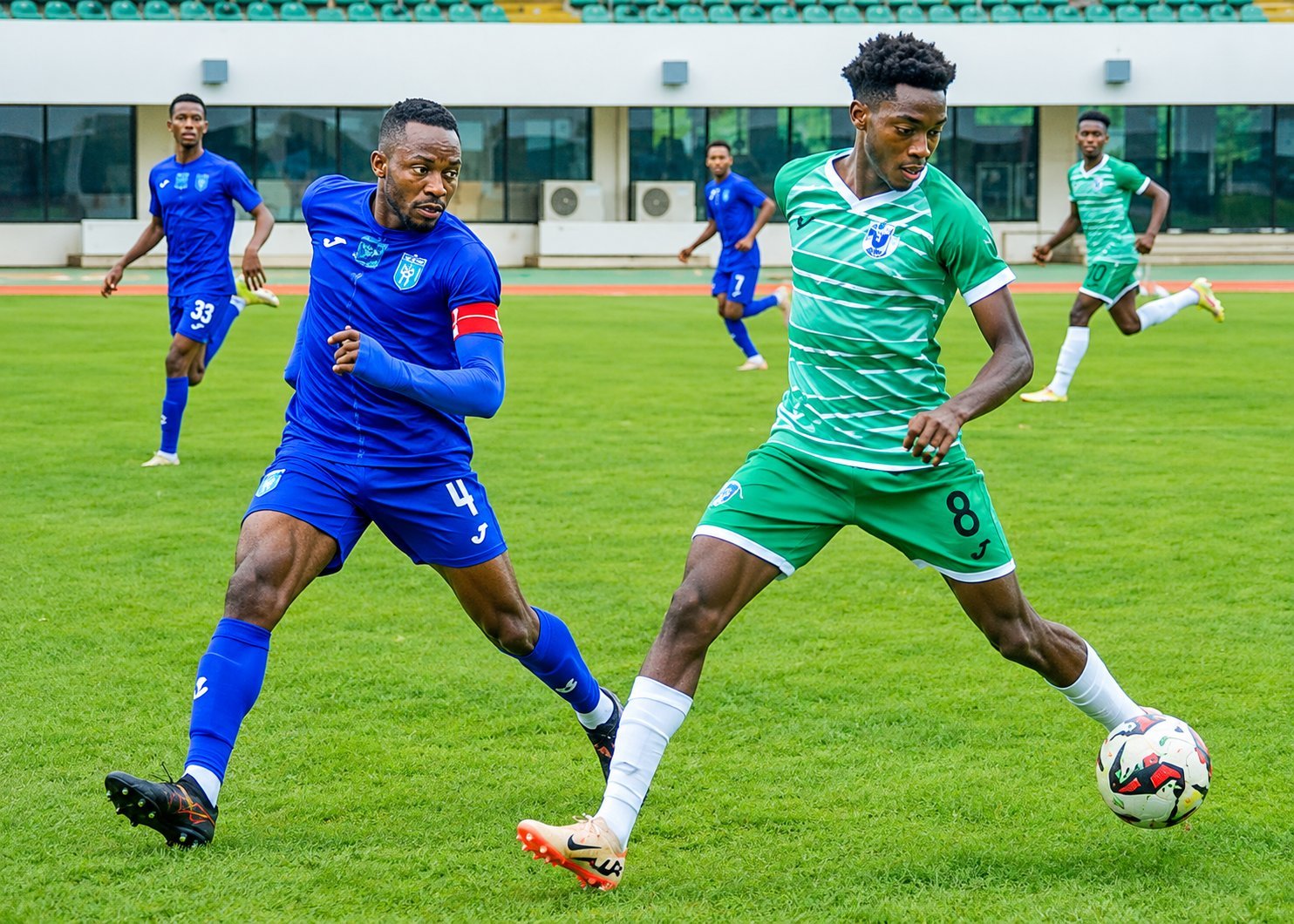
Walk past any astro turf in Accra on a Saturday afternoon, and you'll probably find one in progress, eight or twelve neighbourhood teams, a borrowed trophy, someone's uncle refereeing in flip-flops, and a small crowd that's shown up as much for the bragging rights as the football. Community tournaments are one of the most consistent threads running through Ghanaian social life, and they happen at every scale imaginable: from a two-day knockout organised by a group of friends with a WhatsApp chat and a shared cash pool, to sponsor-backed competitions like the McDan Ga-Adangbe Peace and Unity Cup, which has paid out a GH₵10,000 winner's purse in past editions.
What rarely gets talked about publicly is the arithmetic behind these tournaments, what it actually costs to put one together, and where the money quietly disappears. Em News broke down the real cost centres organisers face, from jerseys to security, drawing on documented examples from tournaments run across Ghana in recent years.
The first line item, and the one teams argue about most
Every tournament organiser eventually has to decide who's responsible for kitting out the teams, the organiser, the participating teams themselves, or a sponsor. When Daniel McKorley's McDan Group backed the KGL U-17 Inter Clubs Champions League, the organisation supplied two full sets of branded jerseys to each of the twelve participating clubs, working out to 24 sets of kit for the tournament's maiden edition. That's the sponsor-funded end of the spectrum.
At the grassroots level, without that kind of backing, jersey costs usually fall on the teams themselves. A set of printed jerseys for a squad of 15 to 18 players is one of the more predictable costs an organiser can budget for, even if the exact printing price varies by supplier and design complexity. Many community organisers sidestep the cost entirely by asking each team to arrive in its own kit or a simple bib colour, reserving branded jerseys for finals day only.
A cost that's easy to underestimate
Referee fees rarely make the news coverage of community tournaments, but organisers who've run one will tell you it's one of the costs most likely to be short-changed in the planning stage. A typical community tournament needs at least one certified or experienced referee per match, plus assistants for anything beyond a small-sided format, and multiplied across a full tournament schedule, from group stage through to final, this adds up over several weekends.
Organisers who try to cut this corner by using unqualified volunteers often pay for it in a different currency: disputed results, on-pitch confrontations, and tournaments that lose credibility with the very communities they're meant to unite. Budgeting properly for referees, even at grassroots level, is one of the clearer signals that a tournament is being taken seriously.
Trophies, medals and prize money: where the numbers get real
This is the line item with the clearest public record, because winners and their prize money tend to make local news. At the smaller end, the Comrades Club's Unity Cup tournament in the Ellembelle District, an eight-team community competition, awarded its 2024 champions a trophy, gold medals and a GH₵500 cash prize, with GH₵300 for the runners-up and GH₵200 for third place. At the other end of the scale, the sponsor-backed McDan Ga-Adangbe Peace and Unity Cup, drawing 24 communities, put up GH₵10,000 for the winner, GH₵5,000 for the first runner-up and GH₵3,000 for the second runner-up, alongside trophies and medals for all three.
That ranges from a few hundred cedis at the community level, five figures once a corporate sponsor gets involved, and is probably the most honest illustration of how differently "community football tournament" can be budgeted depending on who's backing it. Medals, plaques for individual awards like Most Valuable Player or top scorer, and the trophy itself are comparatively minor costs next to the cash prizes, but they matter enormously to the players collecting them.
Getting teams, officials and equipment to the venue
Transport costs are often the least visible part of a tournament budget because they're spread across so many people, but they're real. Teams travelling from outside the host community need fares covered or reimbursed, officials and referees need to get to and from the venue for every match day, and equipment (goalposts, nets, first-aid supplies, public address systems) has to be moved in and set up. For tournaments spanning several weekends, as many community competitions do, this cost repeats every match day rather than landing as a single upfront expense, something first-time organisers frequently underestimate.
Astro turf or open field, and what it actually costs to secure one
Most community tournaments in Ghana are now played on artificial turf rather than open dirt pitches, a shift driven partly by government and NGO investment in local sporting infrastructure over the past decade. Astro turf construction itself is a significant public investment; Ghana's GNPC Foundation, for instance, has funded FIFA-specification astro turf facilities around the country at a cost that has risen from roughly $250,000 per facility in 2018 to considerably more in recent years, but for tournament organisers, the relevant cost isn't construction; it's rental.
Renting an astro turf pitch by the hour or by the day varies significantly depending on the facility, its location, and whether it has floodlights, and prices are set independently by each venue rather than published centrally, so organisers should treat any figure quoted online as a starting point for negotiation rather than a fixed rate. Community organisers who can secure a public park, school field or community-owned turf, as several of the tournaments referenced in this piece did, at grounds like Madina's astro turf and the La McDan Town Park, often reduce this cost substantially or eliminate it through local goodwill and community buy-in.
The cost nobody wants to pay until something happens
Football and passion go hand in hand in Ghana, and community tournaments, precisely because they carry local pride and neighbourhood rivalry, can draw larger, more emotionally invested crowds than their size might suggest. Basic crowd control, whether through hired private security or a formal request to local police for a presence on match days, is a cost that experienced organisers build in from the start rather than treating as optional. It's rarely large relative to prize money or venue costs, but it's the kind of expense that only feels justified in hindsight, after a dispute that didn't escalate, or a crowd that didn't spill onto the pitch.
From word of mouth to paid promotion
Community tournaments have traditionally run on word of mouth, community radio announcements and posters at the market, and for many, that's still enough, since the appeal is inherently local. Increasingly, though, organisers are using social media to build attention before a ball is kicked, posting team line-ups, match schedules and highlight clips to WhatsApp groups and platforms like TikTok and Facebook. This costs little beyond time and a bit of data, but tournaments looking for a wider audience, sponsor visibility, or media coverage, the kind that gets a tournament covered by outlets like the Ghanaian Times or GNA, as several of the tournaments referenced here were, typically invest more deliberately in banners, branded materials and, where budgets allow, paid promotion or a small honorarium for a local commentator or MC.
What it adds up to
There's no single number that captures the cost of "a community football tournament in Ghana," because the format is genuinely elastic; an eight-team, single-weekend competition organised by a community club bears almost no resemblance, cost-wise, to a month-long, sponsor-backed cup with a five-figure prize pool. What's consistent across every tournament examined for this piece is the shape of the budget: prize money and trophies are the most visible cost and the one organisers plan around first, while referees, transport and security are the quieter expenses that determine whether a tournament runs smoothly or descends into the kind of chaos that ends a competition's reputation before its second edition.
For anyone thinking about organising one, the lesson from the tournaments that have run successfully, from Ellembelle's modest Unity Cup to the sponsor-driven Ga-Adangbe Cup, is the same: the football is the easy part. It's the logistics around it that decide whether a community remembers the tournament fondly, or not at all.
Please Login to comment in the post!

you may also like


-
by Christian Amegbor
- September 18, 2026
2026 Ballon d’Or: Kane, Yamal and Mbappé amon...
-
by Christian Amegbor
- September 19, 2026
Independent Football Regulator and Betting: A...

-
by Christian Amegbor
- September 19, 2026
Agyemang Badu Backs Queiroz to Bring Out the...
-
by Christian Amegbor
- September 19, 2026