-
 by Em News
- September 8, 2026
NPP After Kumasi Conference: New Leadership Takes Charge as Party Begins 2028 Rebuilding
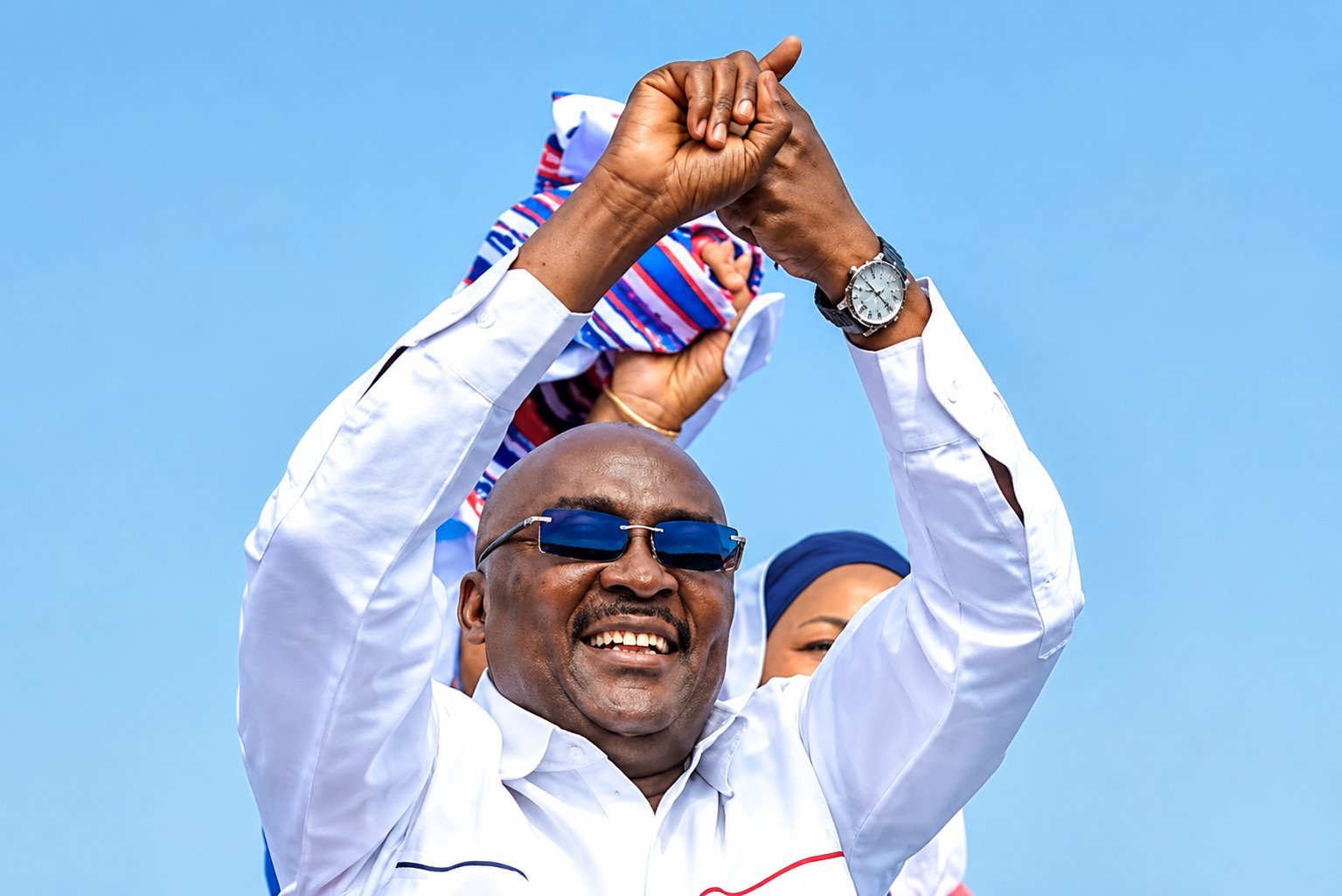
With its internal elections completed and Mahamudu Bawumia already chosen to lead the party into 2028, the NPP's attention is shifting from internal contests to rebuilding its organisation and preparing for another national campaign.
The New Patriotic Party (NPP) has entered a new chapter following the election of its national executives at the party's National Delegates Conference in Kumasi, bringing months of internal reorganisation to a close and shifting attention to the harder task of rebuilding for the 2028 general election.
More than 7,000 delegates gathered at the Baba Yara Sports Stadium on October 3 to elect a new team of national officers and approve changes to the party's constitution.
Former General Secretary John Boadu emerged as National Chairman, marking his return to the upper ranks of the party's leadership, while Justin Frimpong Kodua retained his position as General Secretary.
Kojo Fosu Boadu was elected First Vice Chairman, Henry Nana Boakye secured the position of Second Vice Chairman, while Nana Akomea was elected Third Vice Chairman.
Titus-Glover was elected National Organiser, with Mavis Hawa Koomson taking over as National Women's Organiser. Abanga Fuseini was elected National Youth Organiser, Alfred Kojo Thompson became National Treasurer, and Mohammed Ali Suraj was elected National Nasara Organiser.
Dennis Miracles Aboagye was elected National Communications Director unopposed.
With the contests now settled, the immediate question facing the party is no longer who occupies its national offices, but whether the new leadership can turn the NPP's internal restructuring into an effective political recovery.
New leadership after the 2024 defeat
The executives assume office at a particularly important point in the NPP's history.
After eight years in government, the party lost the 2024 presidential election and returned to opposition. The defeat triggered a period of internal reflection and reorganisation as the NPP sought to understand what went wrong and rebuild its structures ahead of another attempt at power.
That process has included reviews of the party's organisation, elections at the polling station, constituency and regional levels, and the selection of its presidential candidate for the next general election.
The Kumasi conference represented the final major stage of that internal electoral process.
In the closely watched National Chairman contest, John Boadu secured 2,888 votes, defeating former Energy Minister Boakye Agyarko, who received 2,408.
Former National Chairman Paul Afoko polled 790 votes, while Sammy Crabbe received 41.
Justin Frimpong Kodua secured a more decisive victory in the General Secretary race, retaining his position with 4,486 votes. Sylvester Tetteh received 1,340 votes, followed by Eugene Boakye Antwi with 162 and Charles Dwamena with 126.
The results hand the new executives a four-year mandate that will take the party through the 2028 election cycle.
But winning internal elections is only the beginning. Their larger test will be rebuilding trust within the party, strengthening its grassroots organisation and turning an opposition party recovering from electoral defeat into a credible alternative government.
Bawumia remains at the centre of the 2028 project
While the NPP has changed its national leadership, one central element of its 2028 strategy is already settled.
Dr Mahamudu Bawumia remains the party's presidential candidate for the next general election.
That means the conclusion of the national executive elections effectively brings together the major components of the NPP's 2028 political machinery: its flagbearer, national executives, parliamentary caucus and regional and constituency structures.
The challenge now is getting those different parts of the party to work together.
Internal elections inevitably create camps, alliances and rivalries, and the NPP's contests were no exception. Bawumia has therefore made party unity one of his central messages following the Kumasi conference.
After the new executives were sworn in, he called for the factions created during the internal elections to be dissolved and urged members to return to a single party structure.
He also appealed to unsuccessful candidates and their supporters not to see defeat in the internal elections as exclusion from the party's future, stressing that their experience and contribution would still be needed.
It is an important message for a party that cannot afford to spend much of the next electoral cycle fighting yesterday's internal battles.
Constitutional changes reshape the party
Delegates in Kumasi were not only choosing leaders.
The conference also approved 14 amendments to the NPP's constitution, introducing changes to how the party will be organised and governed.
One of the most significant amendments concerns the relationship between the party and its presidential candidate when the NPP is in government.
Under the revised arrangement, the party's flagbearer will assume leadership of the NPP after winning a presidential election and becoming President of Ghana.
Delegates also approved the reinstatement of the President as a member of the National Executive Committee whenever the party is in government.
Other amendments affect the election and appointment of Vice Chairpersons and create new Deputy Communications Officer positions.
The party's IT Officer has also been elevated to executive status, an indication that digital organisation and technology are becoming more deeply embedded in the NPP's formal political structure.
The amendments follow an earlier constitutional review and are intended to address organisational gaps the party believes were not adequately dealt with under previous reforms.
Taken together, the changes suggest an attempt to clarify authority within the party while adapting its structure to the demands of modern political organisation.
John Boadu's rebuilding challenge
For John Boadu, returning to the national leadership comes with a substantially different assignment from the one the NPP faced while in government.
His immediate task is rebuilding an opposition party.
Boadu has indicated that the new leadership will focus heavily on the grassroots, particularly constituency-level organisation, while adapting the party to changing political and social conditions.
He has also spoken about strengthening engagement with young people, social media practitioners and traditional media, alongside improving the party's financial position at the constituency level.
Those priorities reflect some of the broader challenges confronting political parties outside government.
Opposition changes the organisational environment. Access to resources becomes more limited, maintaining grassroots enthusiasm becomes more difficult, and party structures must remain active without the advantages that come with incumbency.
For the NPP, rebuilding therefore cannot simply mean reorganising its national headquarters. Much of the work will have to happen in constituencies and communities where elections are ultimately won and lost.
Parliament becomes another front in the rebuilding effort
The NPP's recovery will not depend solely on its party executives.
Its parliamentary caucus will remain one of its most visible political platforms during the years leading to 2028.
Minority Leader Alexander Afenyo-Markin has argued that the NPP must use Parliament and other democratic institutions to scrutinise government policy while developing credible alternatives for voters.
That gives the party two interconnected tasks.
Its national executives must rebuild the organisation outside Parliament, while its MPs must demonstrate that the NPP can function as an effective opposition inside the legislature.
How well those two sides coordinate could shape public perceptions of the party long before formal campaigning for the next election begins.
From internal elections to political rebuilding
The NPP has now completed much of the internal restructuring that followed its 2024 defeat.
Polling station, electoral area, constituency and regional processes have been followed by the election of national executives in Kumasi.
The party has also settled the question of who will lead it into the next presidential election.
What comes next is considerably more difficult.
Internal elections determine who holds party positions. They do not, by themselves, rebuild public confidence or win national elections.
The new executives must now work with party structures that have themselves recently emerged from competitive elections, while coordinating with the parliamentary caucus and Bawumia's political organisation.
That explains why unity has become such a prominent theme in the NPP's post-conference messaging.
Boakye Agyarko, who finished second in the chairmanship contest, has already congratulated Boadu and pledged his support to the new leadership.
Agyarko described the contest as an internal family exercise and urged members to put the election behind them and concentrate on rebuilding the party.
Whether that spirit extends across the wider organisation will matter considerably in the months ahead.
The road to 2028 starts with the party itself
With the Kumasi conference over, the NPP's attention now shifts from electing leaders to proving what those leaders can deliver.
The new executives must translate promises of grassroots renewal, stronger communication and party unity into practical organisation across the country.
At the same time, the party will need to develop a political and policy agenda capable of responding to the government while presenting voters with a credible alternative for 2028.
For Bawumia, the task will be to work with the new national executives, MPs and grassroots structures to build a campaign organisation capable of returning the party to power.
But 2028 is still some distance away.
The more immediate challenge is internal: healing divisions from the party's contests, rebuilding confidence among members, strengthening constituency structures and ensuring that the NPP remains politically active and organisationally disciplined while in opposition.
The party leaves Kumasi with most of the pieces now in place, a new national leadership, a selected presidential candidate, and a revised constitutional framework.
Whether those pieces can be turned into a successful political project is the question that will define the next phase of the NPP.
The conference settled who will lead the party.
The harder task now begins: rebuilding it.
you may also like
-
by Em News
- September 18, 2026
Central Regional Minister Mourns New Winneba...
-
by Em News
- September 19, 2026
Foreign Affairs Ministry Submits 200-Page Rep...
-
by Em News
- September 19, 2026
Barker-Vormawor: If It Was Wrong Under NPP, I...
-
by Em News
- September 19, 2026
0 Comments
Be the first to join the conversation.