- by Christian Amegbor
- Feb 09, 2026
Obuasi Local Prison Launches Aquaculture Initiative to Transform Inmate Welfare and Food Security
- By Christian Amegbor
- Apr Wed, 2026
- in News
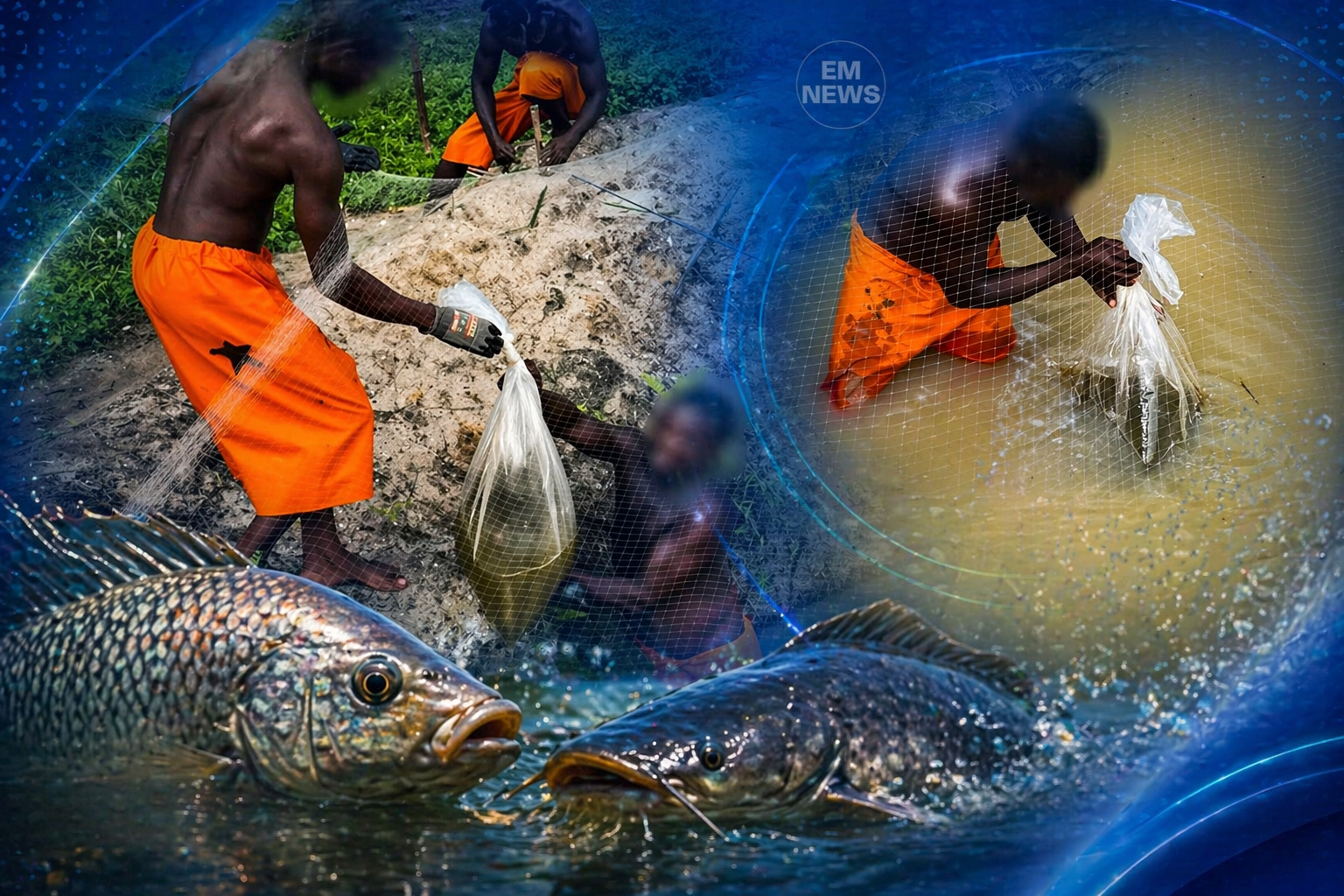
A correctional facility in Ghana's Ashanti Region has taken a meaningful step toward self-sufficiency and inmate welfare, launching an aquaculture project that introduces fish farming directly onto prison grounds, and in doing so, quietly redefining what rehabilitation can look like inside Ghana's correctional system.
Obuasi Local Prison has introduced 1,000 fingerlings of tilapia and catfish into newly constructed fish ponds within the facility, marking the beginning of a pilot programme designed to improve nutrition, reduce dependence on external food supply chains, and equip inmates with practical agricultural skills they can carry beyond their sentences.
The fingerlings were donated by George Boamah, a respected Ghanaian agri-consultant whose contribution has helped bring the initiative from concept to reality, a demonstration of how private sector expertise and public institutional need can align around genuine social impact.
Addressing a Persistent Problem: Food Security Behind Bars
Food supply has long been one of the most chronic and under-discussed challenges within Ghana's prison infrastructure. Correctional facilities across the country operate under significant resource constraints, and the consistency, quality, and nutritional adequacy of inmate meals have frequently fallen short of acceptable standards.
The Obuasi aquaculture project directly targets this gap. By cultivating fish on-site, the prison aims to establish a reliable, cost-effective internal food source that reduces its dependence on external suppliers and the budgetary pressures that come with them.
Tilapia and catfish are well-suited to this purpose. Both species are native to Ghanaian water systems, adapt readily to controlled pond environments, grow at relatively fast rates, and deliver high nutritional value, particularly in terms of protein, which is often the most deficient component of institutional diets. Incorporating fresh fish into the prison's regular feeding programme is expected to produce measurable improvements in inmate health and dietary quality over time.
Rehabilitation Through Agriculture: Skills That Outlast a Sentence
The project's significance extends well beyond the food it will produce. Selected inmates will be directly involved in the day-to-day management of the fish ponds, monitoring water quality, managing feeding cycles, maintaining pond infrastructure, and learning the broader disciplines of sustainable aquaculture.
This is rehabilitation in its most practical form. Rather than leaving inmates idle or occupied with tasks that bear no relationship to life after release, the programme invests in skills that have genuine market value in Ghana's growing agricultural economy. Fish farming is a sector with documented employment opportunities, and inmates who complete the programme will leave with hands-on experience that is directly transferable to smallholder aquaculture, agribusiness employment, or independent enterprise.
This approach reflects a broader shift in correctional philosophy, one that measures success not only by security and containment, but by the rate at which former inmates are equipped to reintegrate productively into their communities. Recidivism is closely tied to economic exclusion, and programmes that address that exclusion directly are among the most evidence-backed tools available to correctional systems worldwide.
A Pilot With National Potential
Authorities at Obuasi Local Prison have been clear that the current initiative is a pilot, a carefully managed first phase designed to test the model before any broader rollout is considered. That measured approach is appropriate. Fish farming requires consistent management, and the programme's long-term viability will depend on the quality of training provided, the sustainability of pond maintenance, and the institutional commitment to seeing it through beyond its initial novelty.
But if the pilot delivers on its objectives, the implications for Ghana's prison system could be significant. The country operates dozens of correctional facilities, many of which face comparable challenges around food supply, inmate nutrition, and skills development. A replicable, low-cost aquaculture model, one that demonstrably improves welfare outcomes while generating internal food value, would represent a compelling case for national adoption by the Ghana Prison Service.
The project also slots into a wider national conversation about food security and agricultural self-sufficiency. Ghana has made domestic food production a strategic priority, and the idea that correctional institutions could contribute meaningfully to that agenda, rather than simply drawing on public resources, is one that deserves serious policy attention.
The Broader Vision
What Obuasi Local Prison has launched is modest in scale but substantial in ambition. One thousand fingerlings in newly dug ponds may not sound transformative. But the thinking behind the initiative, that prisons can be sites of productivity, skill-building, and genuine human development, represents exactly the kind of institutional imagination that Ghana's correctional system needs more of.
George Boamah's donation of the initial stock was more than a logistical contribution. It was a signal that the private sector sees value in investing in correctional welfare, and that the gap between agricultural development and social rehabilitation is narrower than it might appear.
As the pilot progresses, stakeholders, policymakers, and prison administrators across Ghana will be watching closely. The fish ponds at Obuasi may yet prove to be something larger than themselves, a proof of concept for a more humane, more productive, and more forward-thinking approach to correctional facility management nationwide.

Please Login to comment in the post!

you may also like

- by Christian Amegbor
- Feb 09, 2026
Reversal of institutions' names not erasing h...
- by Christian Amegbor
- Feb 09, 2026
Deputy Education Minister Vows to Secure Buli...
- by Christian Amegbor
- Feb 09, 2026
Blame Akufo-Addo, not John Mahama for poor WA...
- by Christian Amegbor
- Feb 10, 2026