-
 by Em News
- September 18, 2026
Bank of Ghana’s New China Payment System: What Changes for Ghana’s Importers?
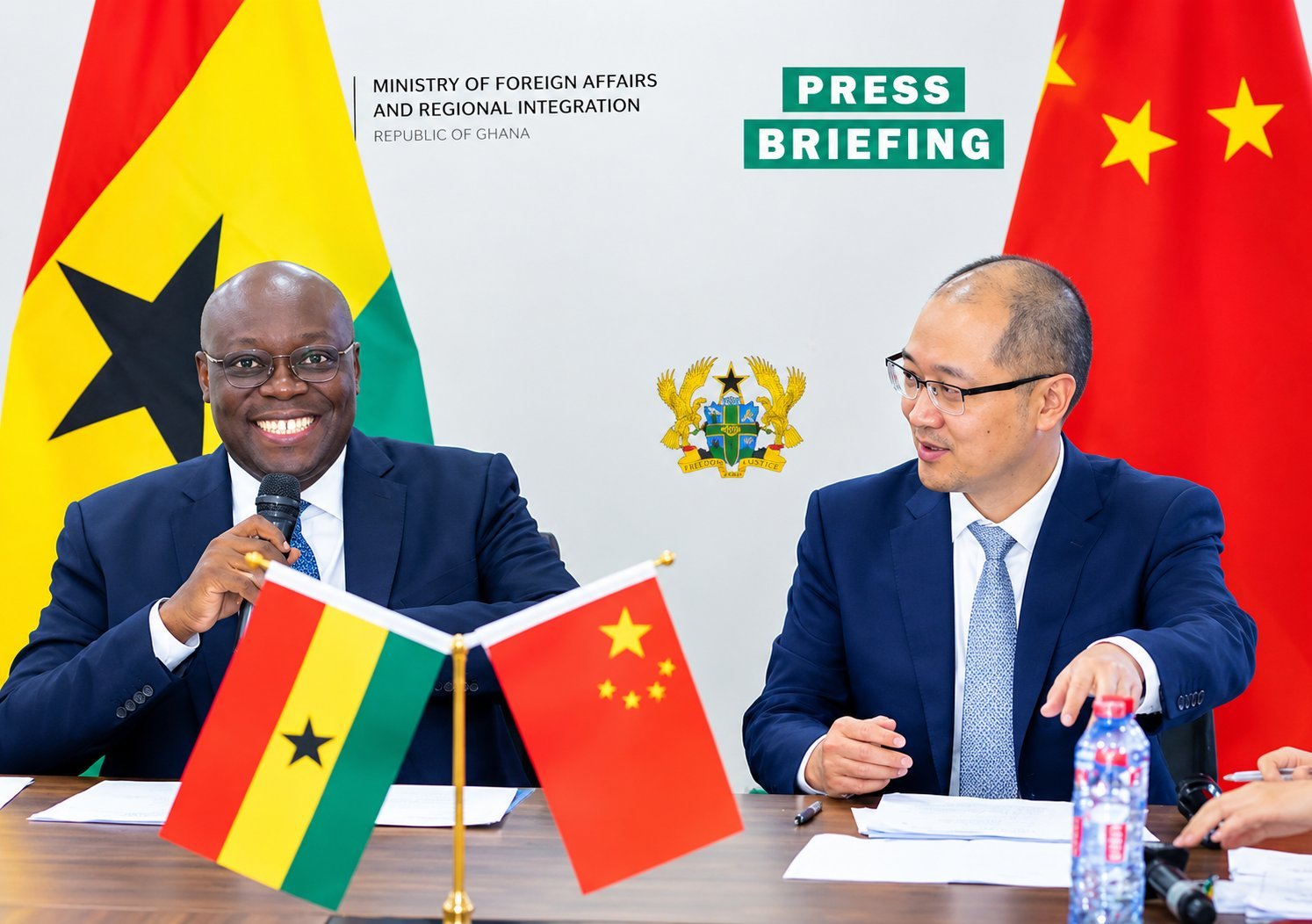
A new cedi-to-yuan payment arrangement could allow eligible Ghanaian businesses to pay Chinese suppliers without first sourcing US dollars, potentially simplifying one of the most difficult parts of importing from China.
For many Ghanaian businesses importing goods from China, securing the products is only part of the challenge. Before a shipment leaves a Chinese factory or warehouse, the importer must usually find the foreign currency needed to pay the supplier.
For years, that has often meant looking for US dollars.
A new payment arrangement being piloted in Ghana could begin to change that process.
The Bank of Ghana has confirmed that eligible importers will be able to initiate payments to Chinese suppliers using funds from their Ghana cedi accounts, with the transaction ultimately settled in Chinese yuan.
Stanbic Bank Ghana is currently piloting the arrangement, while GCB Bank is also preparing a similar service.
The initiative is part of a broader effort to make payments between Ghana and China more efficient while reducing the need to use the US dollar as an intermediary currency for every eligible transaction.
For businesses importing everything from electronics and clothing to machinery, furniture, vehicle parts and household goods, the new system could offer another way to pay Chinese suppliers.
But it is important to understand what the arrangement actually does, and what it does not do.
How will the cedi-to-yuan payment work?
The basic idea is relatively straightforward.
An eligible importer with money in a Ghana cedi account can instruct a participating bank to make payment to a supplier in China.
The Ghanaian business funds the transaction in cedis, while the supplier receives the payment in Chinese yuan.
Stanbic's arrangement uses China's Cross-Border Interbank Payment System (CIPS), a payment infrastructure designed to facilitate cross-border transactions involving the Chinese currency.
For the Ghanaian importer, the most important difference is what may no longer be necessary.
Traditionally, a business might have cedis but need to acquire US dollars to settle an international invoice. Depending on the payment arrangement, another conversion may ultimately be required before the Chinese supplier receives the currency it wants.
The new system provides a more direct route between the cedi and the yuan.
It is important, however, not to interpret this as Ghanaian cedis being transferred directly into an ordinary Chinese bank account.
The importer provides the cedi funding in Ghana. The banks and payment infrastructure handle the foreign-exchange conversion and international settlement, allowing the beneficiary in China to receive yuan.
That distinction matters because the transaction remains a regulated foreign-exchange payment.
Why this could matter for Ghanaian traders
China is one of Ghana's most important trading partners and a major source of goods sold throughout the country.
Walk through many of Ghana's commercial centres, and the connection is immediately visible. Phones and accessories, clothing, electrical equipment, machinery, furniture, vehicle parts, and countless household products are sourced directly or indirectly from Chinese manufacturers and wholesalers.
Behind those goods are thousands of transactions that must be settled across borders.
Foreign exchange therefore has a direct impact on the cost of doing business.
When dollars become difficult or expensive to obtain, importers can face delays in paying suppliers. Currency movements can also affect margins, particularly for businesses operating in highly competitive markets where they cannot easily pass every additional cost on to consumers.
Allowing eligible businesses to fund Chinese payments from their cedi accounts could remove one step from that process.
Instead of thinking first about cedis to dollars and then payment to China, some importers could increasingly think in terms of cedis to yuan.
For traders, that could make the payment process simpler.
Whether it makes it significantly cheaper is another question.
Will importers actually save money?
Potentially, but there is no guarantee.
Removing an unnecessary currency-conversion step could improve efficiency and, depending on how a transaction is priced, reduce some foreign-exchange costs.
But the fact that a payment starts from a cedi account does not eliminate currency conversion.
Someone still has to convert the value of those cedis into yuan, and the rate used for that conversion matters.
Importers therefore need to look beyond the convenience of the system and compare the actual numbers.
A business considering the new payment route should examine the cedi-to-yuan exchange rate, bank charges, transfer fees, settlement time, and total amount ultimately received by the supplier.
That total cost should then be compared with the business's existing payment method.
For some transactions, the new route could prove attractive. For others, the difference may be relatively small.
The market will provide a clearer answer once more businesses begin using the service.
The foreign-exchange rules have not disappeared
There is another important point for importers: the new arrangement does not remove Ghana's foreign-exchange rules.
Businesses will still have to comply with the relevant banking, customs and regulatory requirements when making international payments.
The Bank of Ghana has recently clarified requirements relating to advance payments for imports, including documentation that businesses may have to provide when processing qualifying transactions.
Depending on the transaction, this can include a customer instruction, a valid Import Declaration Form, a pro forma or commercial invoice, and an undertaking to submit the required clearing documentation within the prescribed period.
In other words, an importer cannot simply walk into a bank with cedis and transfer money to China without demonstrating the commercial basis for the payment.
Banks still have compliance responsibilities, and importers must still provide the necessary documentation.
This is particularly important because the central bank has also warned against unauthorised foreign-currency transactions within Ghana.
The two issues should not be confused.
The new system facilitates legitimate international trade payments through regulated financial institutions. It does not create a general exemption from Ghana's foreign-exchange laws or allow businesses to freely price and settle domestic transactions in foreign currencies where that is not permitted.
Is Ghana moving away from the US dollar?
Not entirely.
The dollar will continue to play an important role in Ghana's international trade and financial system.
Importers will still be able to use existing payment channels where appropriate, and some Chinese suppliers may continue requesting payment in dollars depending on their contracts and commercial arrangements.
What the new system does is provide an alternative.
If a Ghanaian business is buying from a supplier that accepts or prefers yuan, there may be less reason to introduce the US dollar into the transaction simply because it has traditionally been the main currency used for international settlement.
That is the bigger significance of the initiative.
It creates the possibility of settling some Ghana-China trade more directly in the currencies connected to the transaction rather than automatically routing payments through a third currency.
GCB's participation could expand access
For now, Stanbic Bank Ghana has been publicly identified as the institution piloting the cedi-to-yuan arrangement.
But it may not remain the only option.
The Bank of Ghana Governor, Dr Johnson Pandit Asiama, has indicated that GCB Bank is also working on a similar service.
If more banks eventually introduce yuan settlement facilities, the system could become accessible to a much wider group of businesses.
More participating banks could also introduce competition over exchange rates, transaction fees, processing times and customer service.
That would matter because the usefulness of the system will ultimately depend not simply on its existence, but on whether banks can make it commercially attractive for importers.
A payment route that is easier but substantially more expensive would have limited appeal.
Importers will therefore need to compare offers rather than assume every cedi-to-yuan service will provide identical terms.
Will goods imported from China become cheaper?
Not necessarily.
For consumers, it may be tempting to assume that a more direct payment system will automatically result in cheaper Chinese goods in Ghana.
The economics are more complicated.
The cost of importing a product includes much more than paying the supplier.
A trader bringing in phones, clothing, machinery, furniture or spare parts may also have to account for freight, insurance, customs duties, port charges, inland transportation, financing costs, warehousing and local distribution.
Exchange-rate movements can also significantly affect the final cost.
The new payment system addresses one part of that chain: how the supplier is paid.
If it reduces transaction costs, businesses could benefit. But whether those savings are large enough to affect retail prices will depend on the product, transaction size and other costs involved.
The more immediate benefit may therefore be greater payment flexibility rather than dramatically cheaper imports.
The bigger story is Ghana-China trade
The payment arrangement also reflects the growing economic relationship between Ghana and China.
For years, much of the public discussion around that relationship has focused on Chinese goods entering Ghana.
But trade works in both directions.
Ghanaian businesses are also looking for opportunities to sell products into the Chinese market, while China has been expanding trade arrangements with African countries.
China's zero-tariff initiatives for eligible African exports could potentially create additional opportunities for businesses capable of meeting the requirements of the Chinese market.
That makes payment infrastructure increasingly important.
If African businesses are expected to trade more directly with China, the financial systems supporting those transactions must also become easier to use.
But better payment infrastructure alone will not transform Ghana's exports.
Ghanaian companies still need products that can compete internationally, sufficient production capacity, access to financing, reliable logistics, and the ability to meet Chinese regulatory and quality standards.
The payment system can facilitate trade. It cannot create competitive exports on its own.
What should Ghanaian importers do?
For businesses that regularly pay suppliers in China, the first step is not necessarily to abandon their existing payment arrangements.
It is to compare.
Importers should find out whether their bank currently offers cedi-to-yuan settlement and whether their transactions are eligible.
They should ask specifically about the exchange rate being offered, transaction charges, minimum or maximum payment amounts, documentation requirements, and expected settlement time.
They should also confirm that their Chinese supplier can receive yuan through the proposed payment route.
Most importantly, businesses should compare the total cost of getting the required amount to the supplier, rather than focusing only on an advertised exchange rate or transfer fee.
The system is still developing, and its practical benefits will become easier to judge as more transactions are processed and more banks participate.
For now, however, the significance is clear.
A Ghanaian importer who earns and holds money in cedis may no longer have to think of the US dollar as the unavoidable first step in paying every Chinese supplier.
For businesses that have spent years navigating dollar shortages, exchange-rate pressures and multiple currency conversions, that is a potentially important change.
It will not eliminate Ghana's foreign-exchange challenges, nor will it automatically make imports from China cheaper.
But it gives traders something they previously had less of: another regulated route to move money from Ghana to suppliers in China.
And if that route proves faster, more competitive, and more widely accessible, it could gradually change how a significant part of Ghana-China trade is settled.
you may also like


-
by Em News
- September 19, 2026
Government Launches First Phase of Major Toma...

-
by Em News
- September 19, 2026
Secured Credit Hits GH¢31.5bn in Q2 2026 as L...

-
by Em News
- September 19, 2026
MTN Ghana Steps Up Push to Take Digital Payme...

-
by Em News
- September 20, 2026
0 Comments
Be the first to join the conversation.